Obesity Biology Research Unit, School of Clinical Sciences, University of Liverpool, Liverpool L69 3GA, UK.
Br J Cancer. 2011 Feb 1;104(3):441-7. doi: 10.1038/sj.bjc.6606083. Epub 2011 Jan 18.
Profound loss of adipose tissue is a hallmark of cancer cachexia. Zinc-α2-glycoprotein (ZAG), a recently identified adipokine, is suggested as a candidate in lipid catabolism.
In the first study, eight weight-stable and 17 cachectic cancer patients (weight loss 5% in previous 6 months) were recruited. Zinc-α2-glycoprotein mRNA and protein expression were assessed in subcutaneous adipose tissue (SAT), subcutaneous adipose tissue morphology was examined and serum ZAG concentrations were quantified. In the second cohort, ZAG release by SAT was determined in 18 weight-stable and 15 cachectic cancer patients. The effect of ZAG on lipolysis was evaluated in vitro.
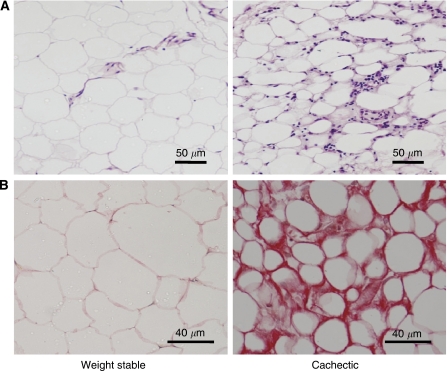
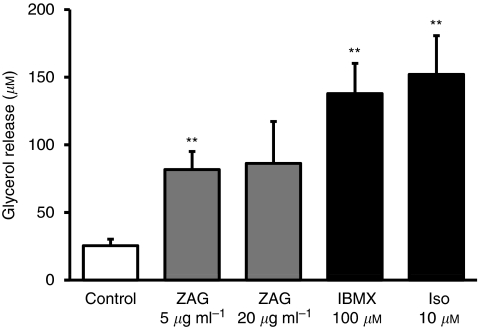
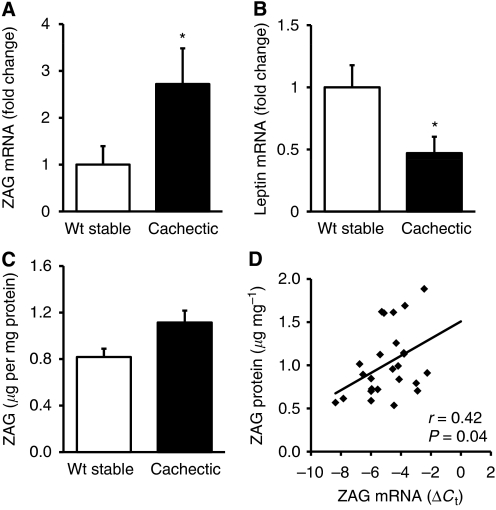
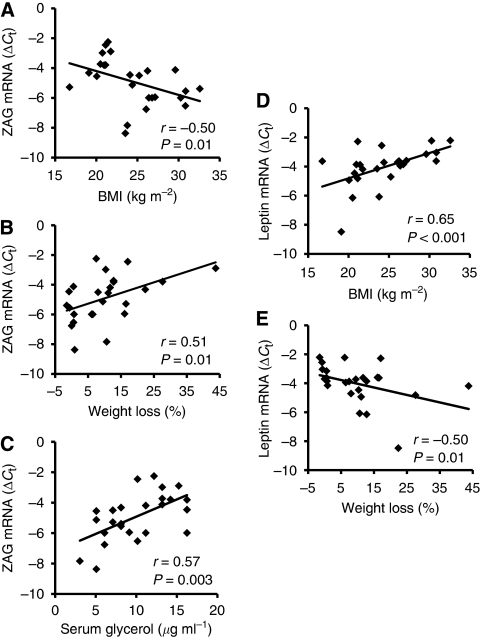
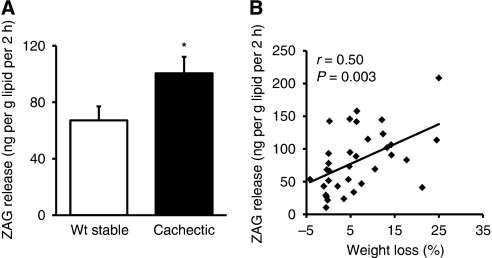
Subcutaneous adipose tissue remodelling in cancer cachexia was evident through shrunken adipocytes with increased fibrosis. In cachectic cancer patients, ZAG mRNA was upregulated (2.7-fold, P=0.028) while leptin mRNA decreased (2.2-fold, P=0.018); serum ZAG levels were found to be unaffected. Zinc-α2-glycoprotein mRNA correlated positively with weight loss (r=0.51, P=0.01) and serum glycerol levels (r=0.57, P=0.003). Zinc-α2-glycoprotein release by SAT was also elevated in cachectic patients (1.5-fold, P=0.024) and correlated with weight loss (r=0.50, P=0.003). Recombinant ZAG stimulated lipolysis in human adipocytes.
Zinc-α2-glycoprotein expression and secretion by adipose tissue is enhanced in cachectic cancer patients. Given its lipid-mobilising effect, ZAG may contribute to adipose atrophy associated with cancer cachexia in human beings.
大量脂肪组织丢失是癌症恶病质的标志。锌-α2-糖蛋白(ZAG),一种最近被发现的脂肪因子,被认为是脂质分解代谢的候选物。
在第一项研究中,招募了 8 名体重稳定和 17 名恶病质癌症患者(过去 6 个月体重减轻 5%)。评估了皮下脂肪组织(SAT)中的锌-α2-糖蛋白 mRNA 和蛋白表达,检查了 SAT 形态,并定量了血清 ZAG 浓度。在第二个队列中,在 18 名体重稳定和 15 名恶病质癌症患者中测定了 SAT 中 ZAG 的释放。评估了 ZAG 对脂肪分解的体外影响。
癌症恶病质中的 SAT 重塑表现为脂肪细胞缩小,纤维化增加。在恶病质癌症患者中,ZAG mRNA 上调(2.7 倍,P=0.028),而瘦素 mRNA 下调(2.2 倍,P=0.018);血清 ZAG 水平未受影响。ZAG mRNA 与体重减轻呈正相关(r=0.51,P=0.01)和血清甘油水平呈正相关(r=0.57,P=0.003)。SAT 释放的 ZAG 在恶病质患者中也升高(1.5 倍,P=0.024),与体重减轻相关(r=0.50,P=0.003)。重组 ZAG 刺激人脂肪细胞的脂肪分解。
脂肪组织中 ZAG 的表达和分泌在恶病质癌症患者中增强。鉴于其脂质动员作用,ZAG 可能导致人类癌症恶病质相关的脂肪萎缩。