• 文献检索
  • 文档翻译
  • 深度研究
  • 学术资讯
  • Suppr Zotero 插件Zotero 插件
  • 邀请有礼
  • 套餐&价格
  • 历史记录
应用&插件
Suppr Zotero 插件Zotero 插件浏览器插件Mac 客户端Windows 客户端微信小程序
定价
高级版会员购买积分包购买API积分包
服务
文献检索文档翻译深度研究API 文档MCP 服务
关于我们
关于 Suppr公司介绍联系我们用户协议隐私条款
关注我们

Suppr 超能文献

核心技术专利:CN118964589B侵权必究
粤ICP备2023148730 号-1Suppr @ 2026

文献检索

告别复杂PubMed语法,用中文像聊天一样搜索,搜遍4000万医学文献。AI智能推荐,让科研检索更轻松。

立即免费搜索

文件翻译

保留排版,准确专业,支持PDF/Word/PPT等文件格式,支持 12+语言互译。

免费翻译文档

深度研究

AI帮你快速写综述,25分钟生成高质量综述,智能提取关键信息,辅助科研写作。

立即免费体验

李斯特菌复杂感染策略的生物技术应用。

Biotechnological applications of Listeria's sophisticated infection strategies.

机构信息

Institute for Medical Microbiology, Justus-Liebig University, Frankfurter strasse 107, D-35392 Giessen, Germany.

出版信息

Microb Biotechnol. 2008 Sep;1(5):361-72. doi: 10.1111/j.1751-7915.2008.00037.x. Epub 2008 Jun 9.

DOI:10.1111/j.1751-7915.2008.00037.x
PMID:21261856
原文链接:https://pmc.ncbi.nlm.nih.gov/articles/PMC3815243/
Abstract

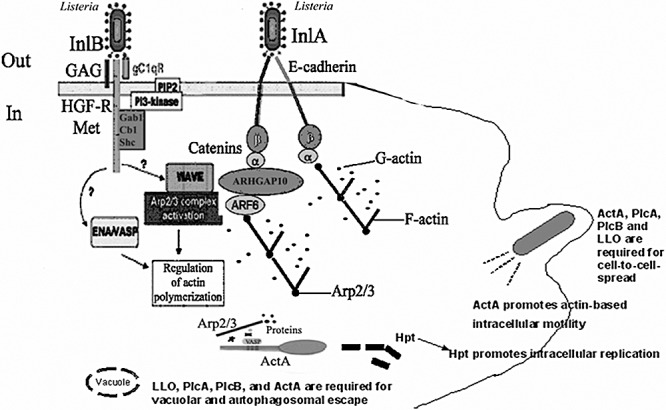
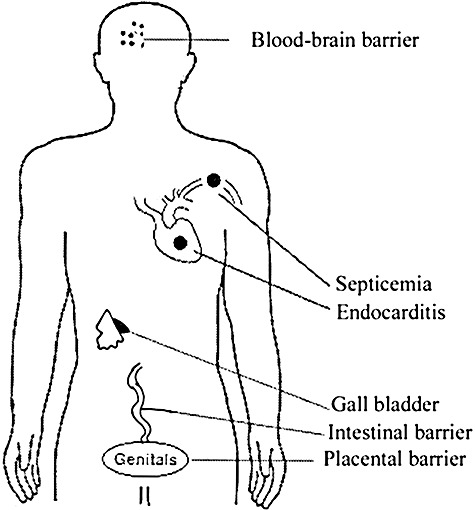
Listeria monocytogenes is a Gram-positive bacterium that is able to survive both in the environment and to invade and multiply within eukaryotic cells. Currently L. monocytogenes represents one of the most well-studied and characterized microorganisms in bacterial pathogenesis. A hallmark of L. monocytogenes virulence is its ability to breach bodily barriers such as the intestinal epithelium, the blood-brain barrier as well as the placental barrier to cause severe systemic disease. Curiously, this theme is repeated at the level of the interaction between the individual cell and the bacterium where its virulence factors contribute to the ability of the bacteria to breach cellular barriers. L. monocytogenes is a model to study metabolic requirements of bacteria growing in an intracellular environment, modulation of signalling pathways in the infected cell and interactions with cellular defences involving innate and adaptive immunity. Technical advances such as the creation of LISTERIA-susceptible mouse strains, had added interest in the study of the natural pathogenesis of the disease via oral infection. The use of attenuated strains of L. monocytogenes as vaccines has gained considerable interest because they can be used to express heterologous antigens as well as to somatically deliver recombinant DNA to eukaryotic cells. A novel vaccine concept, the use of non-viable but metabolically active bacteria to induced immunoprotective responses, has been developed with L. monocytogenes. In this mini-review, we review the strategies used by L. monocytogenes to subvert the cellular functions at different stages of the infection cycle in the host and examine how these properties are being exploited in biotechnological and clinical applications.

摘要

李斯特菌是一种革兰氏阳性细菌,能够在环境中生存,并侵入和在真核细胞内繁殖。目前,李斯特菌是细菌发病机制中研究和描述最充分的微生物之一。李斯特菌的毒力标志之一是其能够突破身体屏障,如肠道上皮、血脑屏障和胎盘屏障,导致严重的全身疾病。奇怪的是,这一主题在个体细胞与细菌之间的相互作用中得到了重复,其毒力因子有助于细菌突破细胞屏障的能力。李斯特菌是研究在细胞内环境中生长的细菌代谢需求、感染细胞中信号通路的调节以及涉及固有和适应性免疫的细胞防御相互作用的模型。技术进步,如创建易受李斯特菌感染的小鼠品系,增加了通过口服感染研究疾病自然发病机制的兴趣。使用李斯特菌减毒株作为疫苗引起了相当大的兴趣,因为它们可以用来表达异源抗原,以及将重组 DNA体细胞传递给真核细胞。利用非存活但代谢活跃的细菌来诱导免疫保护反应的新型疫苗概念已经在李斯特菌中得到了发展。在这篇迷你综述中,我们回顾了李斯特菌在宿主感染周期的不同阶段颠覆细胞功能的策略,并探讨了这些特性如何在生物技术和临床应用中得到利用。
https://cdn.ncbi.nlm.nih.gov/pmc/blobs/5482/3815243/917db7871783/mbt0001-0361-f2.jpg
https://cdn.ncbi.nlm.nih.gov/pmc/blobs/5482/3815243/6916b0d82c95/mbt0001-0361-f1.jpg
https://cdn.ncbi.nlm.nih.gov/pmc/blobs/5482/3815243/917db7871783/mbt0001-0361-f2.jpg
https://cdn.ncbi.nlm.nih.gov/pmc/blobs/5482/3815243/6916b0d82c95/mbt0001-0361-f1.jpg
https://cdn.ncbi.nlm.nih.gov/pmc/blobs/5482/3815243/917db7871783/mbt0001-0361-f2.jpg

相似文献

1
Biotechnological applications of Listeria's sophisticated infection strategies.李斯特菌复杂感染策略的生物技术应用。
Microb Biotechnol. 2008 Sep;1(5):361-72. doi: 10.1111/j.1751-7915.2008.00037.x. Epub 2008 Jun 9.
2
Listeria pathogenesis and molecular virulence determinants.李斯特菌的致病机制及分子毒力决定因素。
Clin Microbiol Rev. 2001 Jul;14(3):584-640. doi: 10.1128/CMR.14.3.584-640.2001.
3
Tailoring host immune responses to Listeria by manipulation of virulence genes -- the interface between innate and acquired immunity.通过操纵毒力基因来调整宿主对李斯特菌的免疫反应——先天免疫与获得性免疫之间的界面
FEMS Immunol Med Microbiol. 2003 Apr 1;35(3):243-53. doi: 10.1016/S0928-8244(02)00469-8.
4
Listeriology (1926-2007): the rise of a model pathogen.李斯特菌学(1926 - 2007):一种模式病原体的兴起
Microbes Infect. 2007 Aug;9(10):1143-6. doi: 10.1016/j.micinf.2007.05.001. Epub 2007 May 6.
5
Classes and functions of Listeria monocytogenes surface proteins.单核细胞增生李斯特菌表面蛋白的类别与功能
Pol J Microbiol. 2004;53(2):75-88.
6
Pathogenicity, genotyping and antibacterial susceptibility of the Listeria spp. recovered from stray dogs.从流浪狗中分离出的李斯特菌的致病性、基因分型和抗菌敏感性。
Microb Pathog. 2019 Jan;126:123-133. doi: 10.1016/j.micpath.2018.10.037. Epub 2018 Oct 28.
7
Host Lipid Rafts as the Gates for Infection: A Mini-Review.宿主脂筏作为感染的门户:综述。
Front Immunol. 2020 Aug 11;11:1666. doi: 10.3389/fimmu.2020.01666. eCollection 2020.
8
Identification of Listeria monocytogenes Genes Contributing to Oxidative Stress Resistance under Conditions Relevant to Host Infection.鉴定李斯特菌属 monocytogenes 基因在宿主感染相关的氧化应激条件下的抗氧化应激能力。
Infect Immun. 2021 Mar 17;89(4). doi: 10.1128/IAI.00700-20.
9
Contributions of a LysR Transcriptional Regulator to Listeria monocytogenes Virulence and Identification of Its Regulons.LysR 转录调节因子对单核细胞增生李斯特菌毒力的贡献及其调控基因的鉴定。
J Bacteriol. 2020 Apr 27;202(10). doi: 10.1128/JB.00087-20.
10
Listeriolysin S Is a Streptolysin S-Like Virulence Factor That Targets Exclusively Prokaryotic Cells .李斯特菌溶素S是一种仅靶向原核细胞的类链球菌溶素S毒力因子。
mBio. 2017 Apr 4;8(2):e00259-17. doi: 10.1128/mBio.00259-17.

引用本文的文献

1
Hacking the Immune Response to Solid Tumors: Harnessing the Anti-Cancer Capacities of Oncolytic Bacteria.破解实体瘤的免疫反应:利用溶瘤细菌的抗癌能力
Pharmaceutics. 2023 Jul 21;15(7):2004. doi: 10.3390/pharmaceutics15072004.
2
Unraveling the role of membrane microdomains during microbial infections.解析膜微区在微生物感染过程中的作用。
Cell Biol Toxicol. 2017 Oct;33(5):429-455. doi: 10.1007/s10565-017-9386-9. Epub 2017 Mar 9.
3
Environmental Microbiology meets Microbial Biotechnology.

本文引用的文献

1
Novel bacterial artificial chromosome vector pUvBBAC for use in studies of the functional genomics of Listeria spp.用于李斯特菌属功能基因组学研究的新型细菌人工染色体载体pUvBBAC
Appl Environ Microbiol. 2008 Mar;74(6):1892-901. doi: 10.1128/AEM.00415-07. Epub 2008 Jan 25.
2
Listeriolysin O allows Listeria monocytogenes replication in macrophage vacuoles.溶血素O可使单核细胞增生李斯特菌在巨噬细胞液泡中复制。
Nature. 2008 Jan 17;451(7176):350-4. doi: 10.1038/nature06479.
3
Induction of suicidal erythrocyte death by listeriolysin from Listeria monocytogenes.
Microb Biotechnol. 2008 Nov;1(6):443-5. doi: 10.1111/j.1751-7915.2008.00068.x.
单核细胞增生李斯特菌的李斯特菌溶素诱导红细胞自杀性死亡。
Cell Physiol Biochem. 2007;20(6):1051-60. doi: 10.1159/000110715. Epub 2007 Oct 30.
4
Cdc42 and phosphoinositide 3-kinase drive Rac-mediated actin polymerization downstream of c-Met in distinct and common pathways.Cdc42和磷酸肌醇3激酶在不同且共同的途径中驱动c-Met下游的Rac介导的肌动蛋白聚合。
Mol Cell Biol. 2007 Oct;27(19):6615-28. doi: 10.1128/MCB.00367-07. Epub 2007 Aug 6.
5
Extending the host range of Listeria monocytogenes by rational protein design.通过合理的蛋白质设计扩展单核细胞增生李斯特菌的宿主范围。
Cell. 2007 Jun 1;129(5):891-902. doi: 10.1016/j.cell.2007.03.049.
6
Patho-biotechnology; using bad bugs to make good bugs better.病理生物技术;利用有害微生物让有益微生物变得更好。
Sci Prog. 2007;90(Pt 1):1-14. doi: 10.3184/003685007780440530.
7
Differential function of Listeria monocytogenes listeriolysin O and phospholipases C in vacuolar dissolution following cell-to-cell spread.单核细胞增生李斯特菌溶血素O和磷脂酶C在细胞间传播后液泡溶解中的差异功能。
Cell Microbiol. 2007 Jan;9(1):179-95. doi: 10.1111/j.1462-5822.2006.00780.x.
8
Autophagy limits Listeria monocytogenes intracellular growth in the early phase of primary infection.自噬在原发性感染的早期阶段限制了单核细胞增生李斯特菌的细胞内生长。
Autophagy. 2007 Mar-Apr;3(2):117-25. doi: 10.4161/auto.3618. Epub 2007 Mar 27.
9
Compartmentalization of the broad-range phospholipase C activity to the spreading vacuole is critical for Listeria monocytogenes virulence.将广泛特异性磷脂酶C活性分隔到扩散液泡中对单核细胞增生李斯特菌的毒力至关重要。
Infect Immun. 2007 Jan;75(1):44-51. doi: 10.1128/IAI.01001-06. Epub 2006 Oct 23.
10
Listeria monocytogenes as a vector for tumor-associated antigens for cancer immunotherapy.单核细胞增生李斯特菌作为癌症免疫疗法中肿瘤相关抗原的载体。
Expert Rev Vaccines. 2006 Aug;5(4):541-52. doi: 10.1586/14760584.5.4.541.