Department of Anatomy and Cell Biology, Oklahoma State University Center for Health Sciences, Tulsa, OK 74107, United States.
Pharmacol Ther. 2011 Jun;130(3):283-309. doi: 10.1016/j.pharmthera.2011.01.005. Epub 2011 Jan 26.
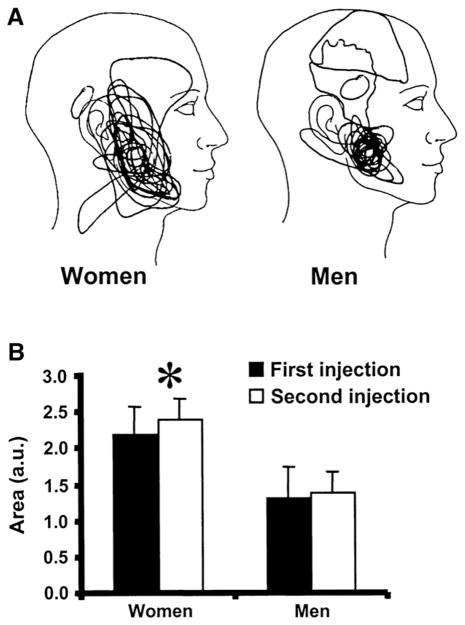
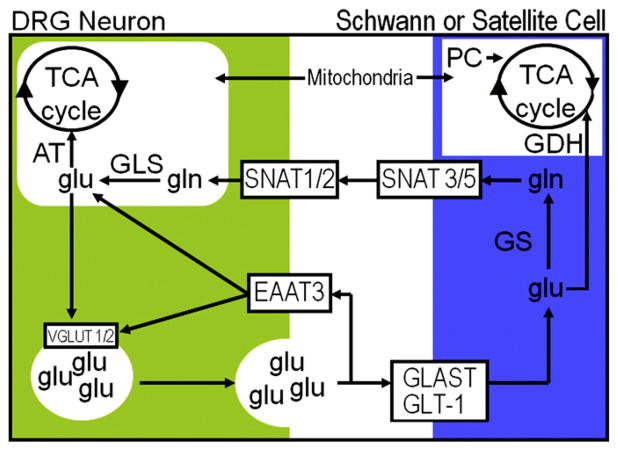
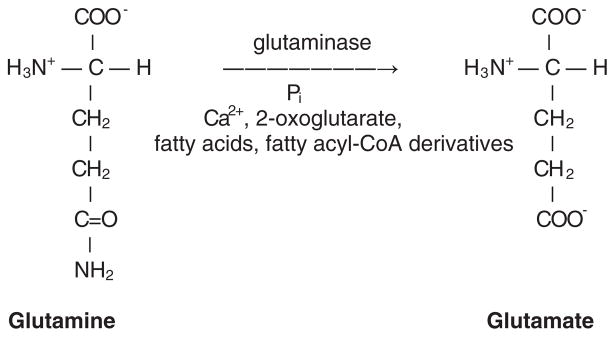
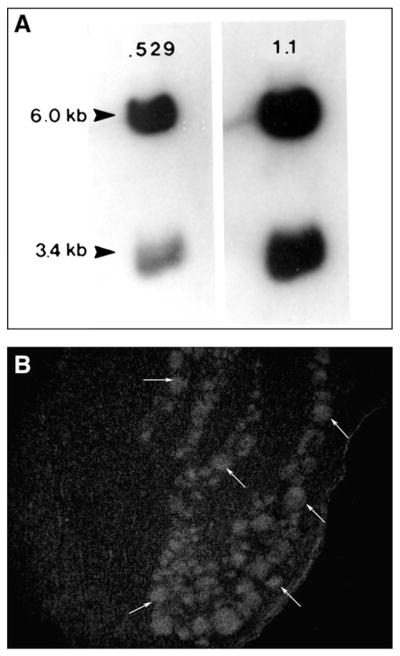
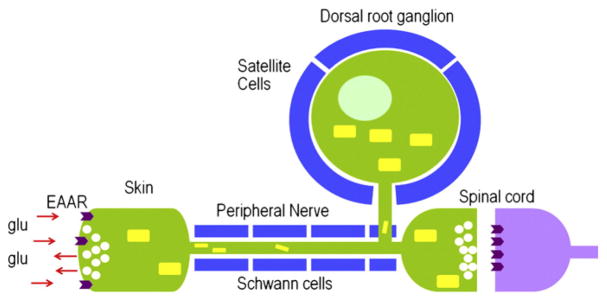
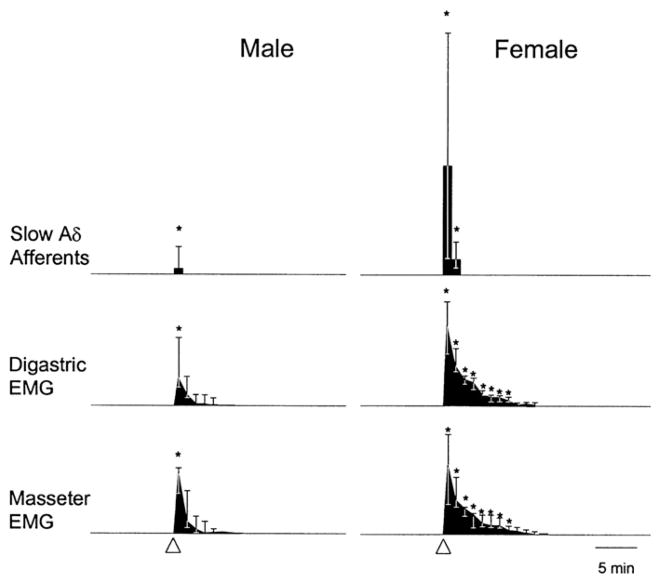
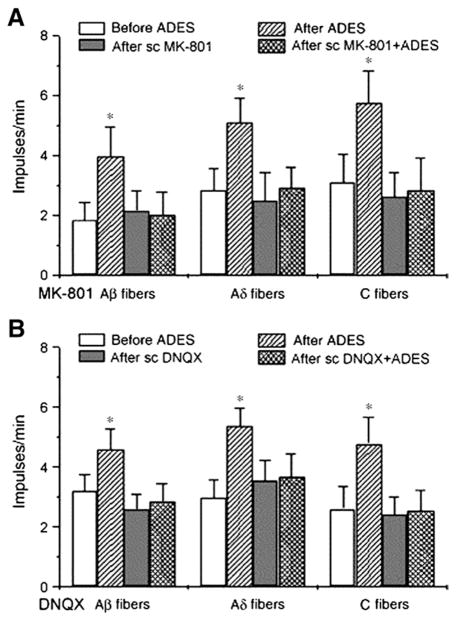
In addition to using glutamate as a neurotransmitter at central synapses, many primary sensory neurons release glutamate from peripheral terminals. Primary sensory neurons with cell bodies in dorsal root or trigeminal ganglia produce glutaminase, the synthetic enzyme for glutamate, and transport the enzyme in mitochondria to peripheral terminals. Vesicular glutamate transporters fill neurotransmitter vesicles with glutamate and they are shipped to peripheral terminals. Intense noxious stimuli or tissue damage causes glutamate to be released from peripheral afferent nerve terminals and augmented release occurs during acute and chronic inflammation. The site of action for glutamate can be at the autologous or nearby nerve terminals. Peripheral nerve terminals contain both ionotropic and metabotropic excitatory amino acid receptors (EAARs) and activation of these receptors can lower the activation threshold and increase the excitability of primary afferents. Antagonism of EAARs can reduce excitability of activated afferents and produce antinociception in many animal models of acute and chronic pain. Glutamate injected into human skin and muscle causes acute pain. Trauma in humans, such as arthritis, myalgia, and tendonitis, elevates glutamate levels in affected tissues. There is evidence that EAAR antagonism at peripheral sites can provide relief in some chronic pain sufferers.
除了在中枢突触作为神经递质使用谷氨酸外,许多初级感觉神经元也从外周末端释放谷氨酸。位于背根或三叉神经节的初级感觉神经元产生谷氨酰胺酶,这是谷氨酸的合成酶,并将该酶运输到线粒体到外周末端。囊泡谷氨酸转运体将谷氨酸填充到神经递质囊泡中,并将其运送到外周末端。强烈的有害刺激或组织损伤会导致谷氨酸从周围传入神经末梢释放,并在急性和慢性炎症期间增强释放。谷氨酸的作用部位可以是自体或附近的神经末梢。外周神经末梢含有离子型和代谢型兴奋性氨基酸受体(EAARs),这些受体的激活可以降低激活阈值并增加初级传入的兴奋性。EAAR 拮抗剂可降低激活传入的兴奋性,并在许多急性和慢性疼痛的动物模型中产生镇痛作用。谷氨酸注入人体皮肤和肌肉会引起急性疼痛。人类的创伤,如关节炎、肌痛和腱炎,会导致受影响组织中的谷氨酸水平升高。有证据表明,外周部位的 EAAR 拮抗作用可以为一些慢性疼痛患者提供缓解。