Mao Jun J, Xie Sharon X, Bowman Marjorie A
Department of Family Medicine and Community Health, University of Pennsylvania School of Medicine, Center for Clinical Epidemiology and Biostatistics, Philadelphia, USA.
Altern Ther Health Med. 2010 Nov-Dec;16(6):22-7.
Research suggests that expectancy may modulate the response to medical interventions, including acupuncture. However, the paucity of validated tools to measure expectancy limits rigorous evaluation. We sought to validate a previously developed Acupuncture Expectancy Scale (AES) as an instrument to measure patients' expected responses to acupuncture.
Participants were patients with stage I to III cancers seen in outpatient medical and radiation oncology clinics. They were drawn from three study cohorts that included 404 participants. We examined the reliability, validity, and responsiveness of the AES.
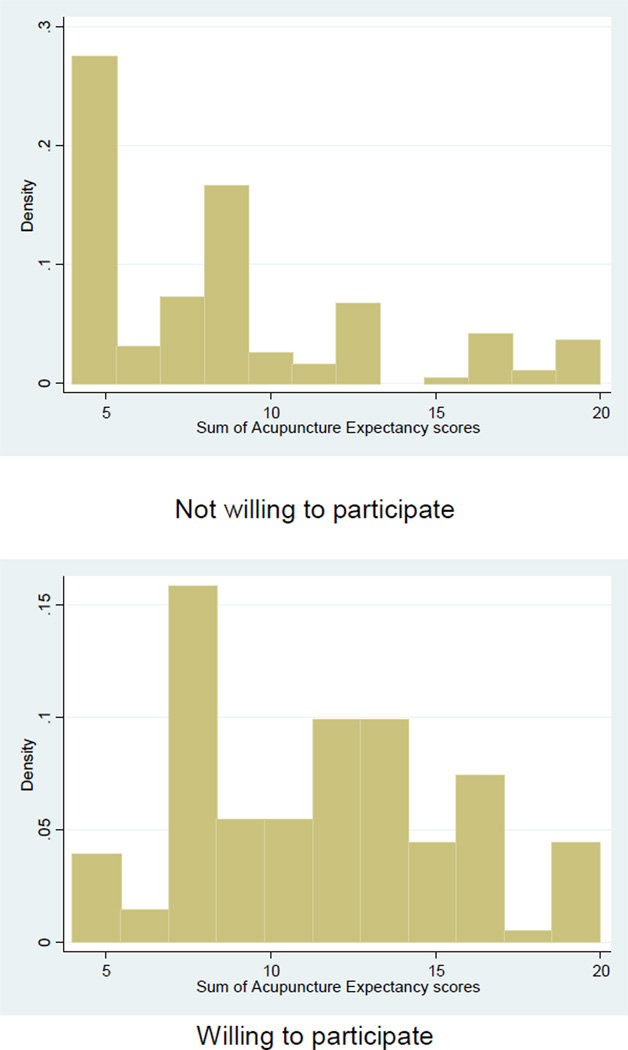
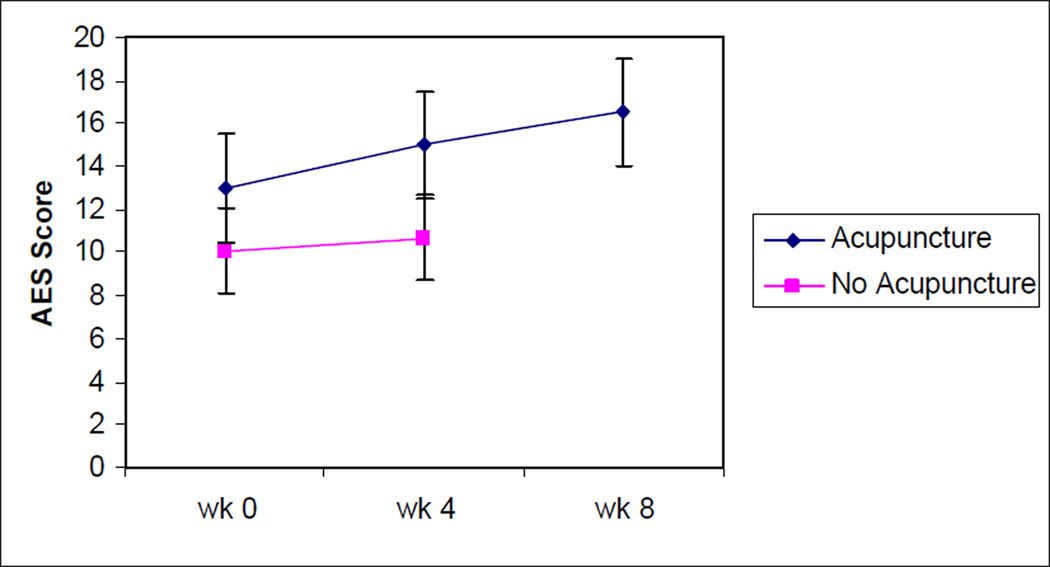
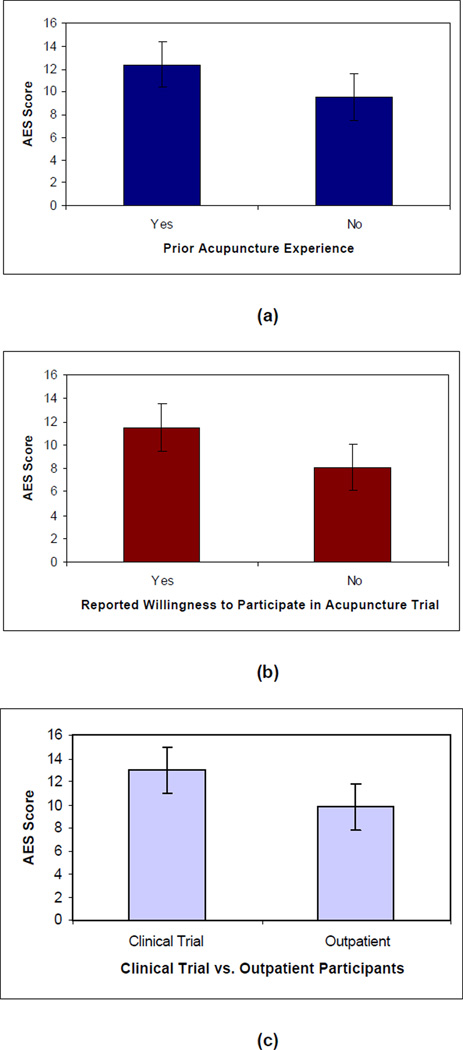
The scores on the AES had internal consistency (Cronbach's alpha coefficient) of 0.95 and test-retest reliability of 0.62 over 4 weeks without acupuncture treatment. Those who had previously used acupuncture had higher AES scores compared to those who were acupuncture naive (12.4 vs 9.5, P = .002). AES scores were higher in those who reported willingness to participate in an acupuncture trial compared to those who did not want to participate in an acupuncture trial (11.5 vs 8.1, P < .001). Patients who enrolled in a pilot trial of acupuncture had higher AES scores than the general outpatient population (13.0 vs 9.8, P = .02), and expectancy increased during the course of acupuncture treatment (13.0 to 16.5, P < .017).
The AES is reliable and valid, and scores appear to increase during or after prior therapy. Incorporation of AES in clinical trials and outcome studies can evaluate the role of expectancy on acupuncture outcomes.
研究表明,期望值可能会调节对包括针灸在内的医学干预措施的反应。然而,用于测量期望值的经过验证的工具匮乏,限制了严格的评估。我们试图验证先前开发的针灸期望值量表(AES)作为一种测量患者对针灸预期反应的工具。
参与者为在门诊医疗和放射肿瘤诊所就诊的I至III期癌症患者。他们来自三个研究队列,共404名参与者。我们检验了AES的信度、效度和反应度。
在未经针灸治疗的4周内,AES得分的内部一致性(克朗巴哈α系数)为0.95,重测信度为0.62。与从未接受过针灸治疗的患者相比,先前接受过针灸治疗的患者AES得分更高(12.4对9.5,P = 0.002)。与那些不想参加针灸试验的患者相比,那些表示愿意参加针灸试验的患者AES得分更高(11.5对8.1,P < 0.001)。参加针灸试点试验的患者AES得分高于普通门诊患者(13.0对9.8,P = 0.02),并且在针灸治疗过程中期望值有所增加(13.0至16.5,P < 0.017)。
AES是可靠且有效的,并且在先前治疗期间或之后得分似乎会增加。将AES纳入临床试验和结果研究可以评估期望值对针灸疗效的作用。