Division of Radiation and Cancer Biology, Department of Radiation Oncology, University of Michigan, Ann Arbor, Michigan, USA.
Mol Cancer Ther. 2011 Apr;10(4):658-69. doi: 10.1158/1535-7163.MCT-10-0643. Epub 2011 Jan 31.
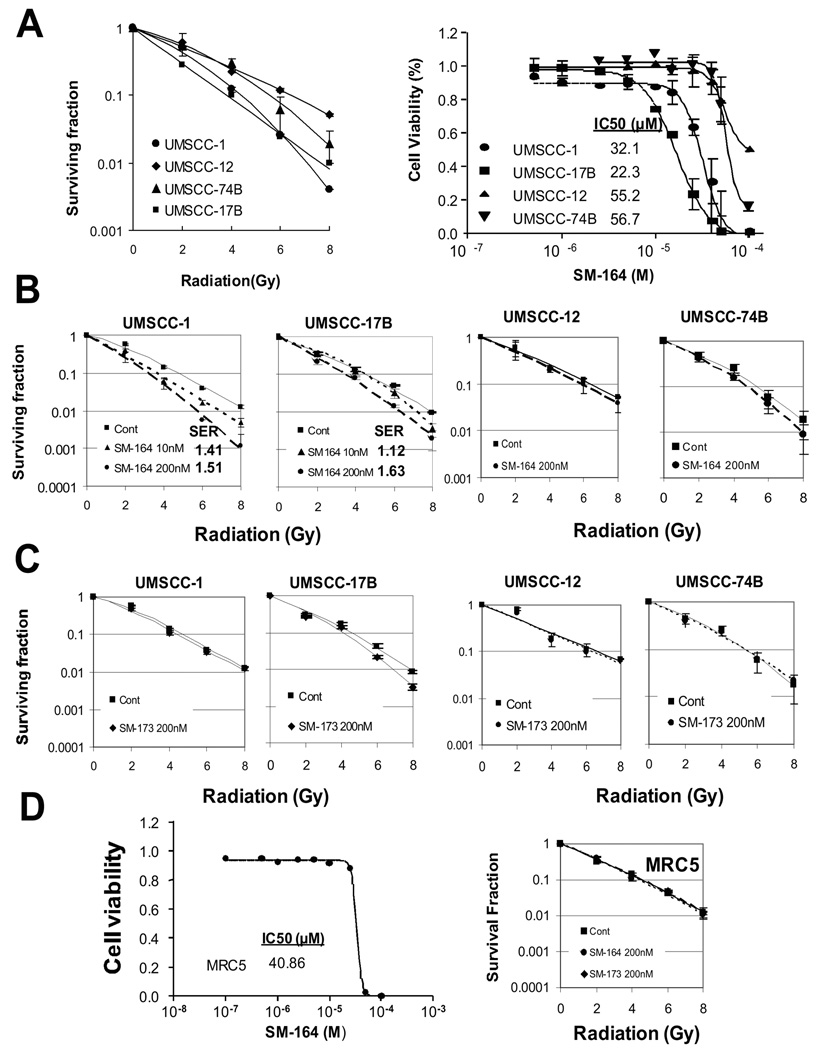
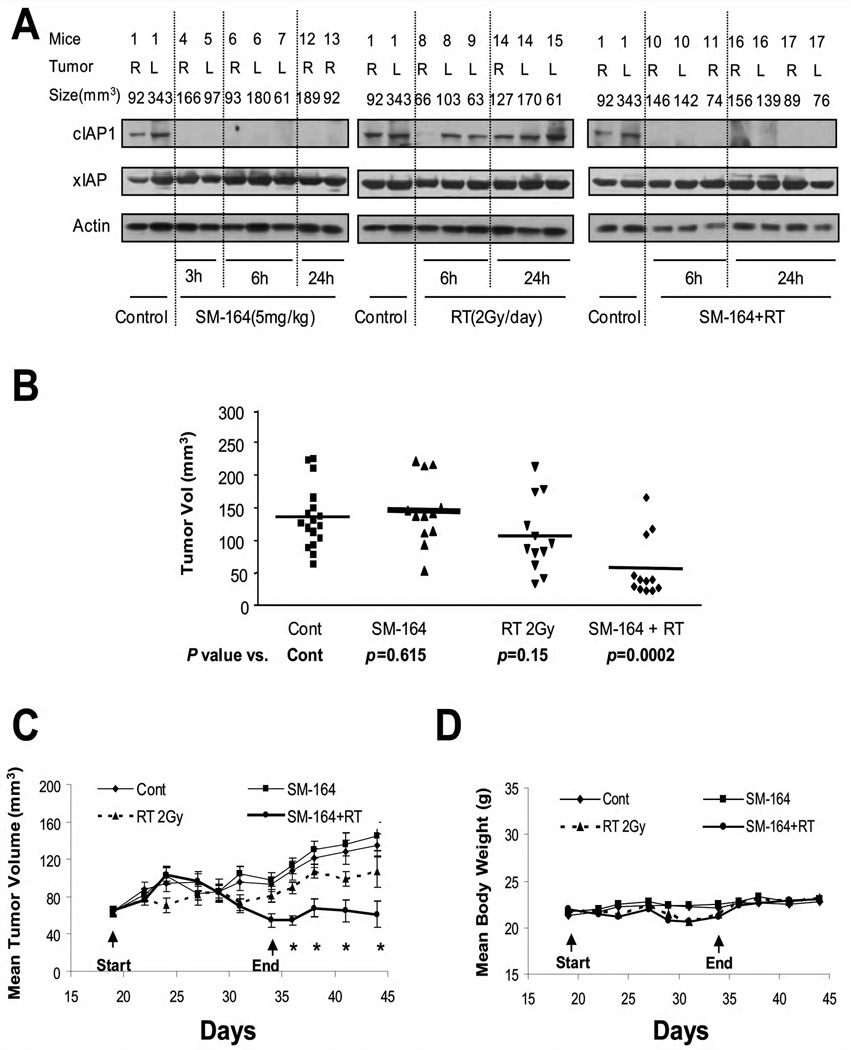
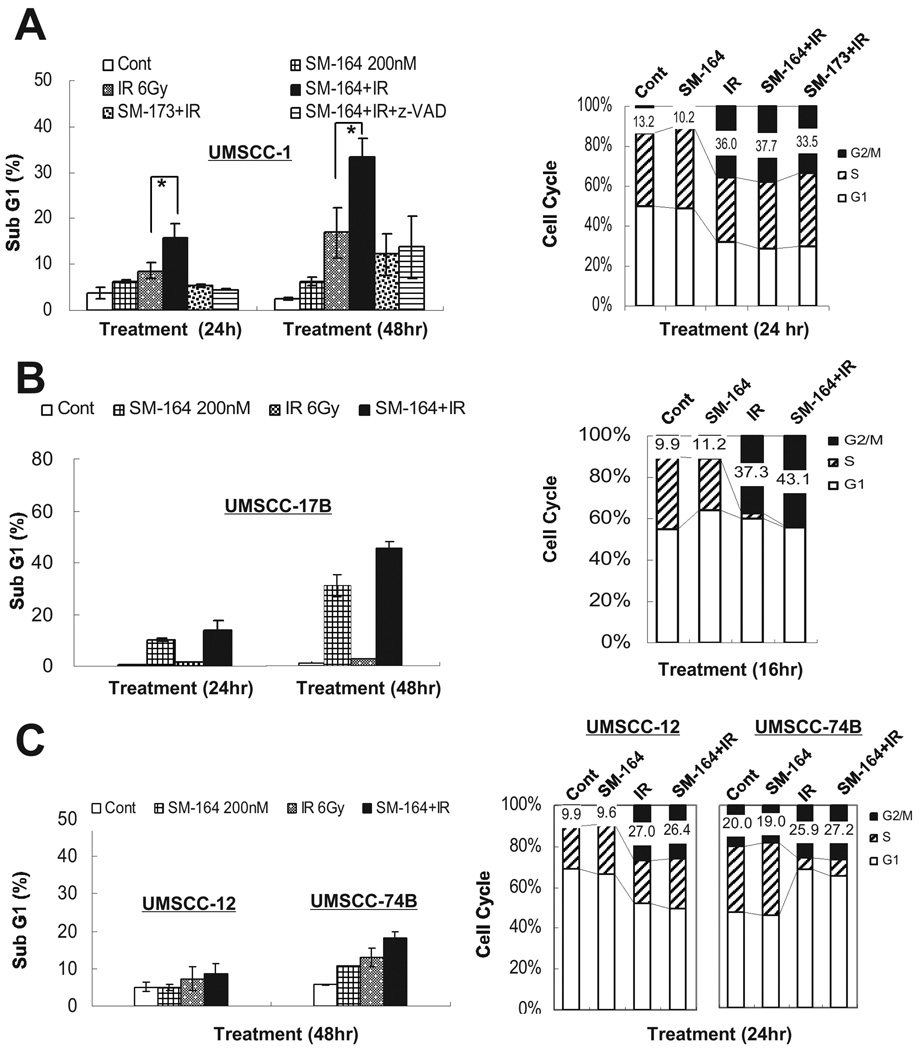
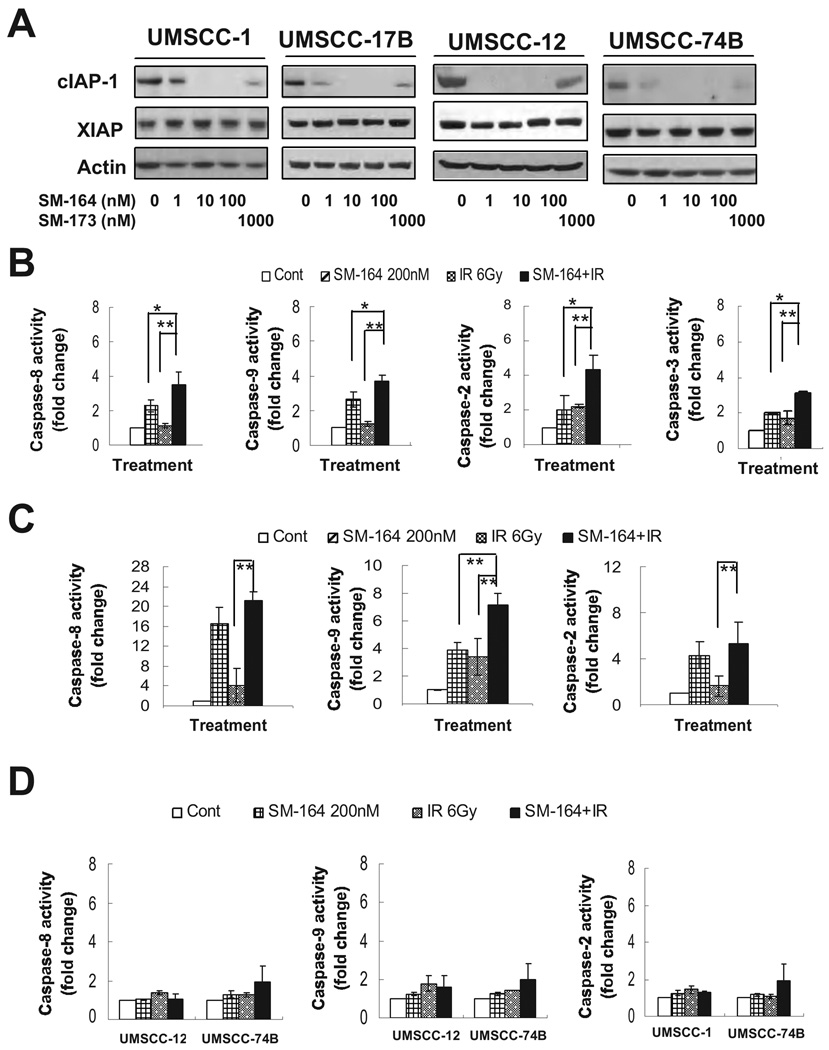
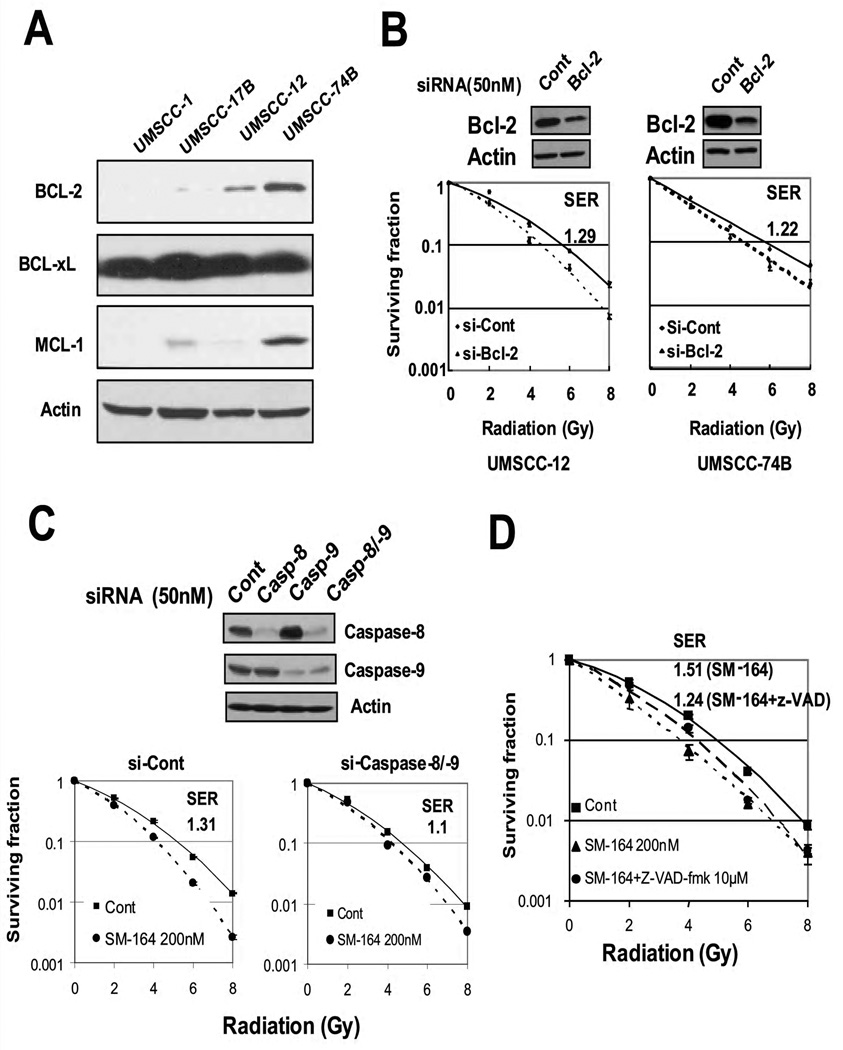
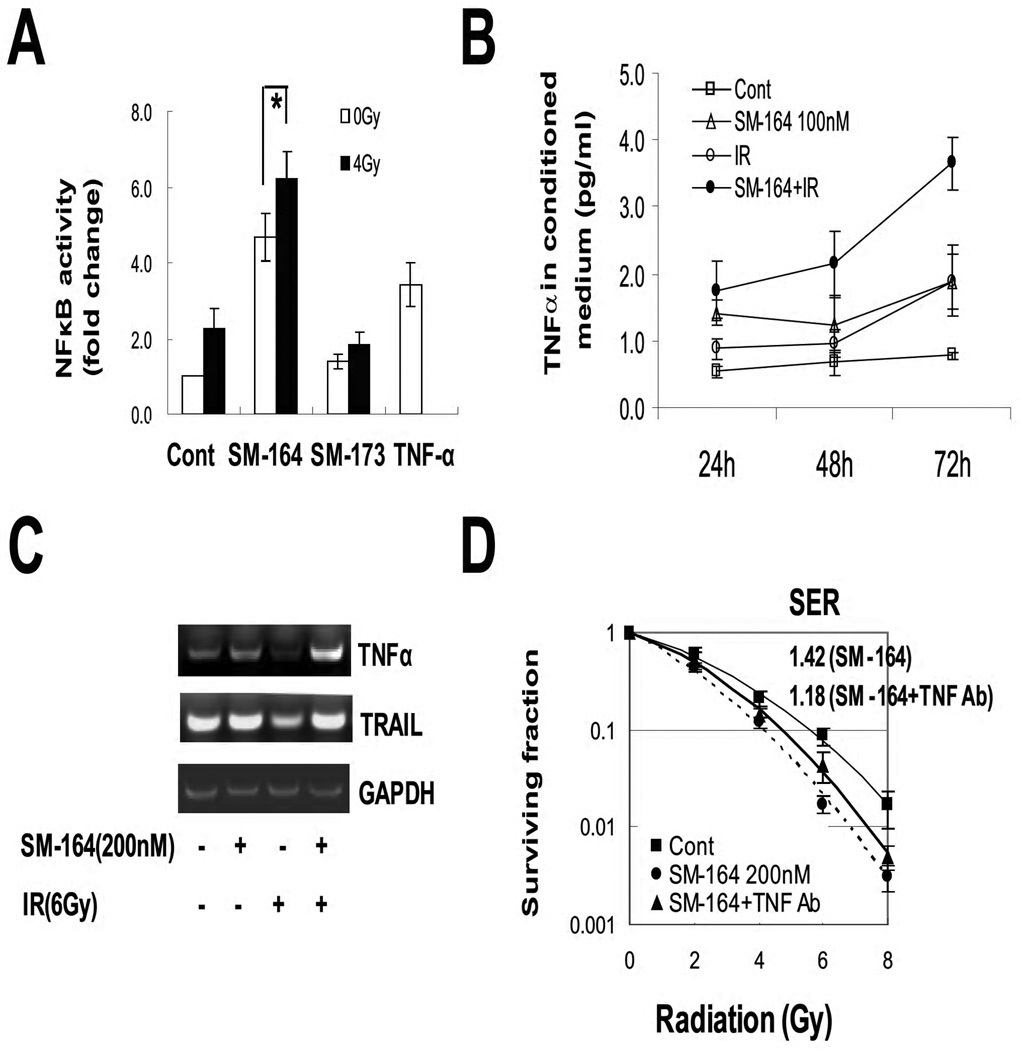
Chemoradiation is the treatment of choice for locally advanced head and neck squamous cell carcinoma (HNSCC). However, radioresistance, which contributes to local recurrence, remains a significant therapeutic problem. In this study, we characterized SM-164, a small second mitochondria-derived activator of caspase -mimetic compound that promotes degradation of cellular inhibitor of apoptosis-1(cIAP-1; also known as baculoviral IAP repeat-containing protein 2, BIRC2) and releases active caspases from the X-linked inhibitor of apoptosis inhibitory binding as a radiosensitizing agent in HNSCC cells. We found that SM-164 at nanomolar concentrations induced radiosensitization in some HNSCC cell lines in a manner dependent on intrinsic sensitivity to caspase activation and apoptosis induction. Blockage of caspase activation via short interfering RNA knockdown or a pan-caspase inhibitor, z-VAD-fmk, largely abrogated SM-164 radiosensitization. On the other hand, the resistant lines with a high level of Bcl-2 that blocks caspase activation and apoptosis induction became sensitive to radiation on Bcl-2 knockdown. Mechanistic studies revealed that SM-164 radiosensitization in sensitive cells was associated with NF-κB activation and TNFα secretion, followed by activation of caspase-8 and -9, leading to enhanced apoptosis. Finally, SM-164 also radiosensitized human tumor xenograft while causing minimal toxicity. Thus, SM-164 is a potent radiosensitizer via a mechanism involving caspase activation and holds promise for future clinical development as a novel class of radiosensitizer for the treatment of a subset of head and neck cancer patients.
化疗联合放疗是治疗局部晚期头颈部鳞状细胞癌(HNSCC)的首选方法。然而,导致局部复发的放射抵抗仍然是一个重大的治疗难题。在这项研究中,我们对 SM-164 进行了研究,它是一种小分子的第二线粒体衍生的半胱天冬酶激活剂模拟物,可促进细胞凋亡抑制剂-1(cIAP-1;也称为杆状病毒 IAP 重复包含蛋白 2,BIRC2)的降解,并从 X 连锁凋亡抑制物抑制剂结合物中释放出活性半胱天冬酶,将其作为 HNSCC 细胞的放射增敏剂。我们发现,SM-164 在纳摩尔浓度下以依赖于内在对半胱天冬酶激活和凋亡诱导的敏感性的方式诱导一些 HNSCC 细胞系的放射增敏作用。通过短干扰 RNA 敲低或泛半胱天冬酶抑制剂 z-VAD-fmk 阻断半胱天冬酶激活,在很大程度上消除了 SM-164 的放射增敏作用。另一方面,具有高水平 Bcl-2 的耐药系可以阻断半胱天冬酶激活和凋亡诱导,使其对 Bcl-2 敲低后的辐射敏感。机制研究表明,敏感细胞中 SM-164 的放射增敏作用与 NF-κB 激活和 TNFα 分泌有关,随后激活 caspase-8 和 -9,导致增强的凋亡。最后,SM-164 还放射增敏了人肿瘤异种移植物,同时引起最小的毒性。因此,SM-164 通过涉及半胱天冬酶激活的机制是一种有效的放射增敏剂,有望作为一种新型的放射增敏剂用于治疗一部分头颈部癌症患者。