Department of Biologic and Materials Sciences, University of Michigan School of Dentistry, 1210 Eisenhower Place, Ann Arbor, MI 48108, USA.
BMC Biochem. 2011 Feb 3;12:6. doi: 10.1186/1471-2091-12-6.
Dentin sialophosphoprotein (Dspp) is a multidomain, secreted protein that is critical for the formation of tooth dentin. Mutations in DSPP cause inherited dentin defects categorized as dentin dysplasia type II and dentinogenesis imperfecta type II and type III. Dentin sialoprotein (Dsp), the N-terminal domain of dentin sialophosphoprotein (Dspp), is a highly glycosylated proteoglycan, but little is known about the number, character, and attachment sites of its carbohydrate moieties.
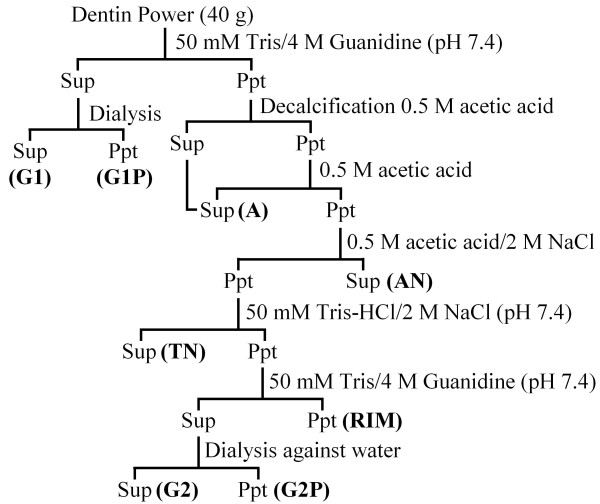
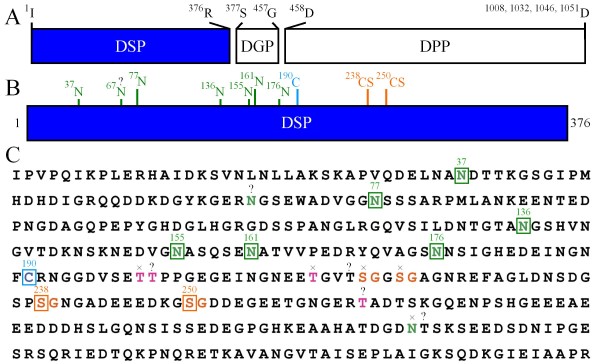
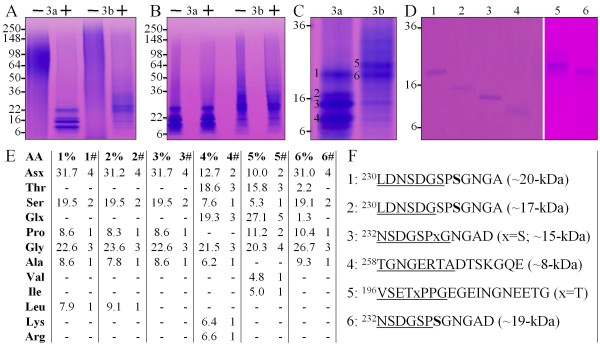
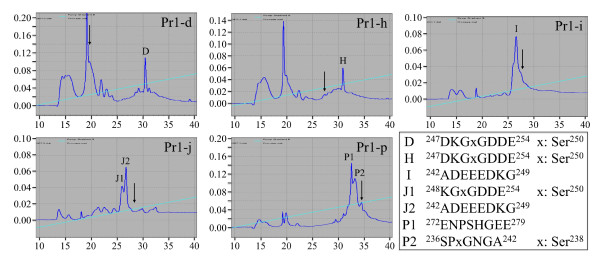
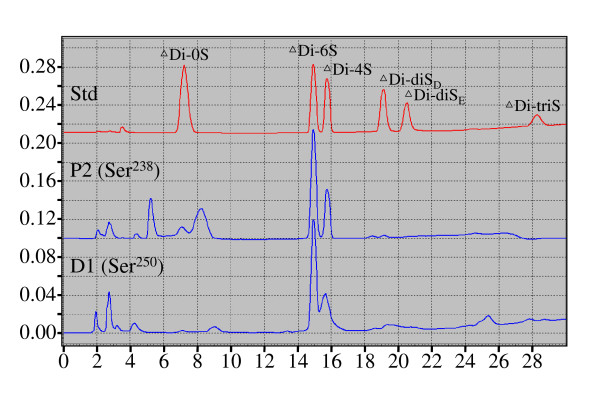
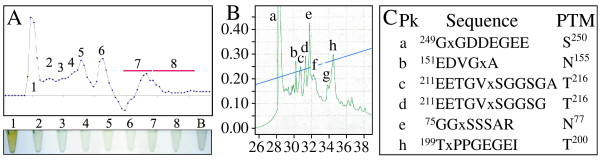
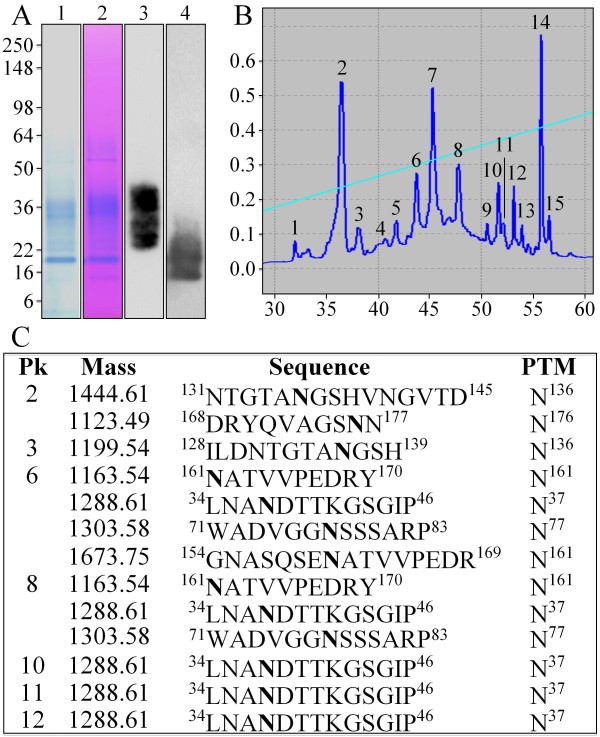
To identify its carbohydrate attachment sites we isolated Dsp from developing porcine molars and digested it with endoproteinase Glu-C or pronase, fractionated the digestion products, identified fractions containing glycosylated peptides using a phenol sulfuric acid assay, and characterized the glycopeptides by N-terminal sequencing, amino acid analyses, or LC/MSMS. To determine the average number of sialic acid attachments per N-glycosylation, we digested Dsp with glycopeptidase A, labeled the released N-glycosylations with 2-aminobenzoic acid, and quantified the moles of released glycosylations by comparison to labeled standards of known concentration. Sialic acid was released by sialidase digestion and quantified by measuring β-NADH reduction of pyruvic acid, which was generated stoichiometrically from sialic acid by aldolase. To determine its forms, sialic acid released by sialidase digestion was labeled with 1,2-diamino-4,5-methyleneoxybenzene (DMB) and compared to a DMB-labeled sialic acid reference panel by RP-HPLC. To determine the composition of Dsp glycosaminoglycan (GAG) attachments, we digested Dsp with chondroitinase ABC and compared the chromotagraphic profiles of the released disaccharides to commercial standards. N-glycosylations were identified at Asn37, Asn77, Asn136, Asn155, Asn161, and Asn176. Dsp averages one sialic acid per N-glycosylation, which is always in the form of N-acetylneuraminic acid. O-glycosylations were tentatively assigned at Thr200, Thr216 and Thr316. Porcine Dsp GAG attachments were found at Ser238 and Ser250 and were comprised of chondroitin 6-sulfate and chondroitin 4-sulfate in a ratio of 7 to 3, respectively.
The distribution of porcine Dsp posttranslational modifications indicate that porcine Dsp has an N-terminal domain with at least six N-glycosylations and a C-terminal domain with two GAG attachments and at least two O-glycosylations.
牙本质涎磷蛋白(DSPP)是一种多功能的分泌蛋白,对牙本质的形成至关重要。DSPP 基因突变导致牙本质发育不全 II 型和牙本质生成不全 II 型和 III 型遗传性牙本质缺陷。牙本质涎蛋白(DSP)是牙本质涎磷蛋白(DSPP)的 N 端结构域,是一种高度糖基化的蛋白聚糖,但对其糖基部分的数量、性质和附着位点知之甚少。
为了鉴定其糖基化附着位点,我们从发育中的猪磨牙中分离出 DSP,并用内切蛋白酶 Glu-C 或蛋白酶进行消化,对消化产物进行分级,用苯酚-硫酸法鉴定含有糖基化肽的级分,并通过 N 末端测序、氨基酸分析或 LC/MSMS 对糖肽进行特征分析。为了确定每个 N-糖基化的唾液酸平均附着数,我们用糖苷酶 A 消化 DSP,用 2-氨基苯甲酸标记释放的 N-糖基化,通过与已知浓度的标记标准品比较来定量释放的糖基化摩尔数。唾液酸通过唾液酸酶消化释放,并通过测量由醛缩酶从唾液酸生成的丙酮酸的β-NADH 还原来定量。为了确定其形式,用 1,2-二氨基-4,5-亚甲氧基苯(DMB)标记唾液酸酶消化释放的唾液酸,并通过反相高效液相色谱法与 DMB 标记的唾液酸参考面板进行比较。为了确定 DSP 糖胺聚糖(GAG)附着的组成,我们用软骨素酶 ABC 消化 DSP,并将释放的二糖的色谱图与商业标准进行比较。在 Asn37、Asn77、Asn136、Asn155、Asn161 和 Asn176 处鉴定出 N-糖基化。DSP 平均每个 N-糖基化一个唾液酸,其形式始终为 N-乙酰神经氨酸。O-糖基化在 Thr200、Thr216 和 Thr316 处被暂定分配。猪 DSP 的 GAG 附着在 Ser238 和 Ser250 处,分别由 7 比 3 的软骨素 6-硫酸盐和软骨素 4-硫酸盐组成。
猪 DSP 的翻译后修饰分布表明,猪 DSP 具有至少六个 N-糖基化的 N 端结构域和两个 GAG 附着的 C 端结构域,以及至少两个 O-糖基化。