Institut Pasteur, Microbial Evolutionary Genomics, Département Génomes et Génétique, Paris, France.
PLoS Genet. 2011 Jan 27;7(1):e1001284. doi: 10.1371/journal.pgen.1001284.
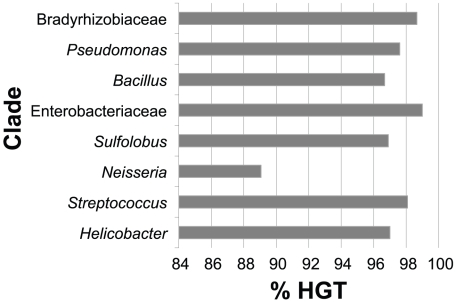
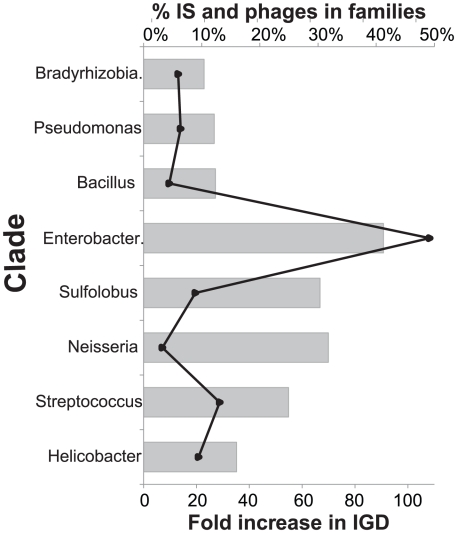
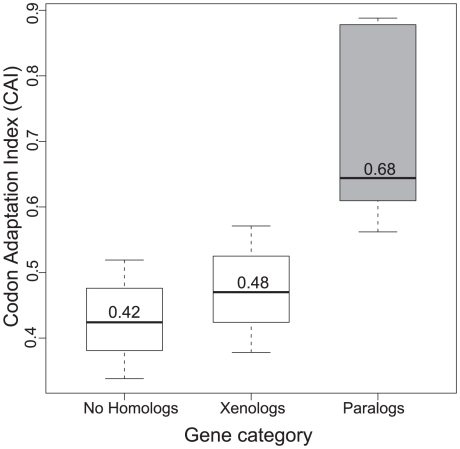
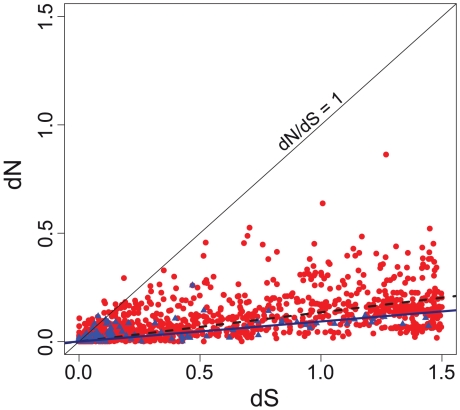
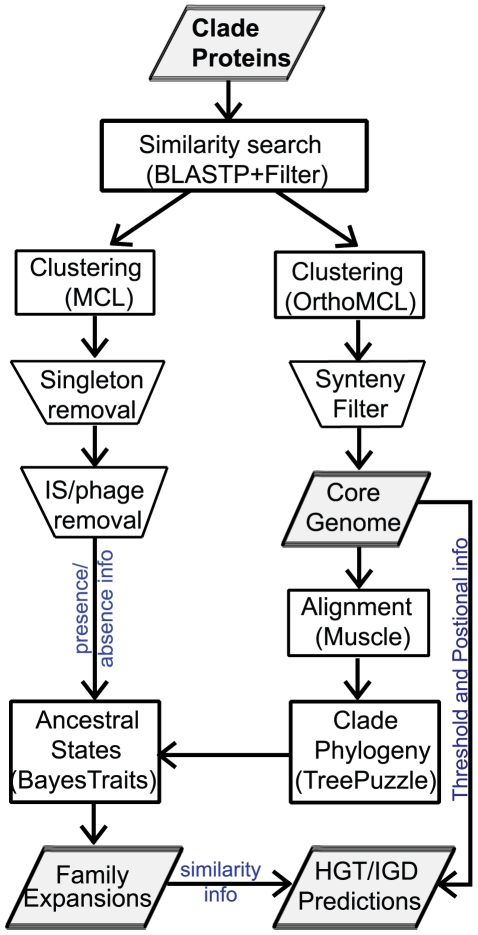
Gene duplication followed by neo- or sub-functionalization deeply impacts the evolution of protein families and is regarded as the main source of adaptive functional novelty in eukaryotes. While there is ample evidence of adaptive gene duplication in prokaryotes, it is not clear whether duplication outweighs the contribution of horizontal gene transfer in the expansion of protein families. We analyzed closely related prokaryote strains or species with small genomes (Helicobacter, Neisseria, Streptococcus, Sulfolobus), average-sized genomes (Bacillus, Enterobacteriaceae), and large genomes (Pseudomonas, Bradyrhizobiaceae) to untangle the effects of duplication and horizontal transfer. After removing the effects of transposable elements and phages, we show that the vast majority of expansions of protein families are due to transfer, even among large genomes. Transferred genes--xenologs--persist longer in prokaryotic lineages possibly due to a higher/longer adaptive role. On the other hand, duplicated genes--paralogs--are expressed more, and, when persistent, they evolve slower. This suggests that gene transfer and gene duplication have very different roles in shaping the evolution of biological systems: transfer allows the acquisition of new functions and duplication leads to higher gene dosage. Accordingly, we show that paralogs share most protein-protein interactions and genetic regulators, whereas xenologs share very few of them. Prokaryotes invented most of life's biochemical diversity. Therefore, the study of the evolution of biology systems should explicitly account for the predominant role of horizontal gene transfer in the diversification of protein families.
基因复制(duplication)随后导致新功能或亚功能化(neo- or sub-functionalization),这对蛋白质家族的进化产生了深远的影响,被认为是真核生物适应功能新颖性的主要来源。虽然有大量证据表明原核生物中存在适应性基因复制,但目前尚不清楚在蛋白质家族的扩展中,复制是否超过了水平基因转移的贡献。我们分析了具有小基因组(Helicobacter、Neisseria、Streptococcus、Sulfolobus)、中等大小基因组(Bacillus、Enterobacteriaceae)和大基因组(Pseudomonas、Bradyrhizobiaceae)的密切相关的原核菌株或物种,以理清复制和水平转移的影响。在去除转座元件和噬菌体的影响后,我们表明,蛋白质家族的绝大多数扩展都是由于转移引起的,即使在大基因组中也是如此。转移的基因——异源基因(xenologs)——在原核生物谱系中持续存在的时间更长,可能是因为它们具有更高/更长的适应性作用。另一方面,复制的基因——旁系同源基因(paralogs)——表达更多,并且在持续存在时进化速度较慢。这表明基因转移和基因复制在塑造生物系统进化方面具有非常不同的作用:转移允许获得新的功能,而复制导致更高的基因剂量。因此,我们表明旁系同源基因共享大多数蛋白质-蛋白质相互作用和遗传调节剂,而异源基因则很少共享。原核生物发明了生命的大部分生物化学多样性。因此,在研究生物系统的进化时,应该明确考虑水平基因转移在蛋白质家族多样化中的主导作用。