Department of Biomedical Sciences, G. d'Annunzio University, Chieti-Pescara, Italy.
PLoS One. 2011 Jan 27;6(1):e15965. doi: 10.1371/journal.pone.0015965.
A typical pathological feature of Alzheimer's disease (AD) is the appearance in the brain of senile plaques made up of β-amyloid (Aβ) and neurofibrillary tangles. AD is also associated with an abnormal accumulation of some metal ions, and we have recently shown that one of these, aluminum (Al), plays a relevant role in affecting Aβ aggregation and neurotoxicity.
In this study, employing a microarray analysis of 35,129 genes, we investigated the effects induced by the exposure to the Aβ(1-42)-Al (Aβ-Al) complex on the gene expression profile of the neuronal-like cell line, SH-SY5Y.
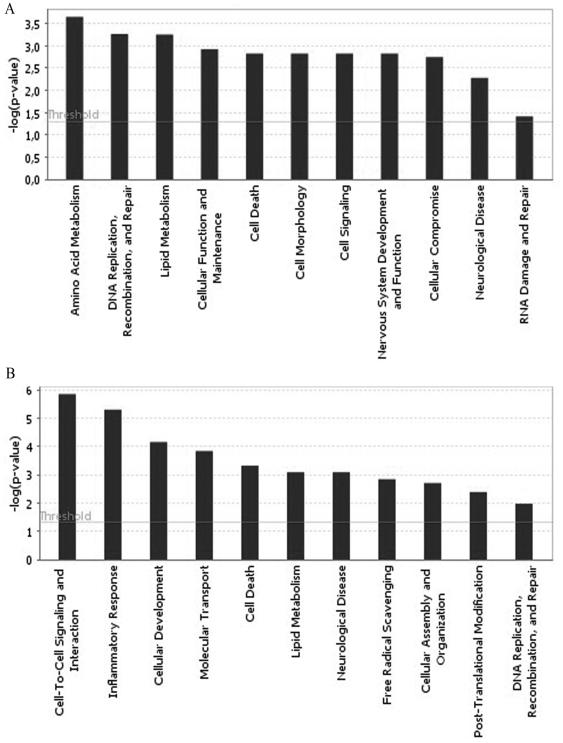
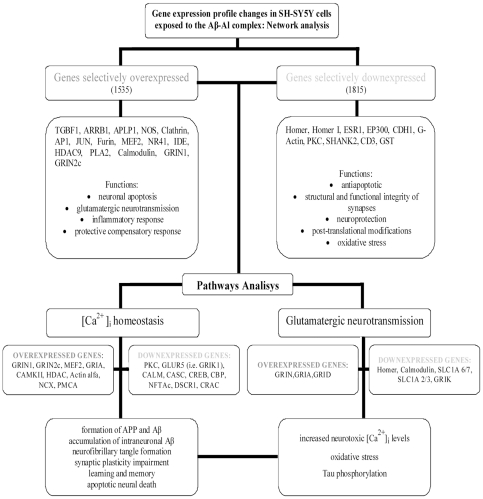
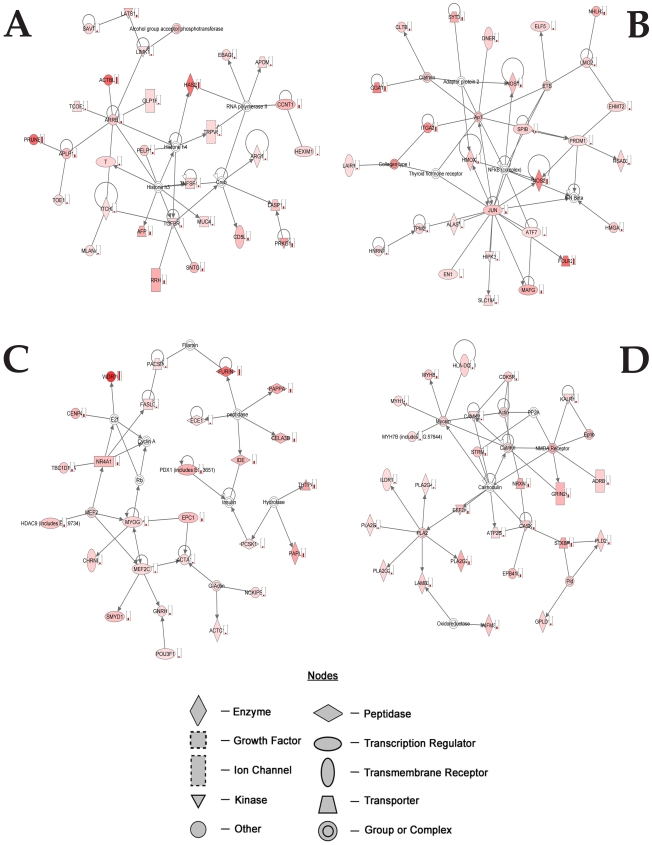
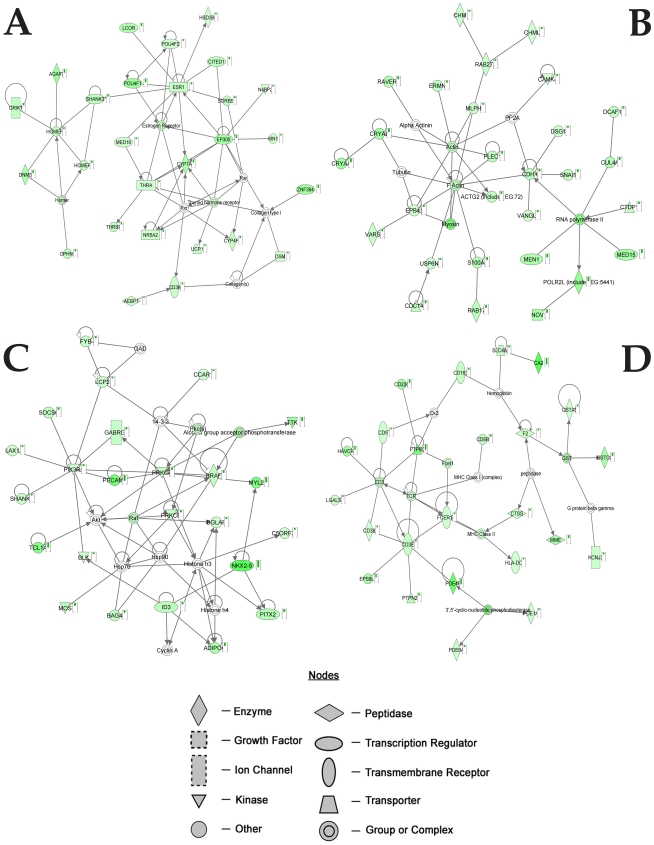
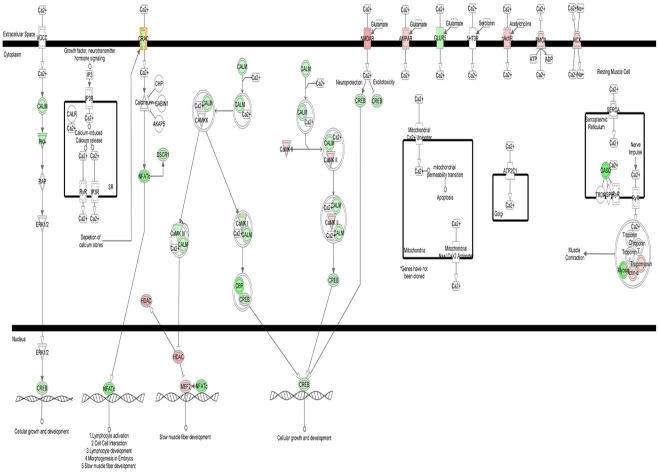
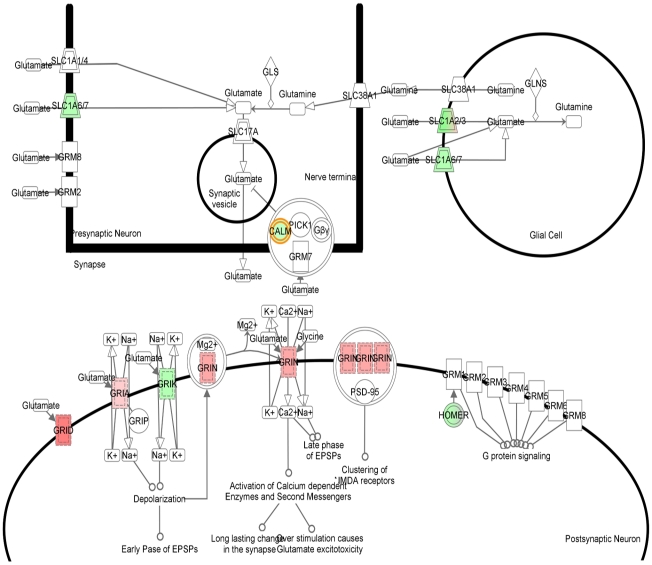
The microarray assay indicated that, compared to Aβ or Al alone, exposure to Aβ-Al complex produced selective changes in gene expression. Some of the genes selectively over or underexpressed are directly related to AD. A further evaluation performed with Ingenuity Pathway analysis revealed that these genes are nodes of networks and pathways that are involved in the modulation of Ca(2+) homeostasis as well as in the regulation of glutamatergic transmission and synaptic plasticity.
Aβ-Al appears to be largely involved in the molecular machinery that regulates neuronal as well as synaptic dysfunction and loss. Aβ-Al seems critical in modulating key AD-related pathways such as glutamatergic transmission, Ca(2+) homeostasis, oxidative stress, inflammation, and neuronal apoptosis.
阿尔茨海默病(AD)的一个典型病理特征是大脑中出现由β-淀粉样蛋白(Aβ)和神经原纤维缠结组成的老年斑。AD 还与一些金属离子的异常积累有关,我们最近表明,其中一种金属离子,铝(Al),在影响 Aβ聚集和神经毒性方面起着相关作用。
在这项研究中,我们采用了 35129 个基因的微阵列分析,研究了暴露于 Aβ(1-42)-Al(Aβ-Al)复合物对神经元样细胞系 SH-SY5Y 的基因表达谱的影响。
微阵列分析表明,与 Aβ 或 Al 单独暴露相比,Aβ-Al 复合物的暴露导致基因表达选择性变化。一些过度表达或表达不足的基因与 AD 直接相关。使用 Ingenuity Pathway 分析进行的进一步评估表明,这些基因是参与钙(Ca2+)稳态调节以及谷氨酸能传递和突触可塑性调节的网络和途径的节点。
Aβ-Al 似乎广泛参与调节神经元和突触功能障碍和丧失的分子机制。Aβ-Al 在调节关键的 AD 相关途径(如谷氨酸能传递、Ca2+稳态、氧化应激、炎症和神经元凋亡)方面似乎至关重要。