Department of Adult Mental Health, National Institute of Mental Health, National Center of Neurology and Psychiatry, Tokyo, Japan.
Biopsychosoc Med. 2011 Feb 8;5:3. doi: 10.1186/1751-0759-5-3.
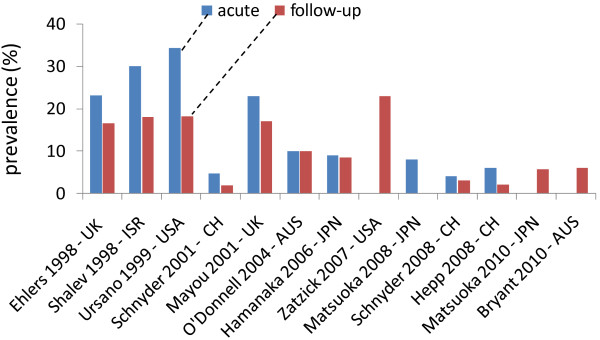
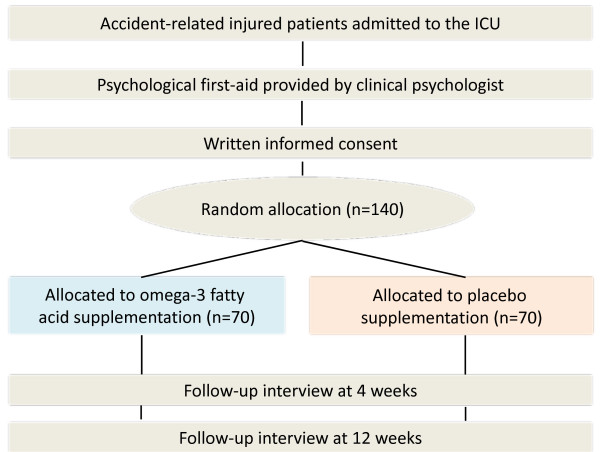
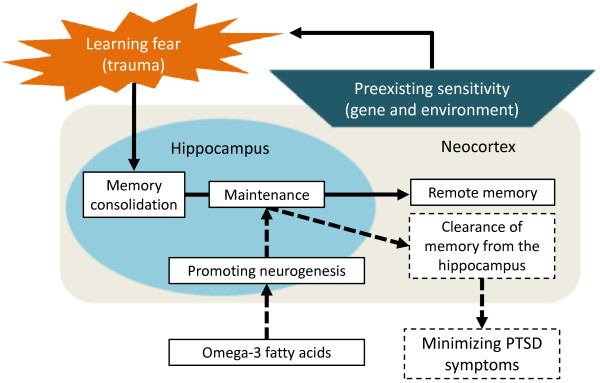
Not only has accidental injury been shown to account for a significant health burden on all populations, regardless of age, sex and geographic region, but patients with accidental injury frequently present with the psychiatric condition of posttraumatic stress disorder (PTSD). Prevention of accident-related PTSD thus represents a potentially important goal. Physicians in the field of psychosomatic medicine and critical care medicine have the opportunity to see injured patients in the immediate aftermath of an accident. This article first briefly reviews the prevalence and associated factors of accident-related PTSD, then focuses on a conceptual model of fear memory and proposes a new, rationally hypothesized translational preventive intervention for PTSD through promoting hippocampal neurogenesis by omega-3 fatty acid supplementation. The results of an open-label pilot trial of injured patients admitted to the intensive care unit suggest that omega-3 fatty acid supplementation immediately after accidental injury can reduce subsequent PTSD symptoms.
意外伤害不仅对所有人群(无论年龄、性别和地理区域如何)造成了重大的健康负担,而且意外伤害患者常常伴有创伤后应激障碍(PTSD)等精神疾病。因此,预防与事故相关的 PTSD 可能是一个重要目标。心身医学和危重病医学领域的医生有机会在事故发生后立即见到受伤的患者。本文首先简要回顾了与事故相关的 PTSD 的患病率和相关因素,然后重点介绍了恐惧记忆的概念模型,并通过 omega-3 脂肪酸补充促进海马神经发生,提出了一种新的、合理假设的 PTSD 转化预防干预措施。对入住重症监护病房的受伤患者进行的一项开放性先导试验的结果表明,意外伤害后立即补充 omega-3 脂肪酸可以减少随后的 PTSD 症状。