Department of Anatomy and Cell Biology, University of Western Ontario, London, ON, Canada.
Hum Mutat. 2011 Apr;32(4):456-66. doi: 10.1002/humu.21472.
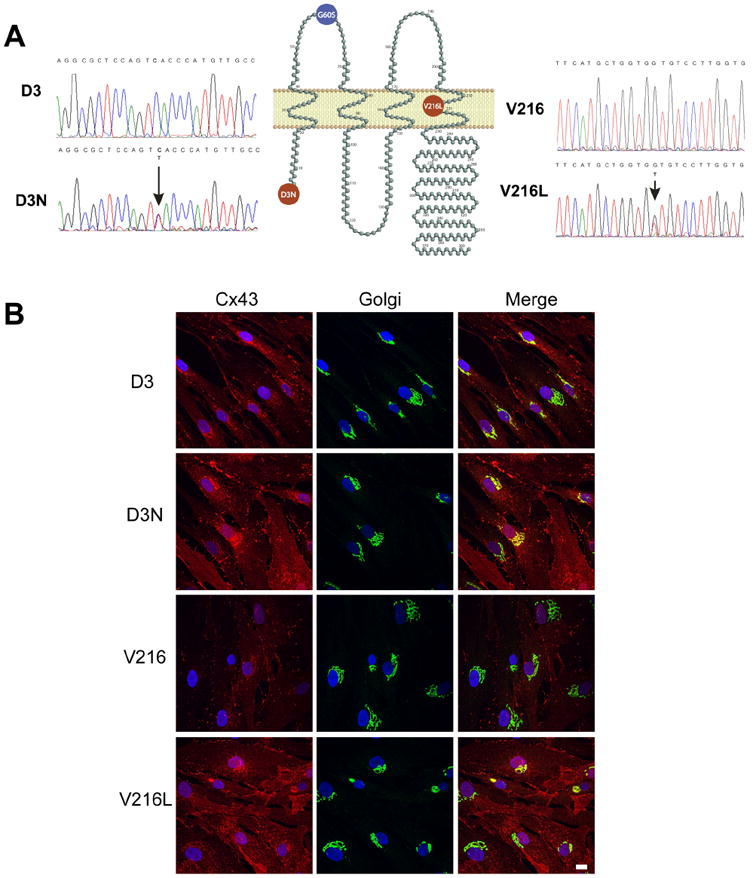
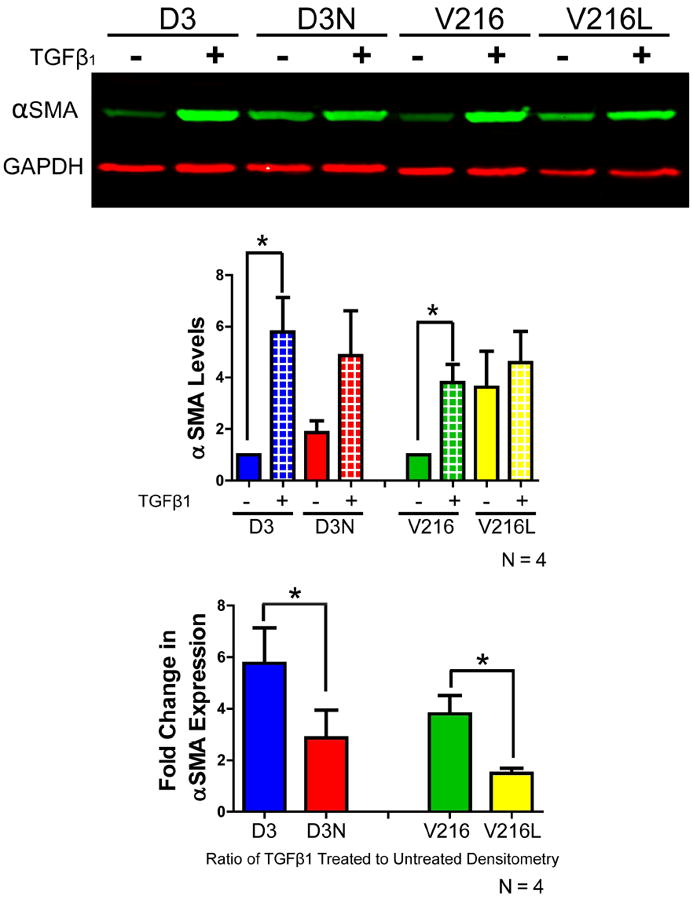
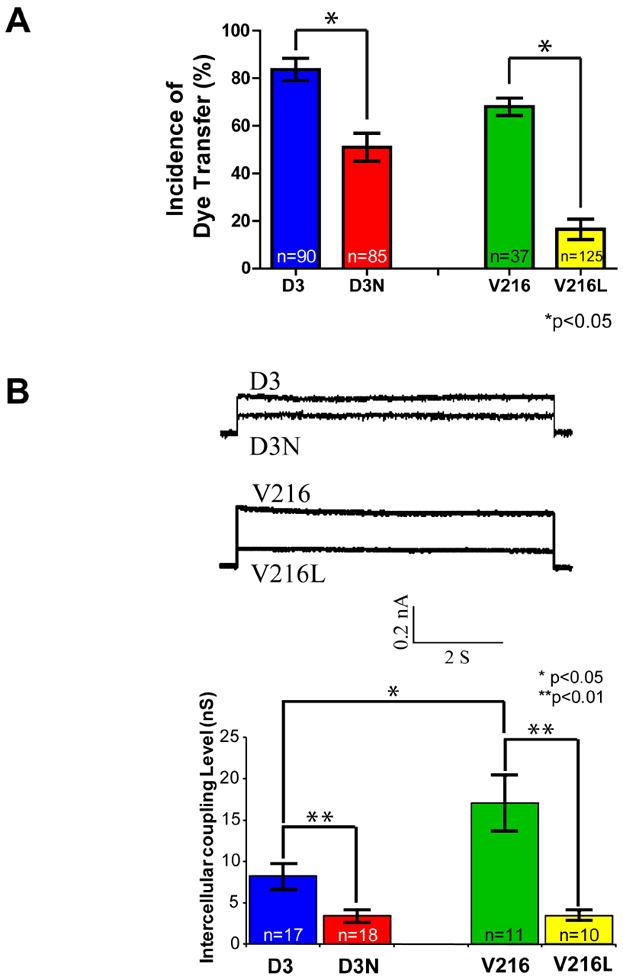
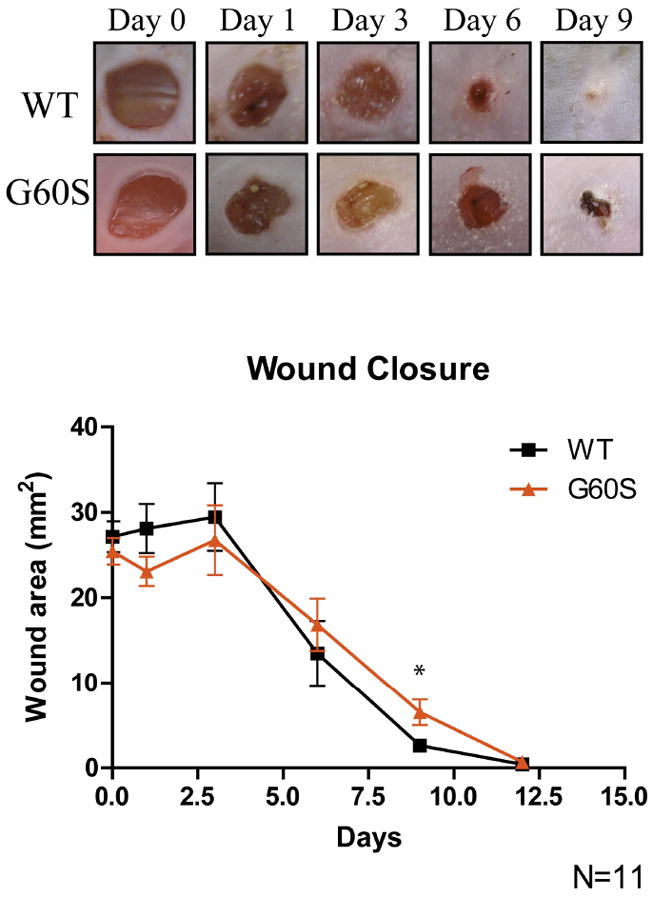
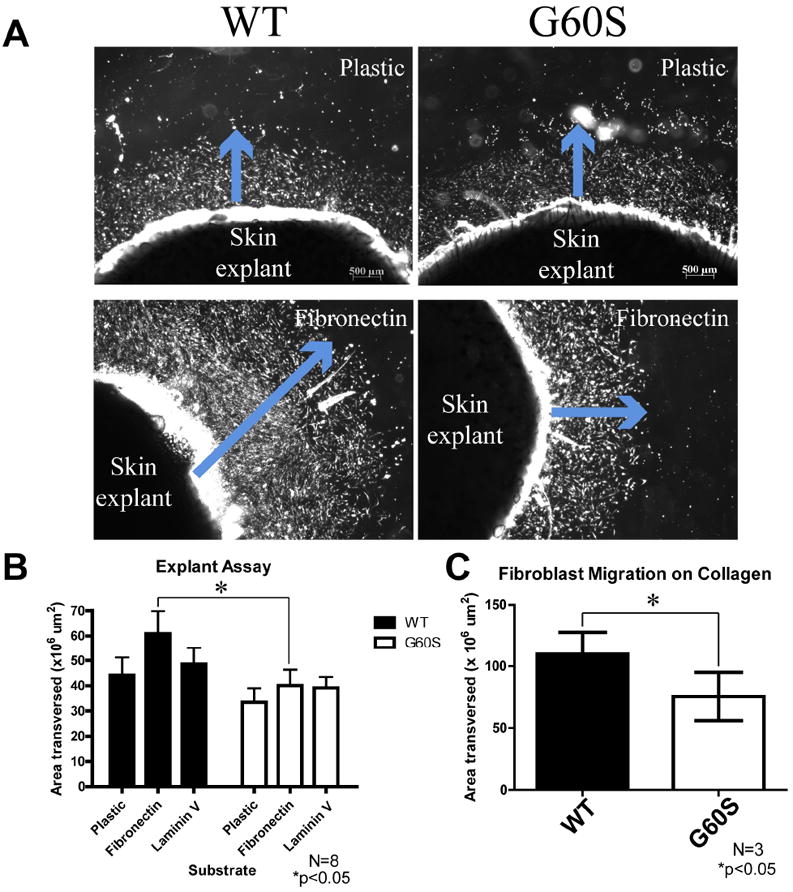
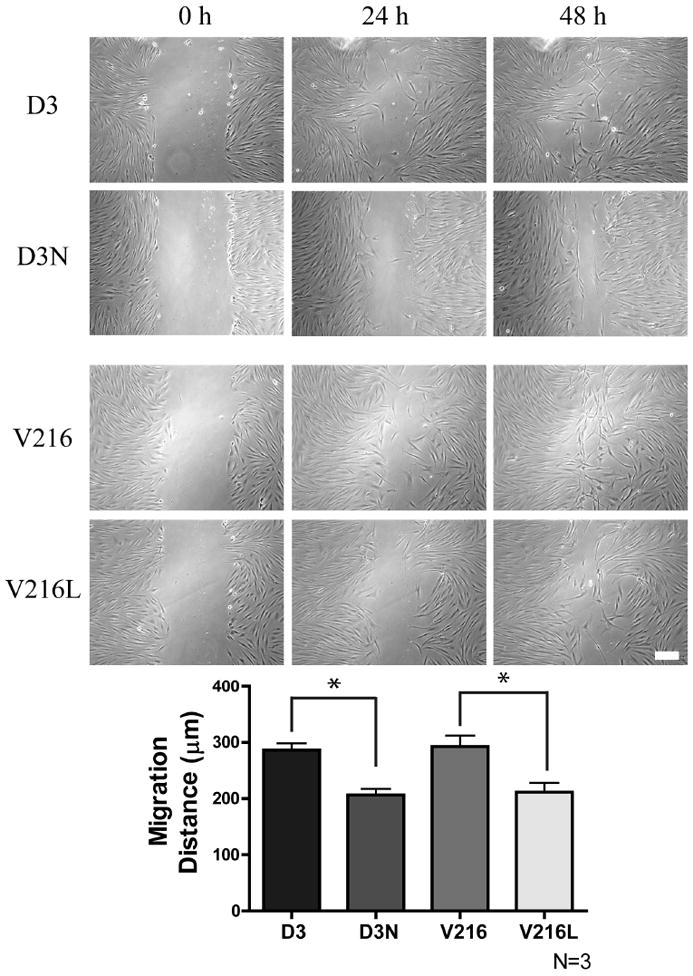
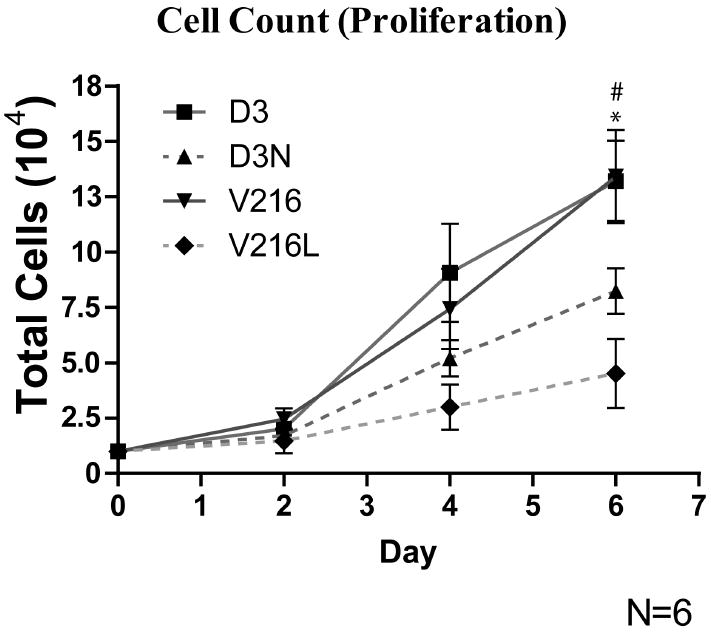
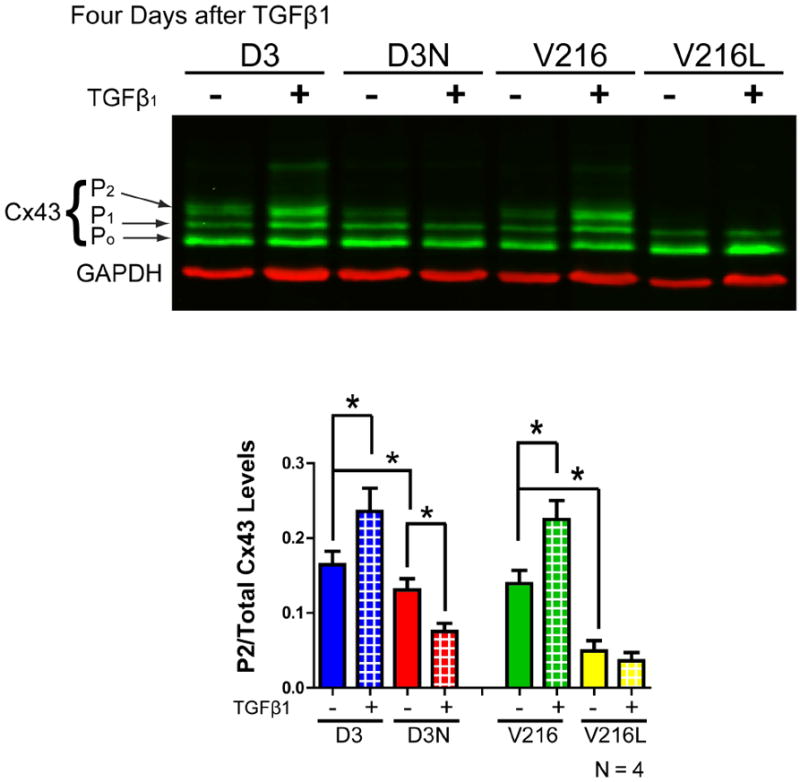
Oculodentodigital dysplasia (ODDD) is primarily an autosomal dominant human disease caused by any one of over 60 mutations in the GJA1 gene encoding the gap junction protein Cx43. In the present study, wound healing was investigated in a G60S ODDD mutant mouse model and by using dermal fibroblasts isolated from two ODDD patients harboring the p.D3N and p.V216L mutants along with dermal fibroblasts isolated from their respective unaffected relatives. Punch biopsies revealed a delay in wound closure in the G60S mutant mice in comparison to wild-type littermates, and this delay appeared to be due to defects in the dermal fibroblasts. Although both the p.D3N and p.V216L mutants reduced gap junctional intercellular communication in human dermal fibroblasts, immunolocalization studies revealed that Cx43 gap junctions were prevalent at the cell surface of p.D3N expressing fibroblasts but greatly reduced in p.V216L expressing fibroblasts. Mutant expressing fibroblasts were further found to have reduced proliferation and migration capabilities. Finally, in response to TGFβ1, mutant expressing fibroblasts expressed significantly less alpha smooth muscle actin suggesting they were inefficient in their ability to differentiate into myofibroblasts. Collectively, our results suggest that ODDD patients may have subclinical defects in wound healing due to impaired function of dermal fibroblasts.
眼牙指发育不良症(ODDD)主要是一种常染色体显性遗传人类疾病,由编码间隙连接蛋白 Cx43 的 GJA1 基因的 60 多种突变之一引起。在本研究中,通过研究 G60S ODDD 突变小鼠模型和从两个携带 p.D3N 和 p.V216L 突变的 ODDD 患者分离的真皮成纤维细胞以及从其各自未受影响的亲属分离的真皮成纤维细胞,研究了伤口愈合。打孔活检显示,与野生型同窝仔相比,G60S 突变小鼠的伤口闭合延迟,这种延迟似乎是由于真皮成纤维细胞的缺陷所致。尽管 p.D3N 和 p.V216L 突变均降低了人真皮成纤维细胞的缝隙连接细胞间通讯,但免疫定位研究显示,Cx43 间隙连接在表达 p.D3N 的成纤维细胞的细胞表面普遍存在,但在表达 p.V216L 的成纤维细胞中大大减少。进一步发现,表达突变体的成纤维细胞增殖和迁移能力降低。最后,在 TGFβ1 的刺激下,表达突变体的成纤维细胞表达的α平滑肌肌动蛋白明显减少,这表明它们在分化为肌成纤维细胞的能力上效率低下。总之,我们的结果表明,由于真皮成纤维细胞功能受损,ODDD 患者的伤口愈合可能存在亚临床缺陷。