Department of Biochemistry and Division of Applied Life Science, BK21 Program) Environmental Biotechnology National Core Research Center, Gyeongsang National University 900 Gazwa-dong, Jinju 660-701, Republic of Korea.
BMC Bioinformatics. 2011 Feb 15;12 Suppl 1(Suppl 1):S28. doi: 10.1186/1471-2105-12-S1-S28.
Beta-site amyloid precursor protein cleaving enzyme (BACE-1) is a single-membrane protein belongs to the aspartyl protease class of catabolic enzymes. This enzyme involved in the processing of the amyloid precursor protein (APP). The cleavage of APP by BACE-1 is the rate-limiting step in the amyloid cascade leading to the production of two peptide fragments Aβ40 and Aβ42. Among two peptide fragments Aβ42 is the primary species thought to be responsible for the neurotoxicity and amyloid plaque formation that lead to memory and cognitive defects in Alzheimer's disease (AD). AD is a ravaging neurodegenerative disorder for which no disease-modifying treatment is currently available. Inhibition of BACE-1 is expected to stop amyloid plaque formation and emerged as an interesting and attractive therapeutic target for AD.
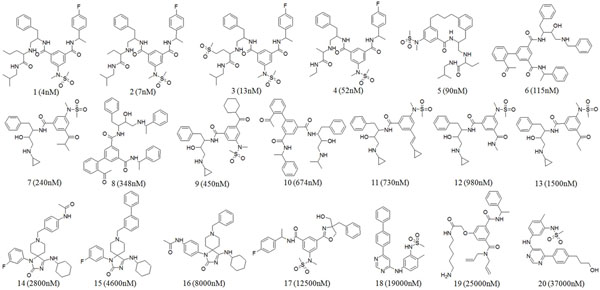
Ligand-based computational approach was used to identify the molecular chemical features required for the inhibition of BACE-1 enzyme. A training set of 20 compounds with known experimental activity was used to generate pharmacophore hypotheses using 3D QSAR Pharmacophore Generation module available in Discovery studio. The hypothesis was validated by four different methods and the best hypothesis was utilized in database screening of four chemical databases like Maybridge, Chembridge, NCI and Asinex. The retrieved hit compounds were subjected to molecular docking study using GOLD 4.1 program.
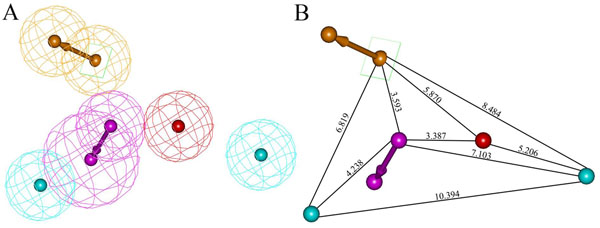
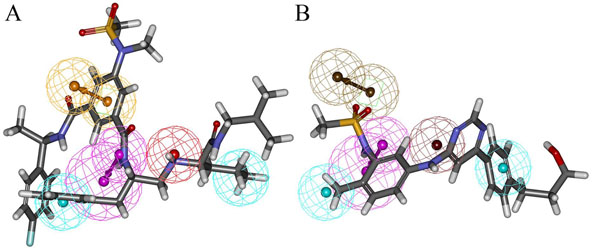
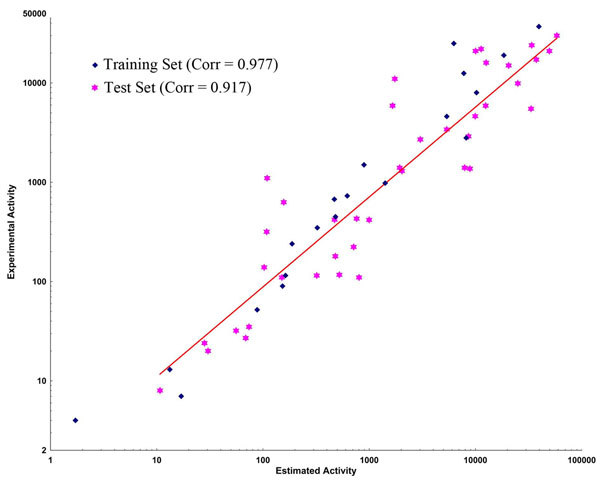
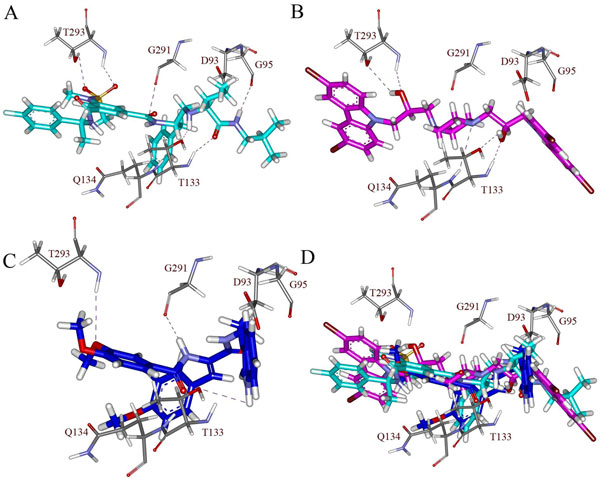
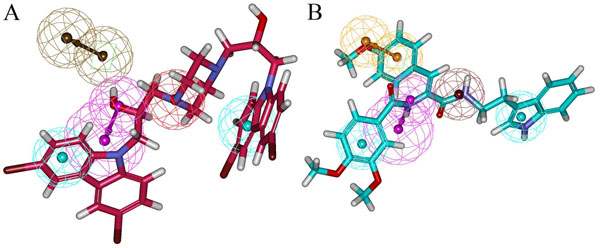
Among ten generated pharmacophore hypotheses, Hypo 1 was chosen as best pharmacophore hypothesis. Hypo 1 consists of one hydrogen bond donor, one positive ionizable, one ring aromatic and two hydrophobic features with high correlation coefficient of 0.977, highest cost difference of 121.98 bits and lowest RMSD value of 0.804. Hypo 1 was validated using Fischer randomization method, test set with a correlation coefficient of 0.917, leave-one-out method and decoy set with a goodness of hit score of 0.76. The validated Hypo 1 was used as a 3D query in database screening and retrieved 773 compounds with the estimated activity value <100 nM. These hits were docked into the active site of BACE-1 and further refined based on molecular interactions with the essential amino acids and good GOLD fitness score.
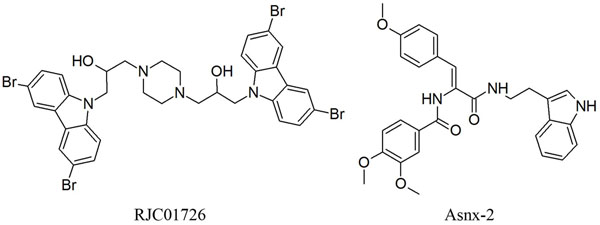
The best pharmacophore hypothesis, Hypo 1, with high predictive ability contains chemical features required for the effective inhibition of BACE-1. Using Hypo 1, we have identified two compounds with diverse chemical scaffolds as potential virtual leads which, as such or upon further optimization, can be used in the designing of new BACE-1 inhibitors.
β-位淀粉样前体蛋白裂解酶(BACE-1)是一种单分子膜蛋白,属于代谢酶的天冬氨酸蛋白酶类。这种酶参与淀粉样前体蛋白(APP)的加工。BACE-1 对 APP 的切割是导致淀粉样蛋白级联反应的限速步骤,从而产生两个肽片段 Aβ40 和 Aβ42。在这两个肽片段中,Aβ42 被认为是主要负责导致阿尔茨海默病(AD)中神经毒性和淀粉样斑块形成的物质,导致记忆和认知缺陷。AD 是一种严重的神经退行性疾病,目前尚无治疗该病的方法。抑制 BACE-1 有望阻止淀粉样斑块的形成,并成为 AD 治疗的一个有趣而有吸引力的治疗靶点。
使用基于配体的计算方法来确定抑制 BACE-1 酶所需的分子化学特征。使用 3DQSAR 药效团生成模块,使用 20 种具有已知实验活性的化合物的训练集生成药效团假设。该假设通过四种不同的方法进行验证,然后使用 Maybridge、Chembridge、NCI 和 Asinex 等四个化学数据库对最佳假设进行数据库筛选。检索到的命中化合物使用 GOLD 4.1 程序进行分子对接研究。
在生成的十个药效团假设中,选择 Hypo 1 作为最佳药效团假设。Hypo 1 由一个氢键供体、一个正可离子化、一个环状芳香和两个疏水性特征组成,具有高相关性系数 0.977、最高成本差异 121.98 位和最低 RMSD 值 0.804。Hypo 1 通过 Fischer 随机化方法、具有 0.917 相关系数的测试集、留一法和具有 0.76 良好命中得分的诱饵集进行验证。验证后的 Hypo 1 被用作数据库筛选的 3D 查询,检索到 773 种估计活性值<100 nM 的化合物。这些命中化合物被对接入 BACE-1 的活性部位,并根据与必需氨基酸的分子相互作用和良好的 GOLD 拟合分数进一步进行优化。
具有高预测能力的最佳药效团假设 Hypo 1 包含有效抑制 BACE-1 所需的化学特征。使用 Hypo 1,我们已经确定了两种具有不同化学支架的化合物作为潜在的虚拟先导化合物,它们可以作为新的 BACE-1 抑制剂的设计基础。