Kuriki Marina, Fujino Masayuki, Tanaka Ken-ichi, Horio Kayo, Kusuki Hirofumi, Hosoi Misa, Eryu Yoshihiko, Kato Tomochika, Yamazaki Toshio, Hata Tadayoshi
Graduate School of Health Sciences, Fujita Health University, Toyoake, Japan.
Pediatr Cardiol. 2011 Apr;32(4):487-91. doi: 10.1007/s00246-011-9908-9. Epub 2011 Feb 23.
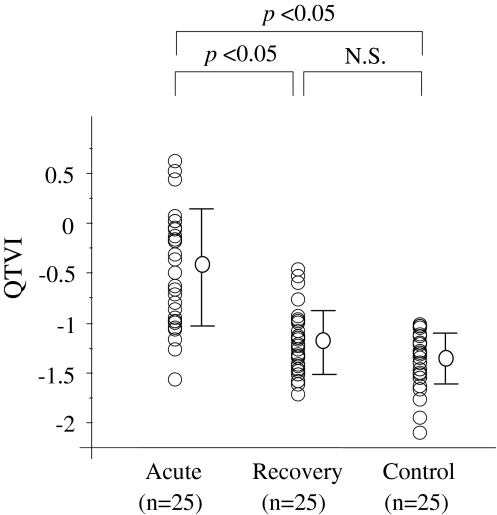
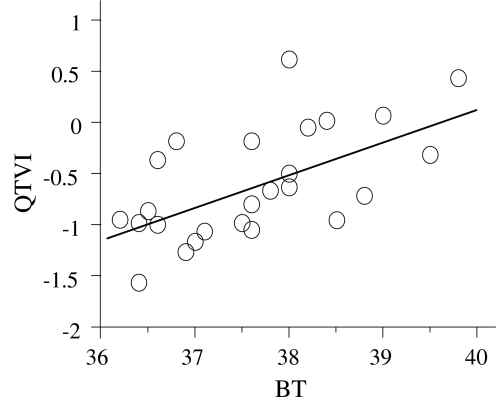
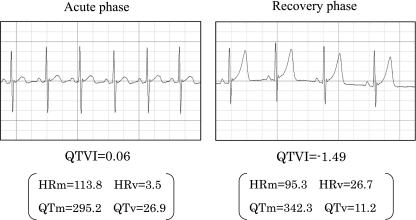
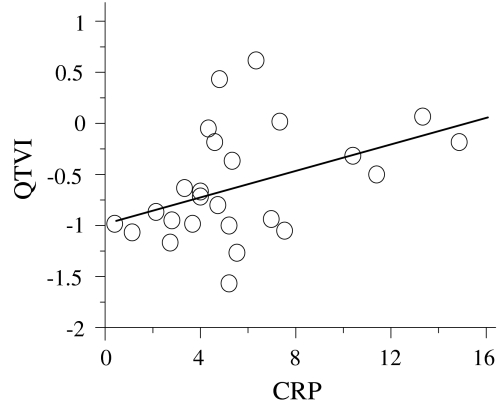
Kawasaki disease (KD) is an acute febrile disease of unknown etiology that develops in children and is sometimes accompanied by myocardial dysfunction and systemic vasculitis. However, myocardial repolarization lability has not yet been fully investigated. Thus, the objective of this study was to evaluate myocardial repolarization lability (QT variability index-QTVI) based on the body surface electrocardiograms in the acute and recovery phases. The subjects were 25 children with acute KD who were hospitalized for treatment. An equal number of age-matched healthy children were selected as controls. The RR-intervals and QT-intervals were measured based on a body surface electrocardiogram of 120 consecutive heartbeats to calculate the QTVI. The QTVI values were then compared with the acute and recovery phases. The relationships between blood biochemistry data and QTVI values were also examined. QTVI was significantly decreased from the acute phase to the recovery phase (P < 0.05) and then recovered to the same level as that of the control. QTVI in the acute phase showed a significant positive relationship with body temperature and C-reactive protein (P <0.05). QTVI was high in the acute phase and was correlated with an inflammatory reaction and became normalized during the recovery phase.
川崎病(KD)是一种病因不明的急性发热性疾病,多见于儿童,有时伴有心肌功能障碍和系统性血管炎。然而,心肌复极易损性尚未得到充分研究。因此,本研究的目的是基于体表心电图评估急性期和恢复期的心肌复极易损性(QT变异性指数-QTVI)。研究对象为25例因急性KD住院治疗的儿童。选取同等数量年龄匹配的健康儿童作为对照。基于连续120次心跳的体表心电图测量RR间期和QT间期,以计算QTVI。然后将QTVI值与急性期和恢复期进行比较。还检查了血液生化数据与QTVI值之间的关系。QTVI从急性期到恢复期显著降低(P<0.05),然后恢复到与对照组相同的水平。急性期的QTVI与体温和C反应蛋白呈显著正相关(P<0.05)。急性期QTVI较高,与炎症反应相关,恢复期恢复正常。