Department of Microbiology and Immunology, The Pennsylvania State University College of Medicine, Hershey, Pennsylvania, United States of America.
PLoS One. 2011 Feb 8;6(2):e16405. doi: 10.1371/journal.pone.0016405.
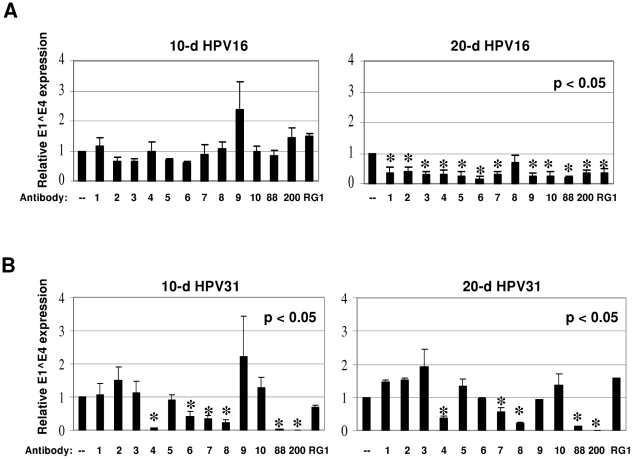
Human papillomavirus (HPV) capsids are composed of 72 pentamers of the major capsid protein L1, and an unknown number of L2 minor capsid proteins. An N-terminal "external loop" of L2 contains cross-neutralizing epitopes, and native HPV16 virions extracted from 20-day-old organotypic tissues are neutralized by anti-HPV16 L2 antibodies but virus from 10-day-old cultures are not, suggesting that L2 epitopes are more exposed in mature, 20-day virions. This current study was undertaken to determine whether cross-neutralization of other HPV types is similarly dependent on time of harvest and to screen for the most effective cross-neutralizing epitope in native virions.
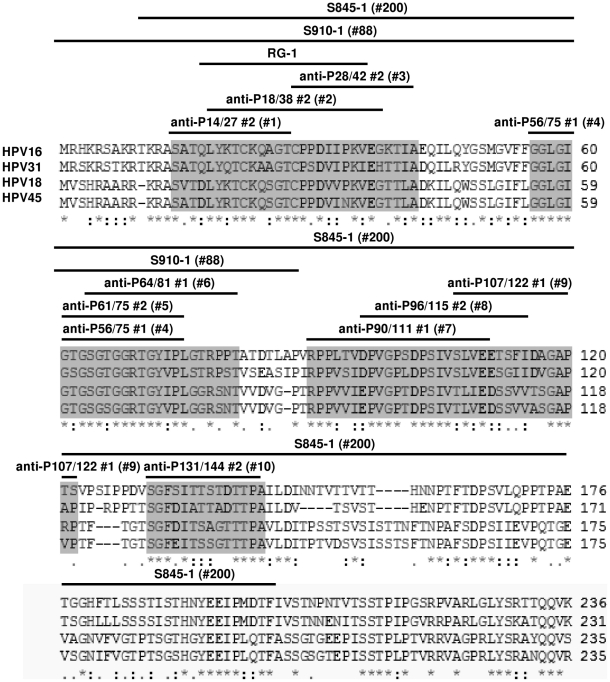
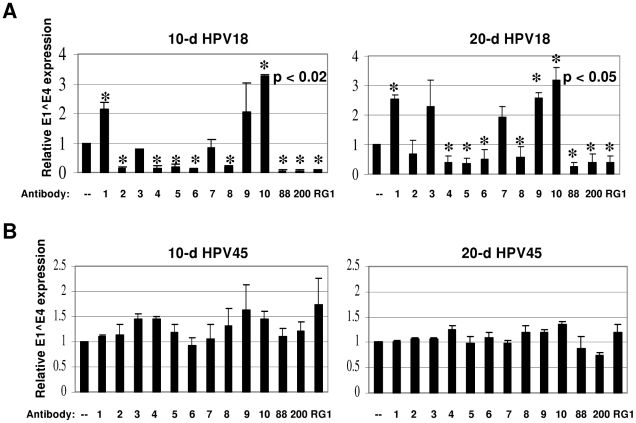
Neutralization assays support that although HPV16 L2 epitopes were only exposed in 20-day virions, HPV31 or HPV18 epitopes behaved differently. Instead, HPV31 and HPV18 L2 epitopes were exposed in 10-day virions and remained so in 20-day virions. In contrast, presumably due to sequence divergence, HPV45 was not cross-neutralized by any of the anti-HPV16 L2 antibodies. We found that the most effective cross-neutralizing antibody was a polyclonal antibody named anti-P56/75 #1, which was raised against a peptide consisting of highly conserved HPV16 L2 amino acids 56 to 75.
This is the first study to determine the susceptibility of multiple, native high-risk HPV types to neutralization by L2 antibodies. Multiple anti-L2 antibodies were able to cross-neutralize HPV16, HPV31, and HPV18. Only neutralization of HPV16 depended on the time of tissue harvest. These data should inform attempts to produce a second-generation, L2-based vaccine.
人乳头瘤病毒 (HPV) 衣壳由 72 个五聚体的主要衣壳蛋白 L1 和未知数量的 L2 次要衣壳蛋白组成。L2 的 N 端“外部环”包含中和交叉表位,从 20 天龄器官型组织中提取的天然 HPV16 病毒粒子被抗 HPV16 L2 抗体中和,但来自 10 天龄培养物的病毒粒子则不被中和,这表明 L2 表位在成熟的 20 天龄病毒粒子中更为暴露。本研究旨在确定其他 HPV 型别的交叉中和是否同样依赖于收获时间,并筛选天然病毒粒子中最有效的交叉中和表位。
中和测定支持尽管 HPV16 L2 表位仅在 20 天龄病毒粒子中暴露,但 HPV31 或 HPV18 表位的行为不同。相反,HPV31 和 HPV18 的 L2 表位在 10 天龄病毒粒子中暴露,在 20 天龄病毒粒子中仍然如此。相比之下,由于序列差异,HPV45 未被任何抗 HPV16 L2 抗体交叉中和。我们发现,最有效的交叉中和抗体是一种多克隆抗体,名为抗-P56/75 #1,它是针对由 HPV16 L2 氨基酸 56 至 75 组成的高度保守肽产生的。
这是第一项确定多种天然高危 HPV 型别对 L2 抗体中和敏感性的研究。多种抗-L2 抗体能够交叉中和 HPV16、HPV31 和 HPV18。只有 HPV16 的中和依赖于组织收获的时间。这些数据应该为生产第二代基于 L2 的疫苗提供信息。