Department of Physiology & Cellular Biophysics and Department of Neuroscience, Columbia University, New York, New York, United States of America.
PLoS Biol. 2011 Feb 8;9(2):e1001013. doi: 10.1371/journal.pbio.1001013.
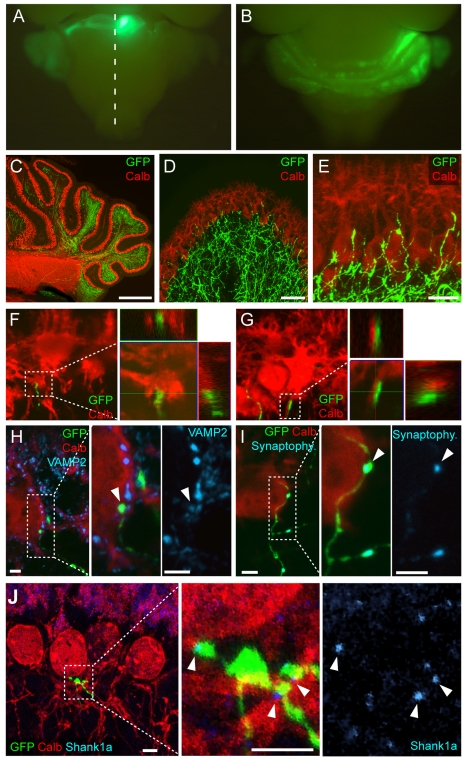
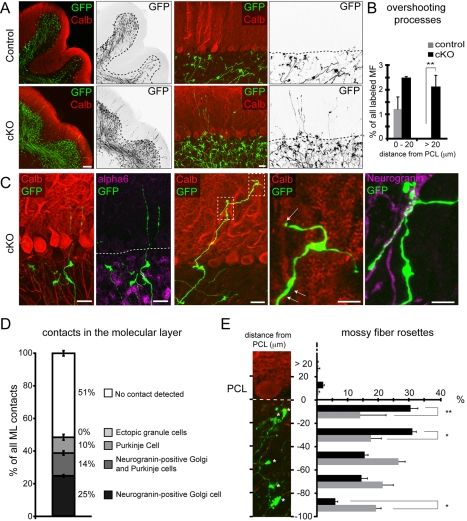
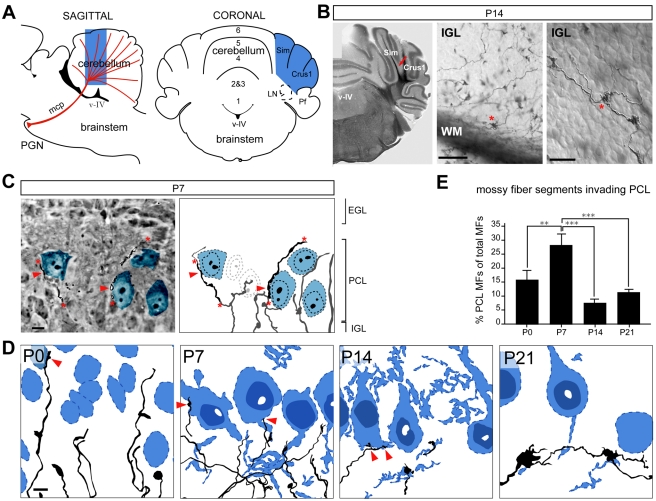
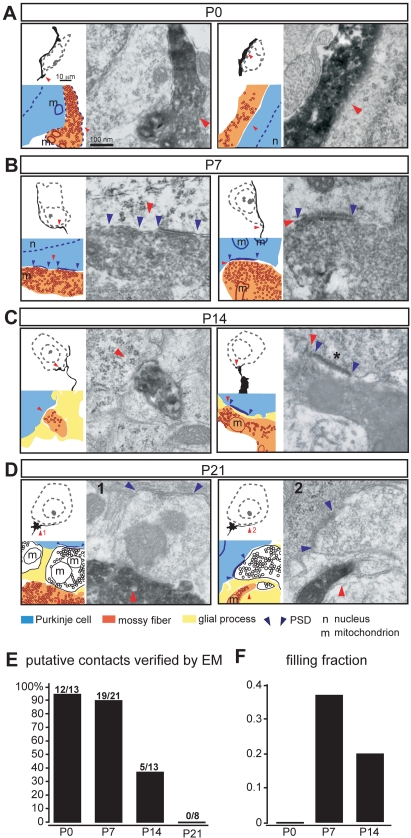
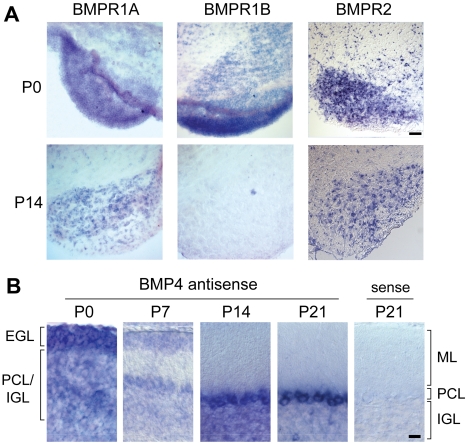
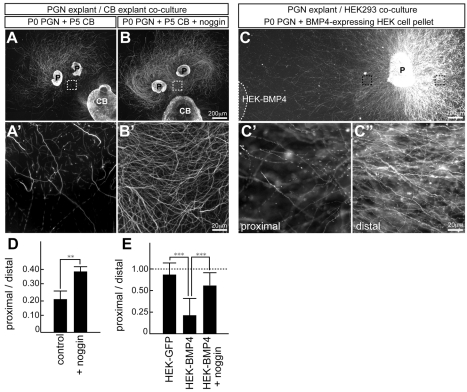
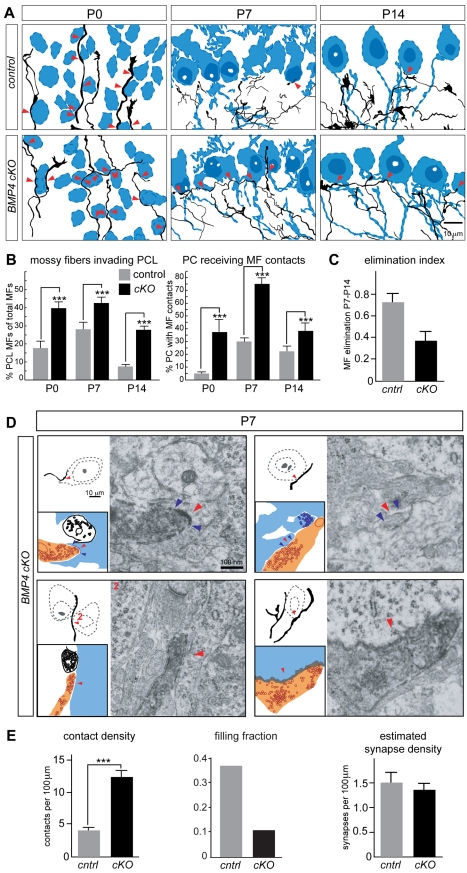
The function of neuronal networks relies on selective assembly of synaptic connections during development. We examined how synaptic specificity emerges in the pontocerebellar projection. Analysis of axon-target interactions with correlated light-electron microscopy revealed that developing pontine mossy fibers elaborate extensive cell-cell contacts and synaptic connections with Purkinje cells, an inappropriate target. Subsequently, mossy fiber-Purkinje cell connections are eliminated resulting in granule cell-specific mossy fiber connectivity as observed in mature cerebellar circuits. Formation of mossy fiber-Purkinje cell contacts is negatively regulated by Purkinje cell-derived BMP4. BMP4 limits mossy fiber growth in vitro and Purkinje cell-specific ablation of BMP4 in mice results in exuberant mossy fiber-Purkinje cell interactions. These findings demonstrate that synaptic specificity in the pontocerebellar projection is achieved through a stepwise mechanism that entails transient innervation of Purkinje cells, followed by synapse elimination. Moreover, this work establishes BMP4 as a retrograde signal that regulates the axon-target interactions during development.
神经元网络的功能依赖于发育过程中突触连接的选择性组装。我们研究了浦肯野细胞投射中突触特异性是如何出现的。通过相关光电子显微镜分析轴突-靶细胞相互作用,发现发育中的桥脑苔藓纤维与浦肯野细胞形成广泛的细胞-细胞接触和突触连接,而浦肯野细胞是一种不适当的靶细胞。随后,苔藓纤维-浦肯野细胞连接被消除,导致颗粒细胞特异性苔藓纤维连接,如成熟小脑回路中观察到的那样。苔藓纤维-浦肯野细胞接触的形成受到浦肯野细胞衍生的 BMP4 的负调控。BMP4 在体外限制苔藓纤维的生长,并且在小鼠中特异性地消除浦肯野细胞中的 BMP4 会导致苔藓纤维-浦肯野细胞相互作用过度。这些发现表明,浦肯野细胞投射中的突触特异性是通过一个逐步的机制实现的,该机制涉及浦肯野细胞的短暂神经支配,随后是突触消除。此外,这项工作确立了 BMP4 作为一种逆行信号,它在发育过程中调节轴突-靶细胞相互作用。