Department of Animal Sciences, School of Life Sciences, University of Hyderabad, Hyderabad, Andhra Pradesh, India.
PLoS One. 2011 Feb 11;6(2):e16742. doi: 10.1371/journal.pone.0016742.
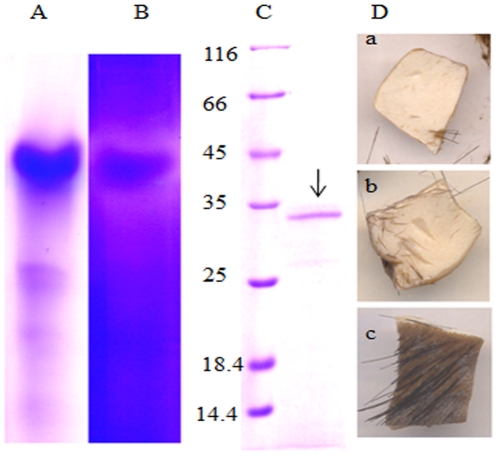
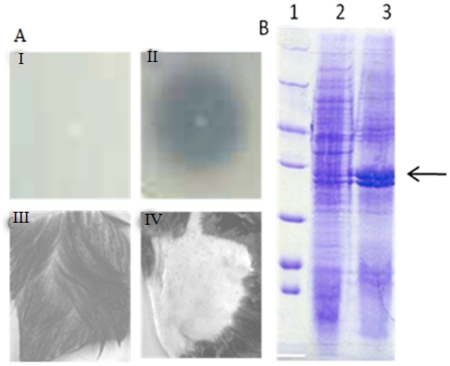
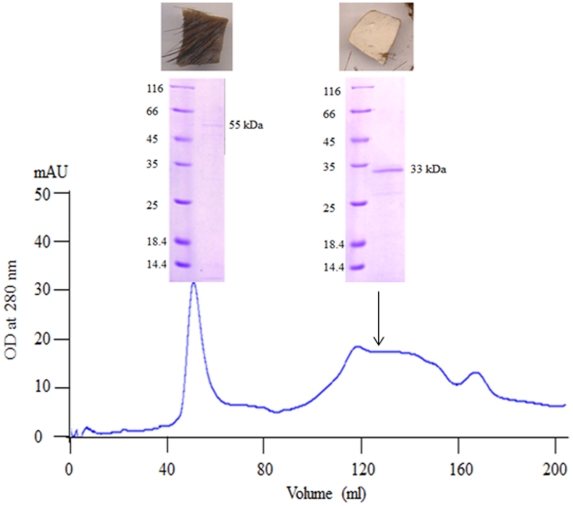
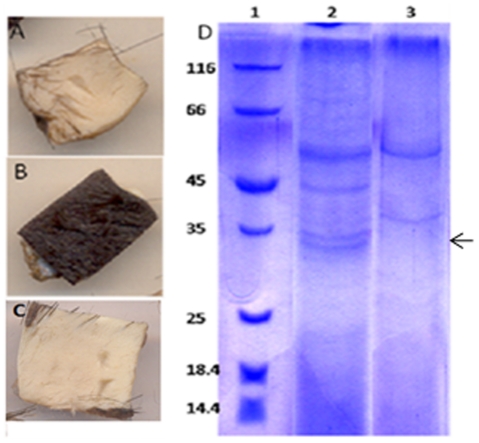
Conventional leather processing involving depilation of animal hide by lime and sulphide treatment generates considerable amounts of chemical waste causing severe environmental pollution. Enzymatic depilation is an environmentally friendly process and has been considered to be a viable alternative to the chemical depilation process. We isolated an extracellular protease from Pseudomonas aeruginosa strain MCM B-327 with high depilation activity using buffalo hide as a substrate. This 33 kDa protease generated a peptide mass fingerprint and de novo sequence that matched perfectly with LasB (elastase), of Pseudomonas aeruginosa. In support of this data a lasB mutant of MCM B-327 strain lacked depilatory activity and failed to produce LasB. LasB heterologously over-produced and purified from Escherichia coli also exhibited high depilating activity. Moreover, reintroduction of the lasB gene to the P. aeruginosa lasB mutant via a knock-in strategy also successfully restored depilation activity thus confirming the role of LasB as the depilating enzyme.
传统的皮革加工涉及使用石灰和硫化物处理来脱毛动物皮,会产生大量的化学废物,造成严重的环境污染。酶脱毛是一种环保的过程,被认为是化学脱毛过程的可行替代方法。我们使用水牛皮作为底物,从铜绿假单胞菌 MCM B-327 菌株中分离出一种具有高脱毛活性的细胞外蛋白酶。这种 33 kDa 的蛋白酶产生的肽质量指纹图谱和从头序列与铜绿假单胞菌的 LasB(弹性蛋白酶)完全匹配。支持这一数据的是,MCM B-327 菌株的 lasB 突变体缺乏脱毛活性,并且未能产生 LasB。LasB 异源过表达并从大肠杆菌中纯化,也表现出很高的脱毛活性。此外,通过敲入策略将 lasB 基因重新引入到 P. aeruginosa lasB 突变体中,也成功地恢复了脱毛活性,从而证实了 LasB 作为脱毛酶的作用。