Département de Biochimie, Faculté de Médecine et des Sciences de la Santé, Université de Sherbrooke, Sherbrooke, Québec, Canada.
PLoS One. 2011 Feb 25;6(2):e17353. doi: 10.1371/journal.pone.0017353.
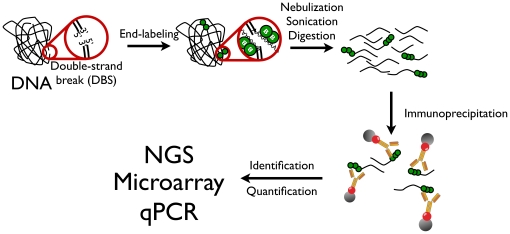
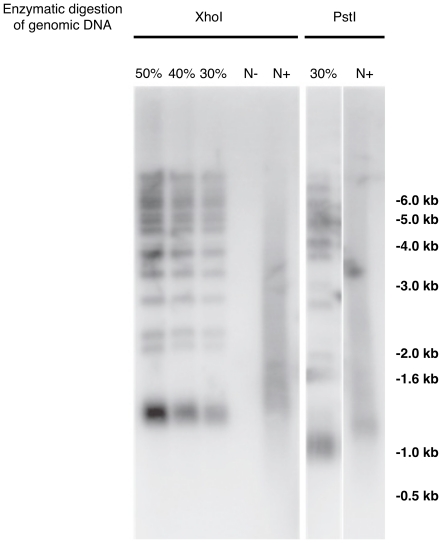
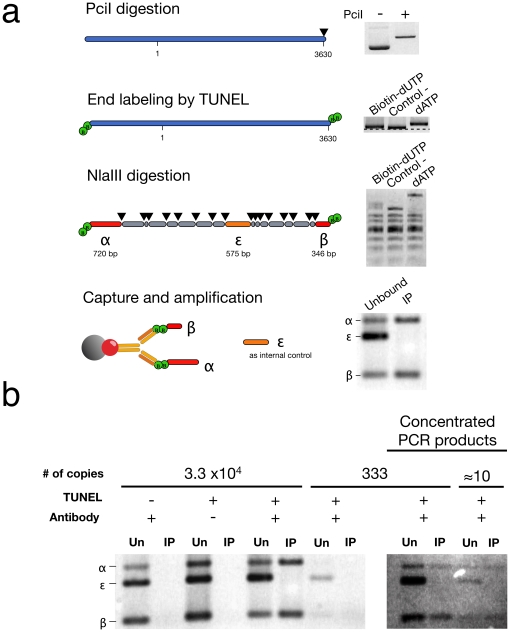
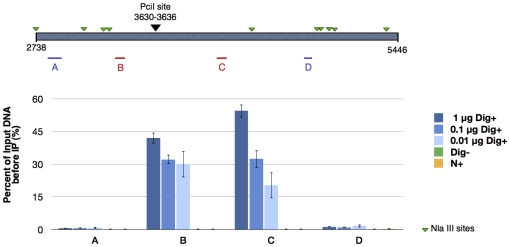
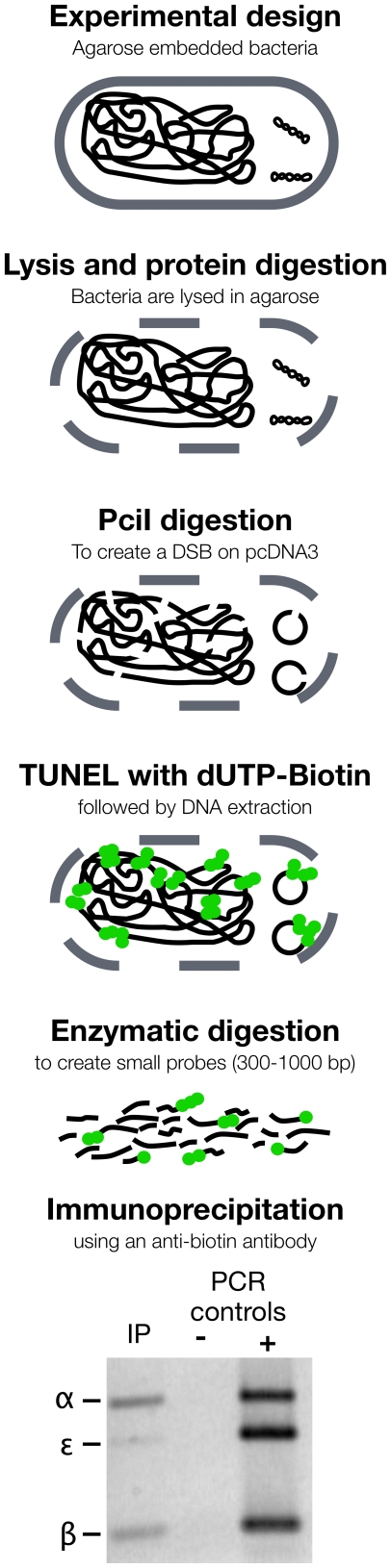
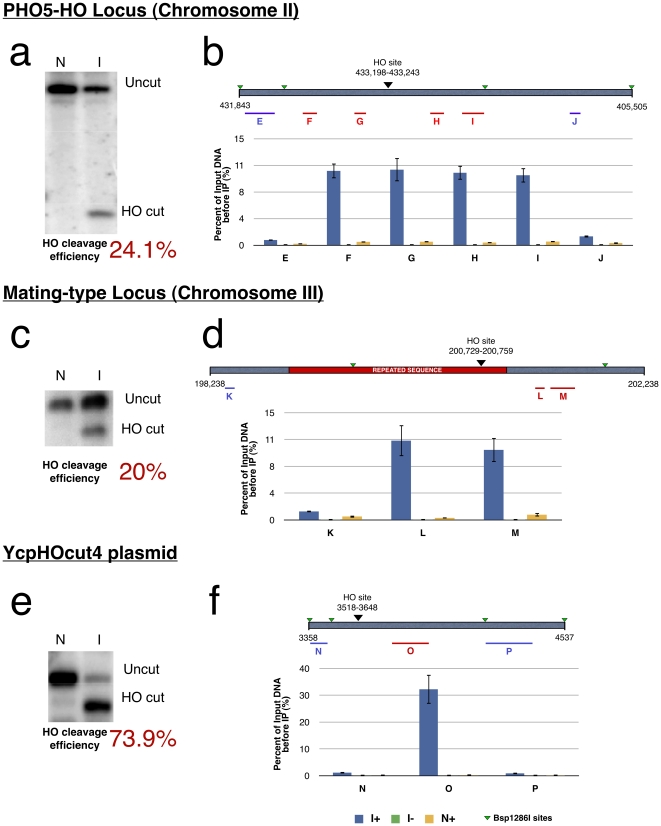
Determination of cellular DNA damage has so far been limited to global assessment of genome integrity whereas nucleotide-level mapping has been restricted to specific loci by the use of specific primers. Therefore, only limited DNA sequences can be studied and novel regions of genomic instability can hardly be discovered. Using a well-characterized yeast model, we describe a straightforward strategy to map genome-wide DNA strand breaks without compromising nucleotide-level resolution. This technique, termed "damaged DNA immunoprecipitation" (dDIP), uses immunoprecipitation and the terminal deoxynucleotidyl transferase-mediated dUTP-biotin end-labeling (TUNEL) to capture DNA at break sites. When used in combination with microarray or next-generation sequencing technologies, dDIP will allow researchers to map genome-wide DNA strand breaks as well as other types of DNA damage and to establish a clear profiling of altered genes and/or intergenic sequences in various experimental conditions. This mapping technique could find several applications for instance in the study of aging, genotoxic drug screening, cancer, meiosis, radiation and oxidative DNA damage.
迄今为止,细胞 DNA 损伤的测定一直局限于对基因组完整性的全局评估,而核苷酸水平的作图则受到特定引物的限制,只能针对特定的基因座。因此,只能研究有限的 DNA 序列,很难发现基因组不稳定性的新区域。我们使用一个经过良好表征的酵母模型,描述了一种不影响核苷酸分辨率的全基因组 DNA 链断裂作图的简单策略。该技术称为“受损 DNA 免疫沉淀”(dDIP),使用免疫沉淀和末端脱氧核苷酸转移酶介导的 dUTP-生物素末端标记(TUNEL)在断裂部位捕获 DNA。当与微阵列或下一代测序技术结合使用时,dDIP 将允许研究人员绘制全基因组 DNA 链断裂以及其他类型的 DNA 损伤图谱,并在各种实验条件下建立明确的改变基因和/或基因间序列的图谱。这种作图技术可能有多种应用,例如在衰老、遗传毒性药物筛选、癌症、减数分裂、辐射和氧化 DNA 损伤的研究中。