Group Cardiovascular Genetics, Department of Vertebrate Genomics, Max Planck Institute for Molecular Genetics, Berlin, Germany.
PLoS Genet. 2011 Feb;7(2):e1001313. doi: 10.1371/journal.pgen.1001313. Epub 2011 Feb 17.
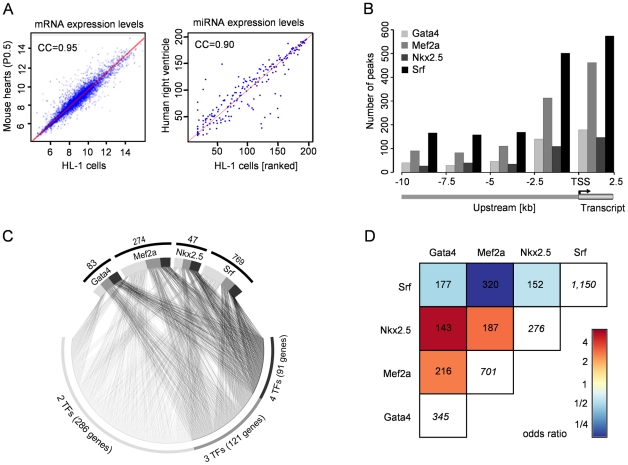
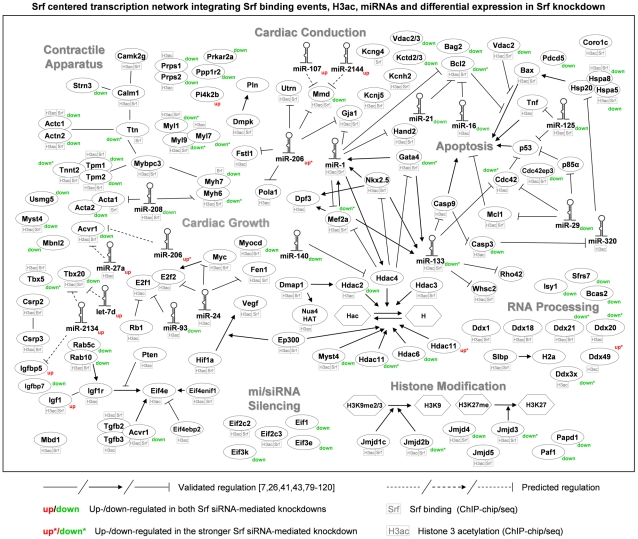
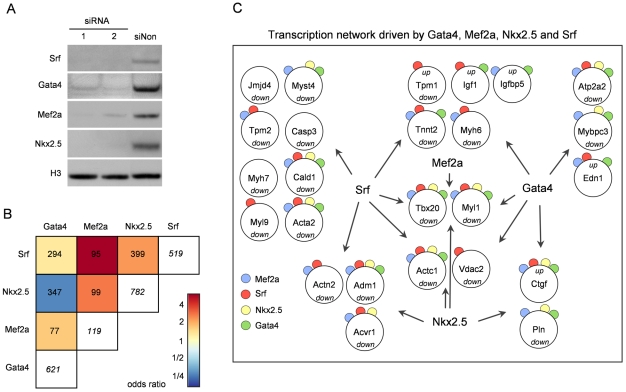
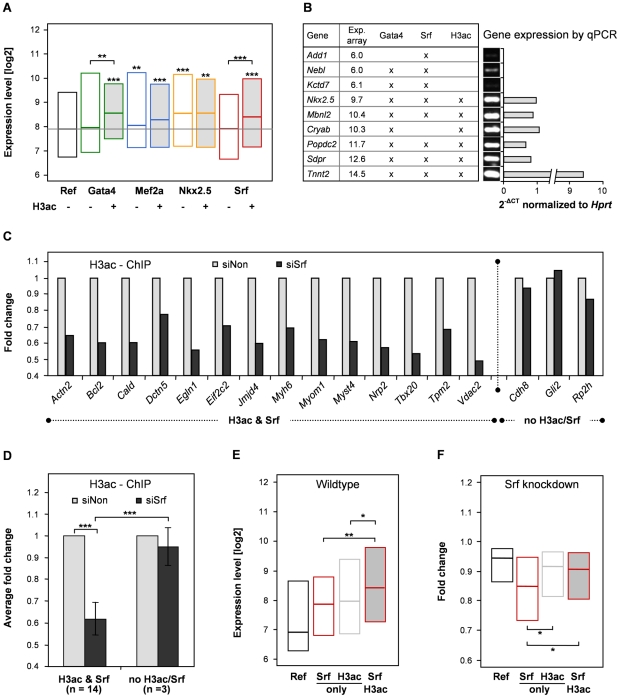
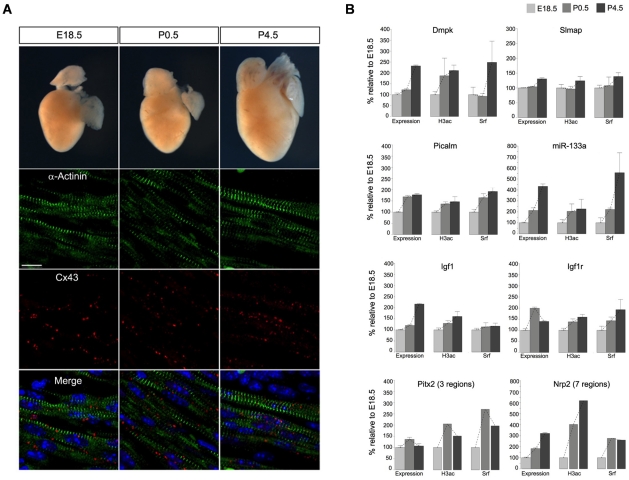
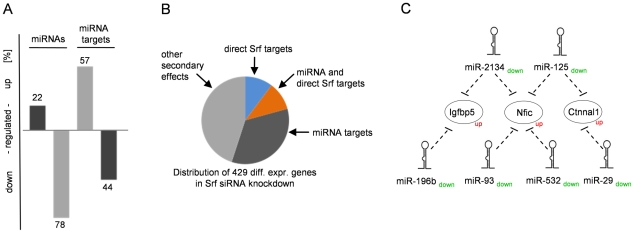
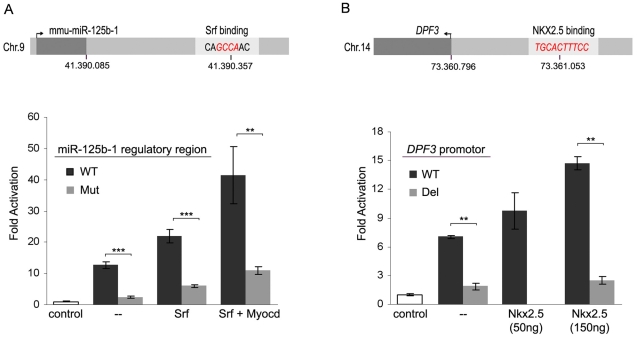
The transcriptome, as the pool of all transcribed elements in a given cell, is regulated by the interaction between different molecular levels, involving epigenetic, transcriptional, and post-transcriptional mechanisms. However, many previous studies investigated each of these levels individually, and little is known about their interdependency. We present a systems biology study integrating mRNA profiles with DNA-binding events of key cardiac transcription factors (Gata4, Mef2a, Nkx2.5, and Srf), activating histone modifications (H3ac, H4ac, H3K4me2, and H3K4me3), and microRNA profiles obtained in wild-type and RNAi-mediated knockdown. Finally, we confirmed conclusions primarily obtained in cardiomyocyte cell culture in a time-course of cardiac maturation in mouse around birth. We provide insights into the combinatorial regulation by cardiac transcription factors and show that they can partially compensate each other's function. Genes regulated by multiple transcription factors are less likely differentially expressed in RNAi knockdown of one respective factor. In addition to the analysis of the individual transcription factors, we found that histone 3 acetylation correlates with Srf- and Gata4-dependent gene expression and is complementarily reduced in cardiac Srf knockdown. Further, we found that altered microRNA expression in Srf knockdown potentially explains up to 45% of indirect mRNA targets. Considering all three levels of regulation, we present an Srf-centered transcription network providing on a single-gene level insights into the regulatory circuits establishing respective mRNA profiles. In summary, we show the combinatorial contribution of four DNA-binding transcription factors in regulating the cardiac transcriptome and provide evidence that histone modifications and microRNAs modulate their functional consequence. This opens a new perspective to understand heart development and the complexity cardiovascular disorders.
转录组作为特定细胞中所有转录元件的集合,受到不同分子水平之间相互作用的调控,涉及表观遗传、转录和转录后机制。然而,许多先前的研究分别研究了这些水平中的每一个,并且对于它们的相互依存性知之甚少。我们进行了一项系统生物学研究,将 mRNA 谱与关键心脏转录因子(Gata4、Mef2a、Nkx2.5 和 Srf)的 DNA 结合事件、激活的组蛋白修饰(H3ac、H4ac、H3K4me2 和 H3K4me3)以及在野生型和 RNAi 介导的敲低中获得的 microRNA 谱进行了整合。最后,我们在出生前后小鼠心脏成熟的时间过程中,在心肌细胞培养中主要获得的结论进行了验证。我们深入了解了心脏转录因子的组合调控,并表明它们可以部分补偿彼此的功能。受多个转录因子调控的基因在一个相应因子的 RNAi 敲低中不太可能表现出差异表达。除了对单个转录因子的分析外,我们还发现组蛋白 3 乙酰化与 Srf 和 Gata4 依赖性基因表达相关,并且在心脏 Srf 敲低中互补性降低。此外,我们发现 Srf 敲低中改变的 microRNA 表达可能解释了多达 45%的间接 mRNA 靶标。考虑到调节的三个水平,我们提出了一个以 Srf 为中心的转录网络,在单个基因水平上提供了关于调节电路的见解,这些调节电路建立了各自的 mRNA 谱。总之,我们展示了四个 DNA 结合转录因子在调节心脏转录组方面的组合贡献,并提供了证据表明组蛋白修饰和 microRNA 调节它们的功能后果。这为理解心脏发育和心血管疾病的复杂性开辟了新的视角。