Department of Biochemistry, All India Institute of Medical Sciences, New Delhi, India.
PLoS One. 2011 Feb 24;6(2):e14728. doi: 10.1371/journal.pone.0014728.
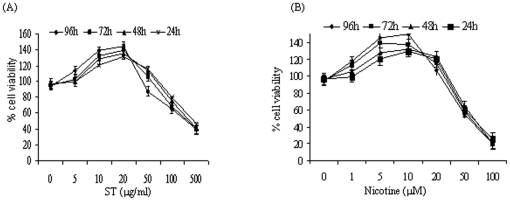
Epidemiological association of head and neck cancer with smokeless tobacco (ST) emphasizes the need to unravel the molecular mechanisms implicated in cancer development, and identify pharmacologically safe agents for early intervention and prevention of disease recurrence. Guggulsterone (GS), a biosafe nutraceutical, inhibits the PI3K/Akt pathway that plays a critical role in HNSCC development. However, the potential of GS to suppress ST and nicotine (major component of ST) induced HNSCC remains unexplored. We hypothesized GS can abrogate the effects of ST and nicotine on apoptosis in HNSCC cells, in part by activation of PI3K/Akt pathway and its downstream targets, Bax and Bad.
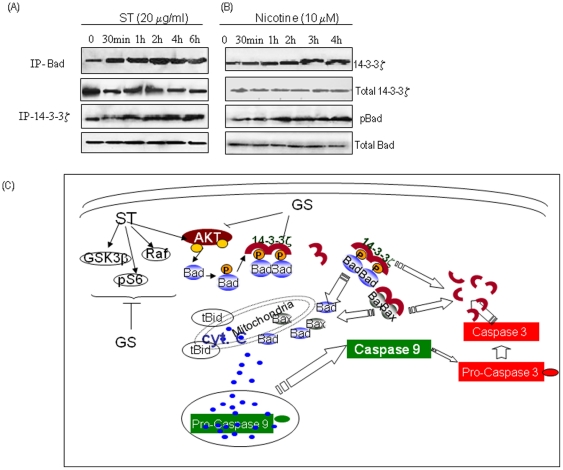
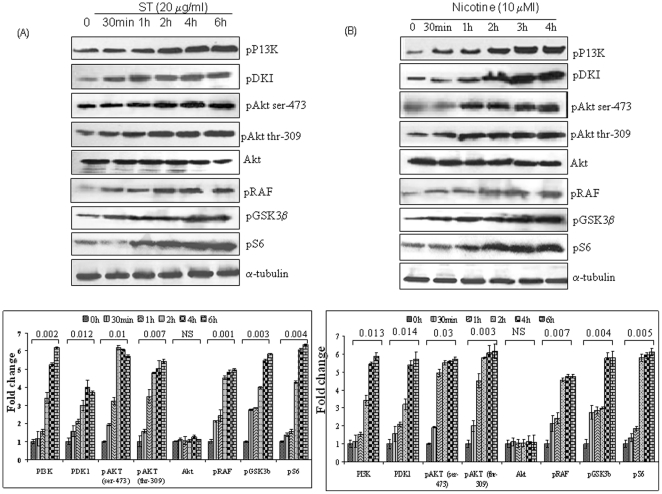
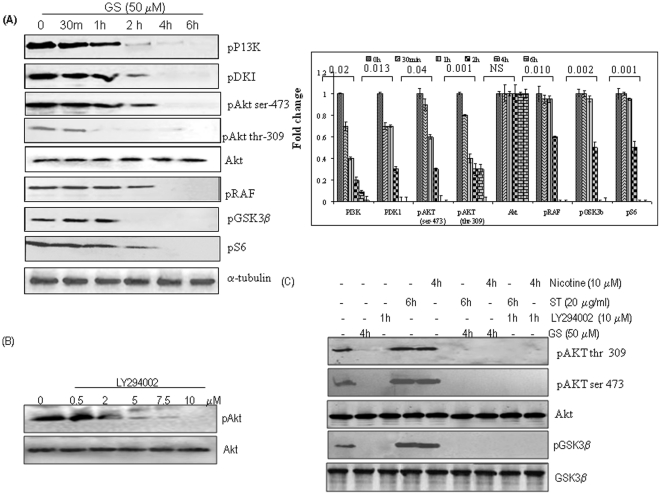
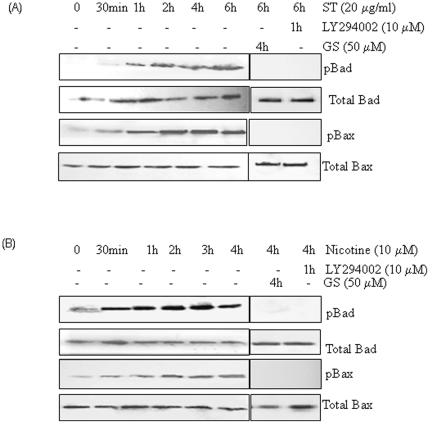
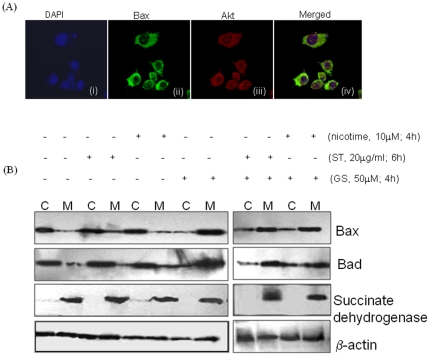
Our results showed ST and nicotine treatment resulted in activation of PI3K, PDK1, Akt, and its downstream proteins--Raf, GSK3β and pS6 while GS induced a time dependent decrease in activation of PI3K/Akt pathway. ST and nicotine treatment also resulted in induction of Bad and Bax phosphorylation, increased the association of Bad with 14-3-3ζresulting in its sequestration in the cytoplasm of head and neck cancer cells, thus blocking its pro-apoptotic function. Notably, GS pre-treatment inhibited ST/nicotine induced activation of PI3K/Akt pathway, and inhibited the Akt mediated phosphorylation of Bax and Bad.
In conclusion, GS treatment not only inhibited proliferation, but also induced apoptosis by abrogating the effects of ST/nicotine on PI3K/Akt pathway in head and neck cancer cells. These findings provide a rationale for designing future studies to evaluate the chemopreventive potential of GS in ST/nicotine associated head and neck cancer.
头颈部癌症与无烟烟草(ST)的流行病学关联强调需要阐明参与癌症发展的分子机制,并确定用于早期干预和预防疾病复发的药理安全药物。芝麻素(GS),一种生物安全的营养保健品,可抑制在 HNSCC 发展中起关键作用的 PI3K/Akt 通路。然而,GS 抑制 ST 和尼古丁(ST 的主要成分)诱导的 HNSCC 的潜力尚未得到探索。我们假设 GS 可以通过激活 PI3K/Akt 通路及其下游靶标 Bax 和 Bad,部分阻断 ST 和尼古丁对 HNSCC 细胞凋亡的作用。
我们的结果表明,ST 和尼古丁处理导致 PI3K、PDK1、Akt 及其下游蛋白 Raf、GSK3β 和 pS6 的激活,而 GS 诱导 PI3K/Akt 通路的激活呈时间依赖性下降。ST 和尼古丁处理还导致 Bad 和 Bax 磷酸化的诱导,增加 Bad 与 14-3-3ζ的结合,从而将其隔离在头颈部癌细胞的细胞质中,从而阻止其促凋亡功能。值得注意的是,GS 预处理抑制了 ST/尼古丁诱导的 PI3K/Akt 通路的激活,并抑制了 Akt 介导的 Bax 和 Bad 的磷酸化。
总之,GS 治疗不仅抑制增殖,而且通过阻断 ST/尼古丁对 HNSCC 细胞中 PI3K/Akt 通路的作用,诱导细胞凋亡。这些发现为设计未来的研究提供了依据,以评估 GS 在 ST/尼古丁相关的头颈部癌症中的化学预防潜力。