Department of Anesthesiology and Pain Medicine, Hallym University College of Medicine, Chuncheon, Korea.
Korean J Anesthesiol. 2011 Feb;60(2):124-7. doi: 10.4097/kjae.2011.60.2.124. Epub 2011 Feb 25.
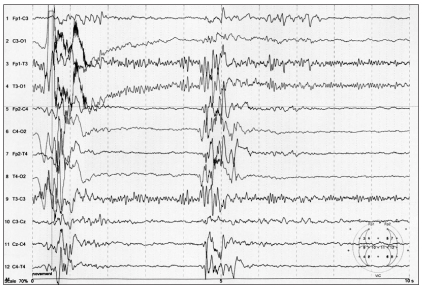
Ohtahara syndrome (OS) is a rare epileptic encephalopathy that is characterized by an abnormal electroencephalogram (EEG) and intractable seizures in the neonatal and early infantile period. The patient of this reported case was delivered normally at 39 weeks of gestation without any complication. One week after birth, seizures that were refractory to anticonvulsants started with repetitive clustered tonic spasms. The child had no abnormal findings on the initial laboratory investigations. But he was diagnosed with OS according to the frequent tonic spasms, an abnormal EEG pattern of suppression-burst and magnetic resonance imaging of cortical dysplasia. He was planned to undergo an operation for brain lesion. This report describes our experience with the general anesthetic management when we performed craniotomy and right hemispherotomy for a patient with OS.
大田原综合征(OS)是一种罕见的癫痫性脑病,其特征为新生儿和婴儿早期出现异常脑电图(EEG)和难治性癫痫发作。本例报告的患者在 39 孕周时正常分娩,无任何并发症。出生后 1 周,开始出现对抗癫痫药物无反应的反复阵挛性强直性痉挛发作。患儿初始实验室检查未见异常发现。但根据频繁的强直性痉挛、抑制-爆发型异常脑电图模式和皮质发育不良的磁共振成像,诊断为 OS。他计划进行脑部病变手术。本报告描述了我们在为一名 OS 患者行开颅术和右半脑切开术时的全身麻醉管理经验。