Department of Cell and Molecular Biology, Karolinska Institutet, Stockholm, Sweden.
Leukemia. 2011 Jun;25(6):1017-25. doi: 10.1038/leu.2011.35. Epub 2011 Mar 11.
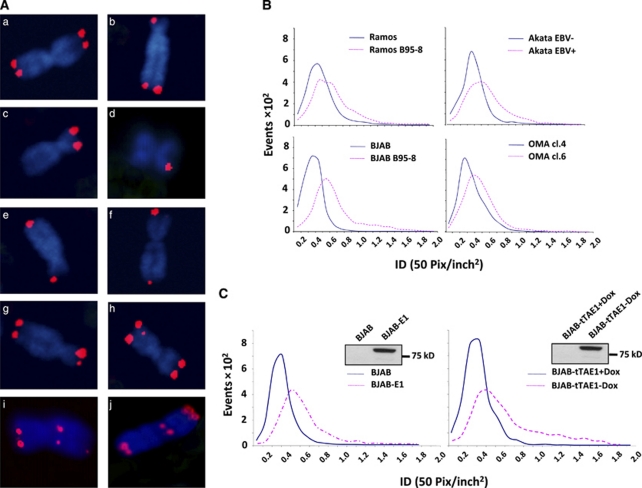
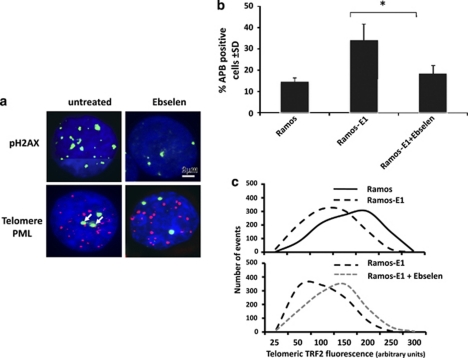
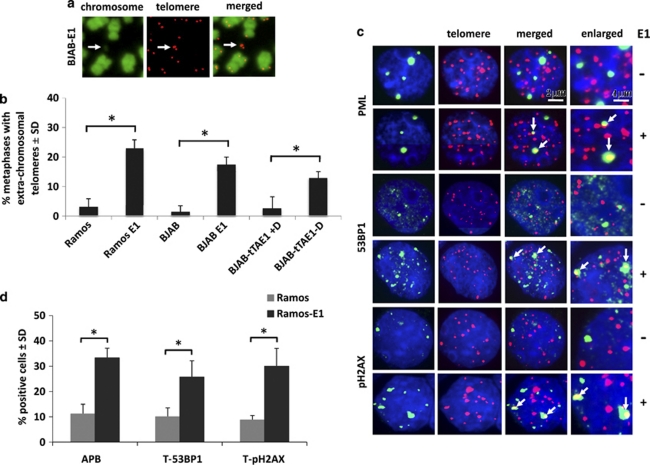
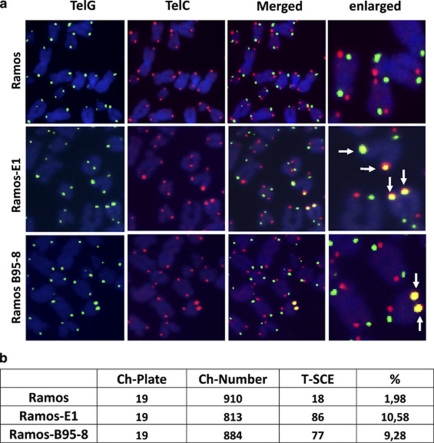
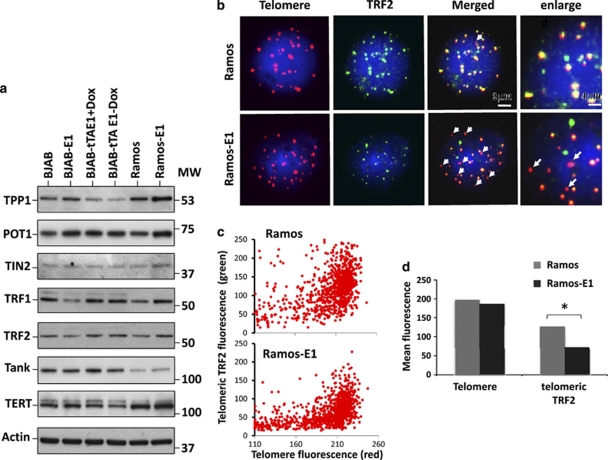
The Epstein-Barr virus (EBV) nuclear antigen (EBNA)-1 promotes the accumulation of chromosomal aberrations in malignant B cells by inducing oxidative stress. Here we report that this phenotype is associated with telomere dysfunction. Stable or conditional expression of EBNA1 induced telomere abnormalities including loss or gain of telomere signals, telomere fusion and heterogeneous length of telomeres. This was accompanied by the accumulation of extrachromosomal telomeres, telomere dysfunction-induced foci (TIFs) containing phosphorylated histone H2AX and the DNA damage response protein 53BP1, telomere-associated promyelocytic leukemia nuclear bodies (APBs), telomeric-sister chromatid exchanges and displacement of the shelterin protein TRF2. The induction of TIFs and APBs was inhibited by treatment with scavengers of reactive oxygen species (ROS) that also promoted the relocalization of TRF2 at telomeres. These findings highlight a novel mechanism by which EBNA1 may promote malignant transformation and tumor progression.
EBV 核抗原(EBNA)-1 通过诱导氧化应激促进恶性 B 细胞中染色体畸变的积累。在这里,我们报告说这种表型与端粒功能障碍有关。EBNA1 的稳定或条件表达诱导端粒异常,包括端粒信号的丢失或获得、端粒融合和端粒长度的异质性。这伴随着额外染色体端粒的积累、含有磷酸化组蛋白 H2AX 和 DNA 损伤反应蛋白 53BP1 的端粒功能障碍诱导焦点(TIF)、端粒相关早幼粒细胞白血病核体(APB)、端粒姐妹染色单体交换和遮蔽蛋白 TRF2 的位移。ROS 清除剂的处理抑制了 TIF 和 APB 的诱导,这也促进了 TRF2 在端粒上的重新定位。这些发现强调了 EBNA1 可能促进恶性转化和肿瘤进展的新机制。