Department of Psychiatry, University of Wisconsin-Madison, 6001 Research Park Blvd., Madison, WI 53719, USA.
J Psychiatr Res. 2011 Aug;45(8):1019-26. doi: 10.1016/j.jpsychires.2011.02.003. Epub 2011 Mar 11.
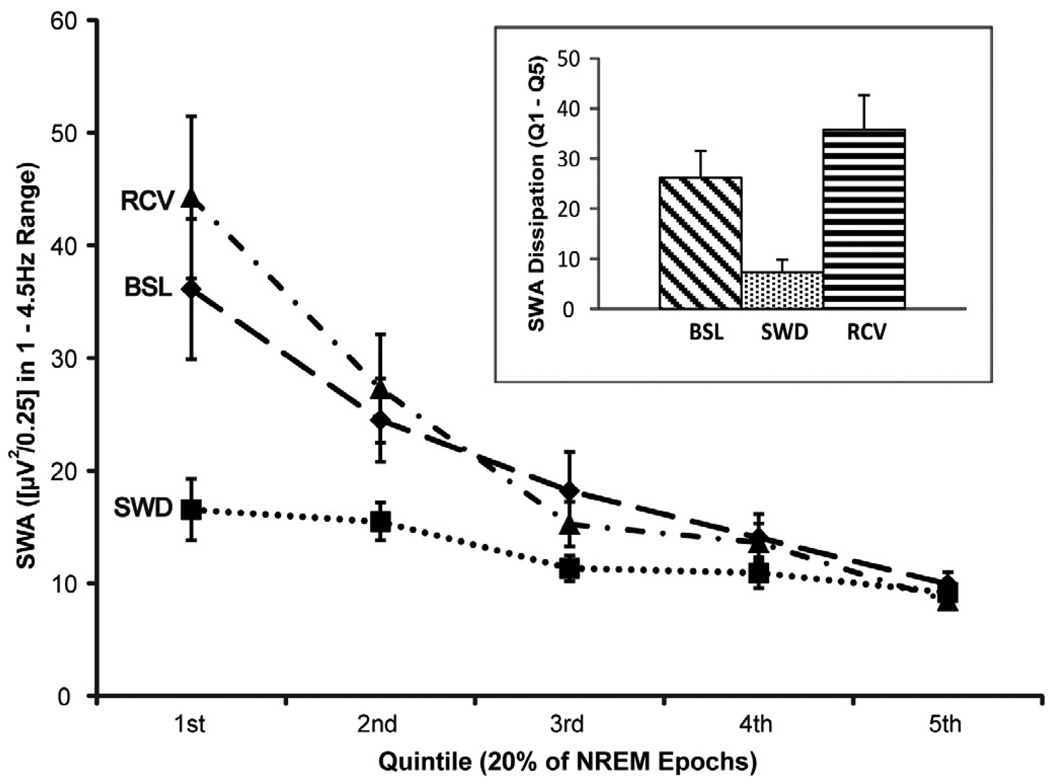
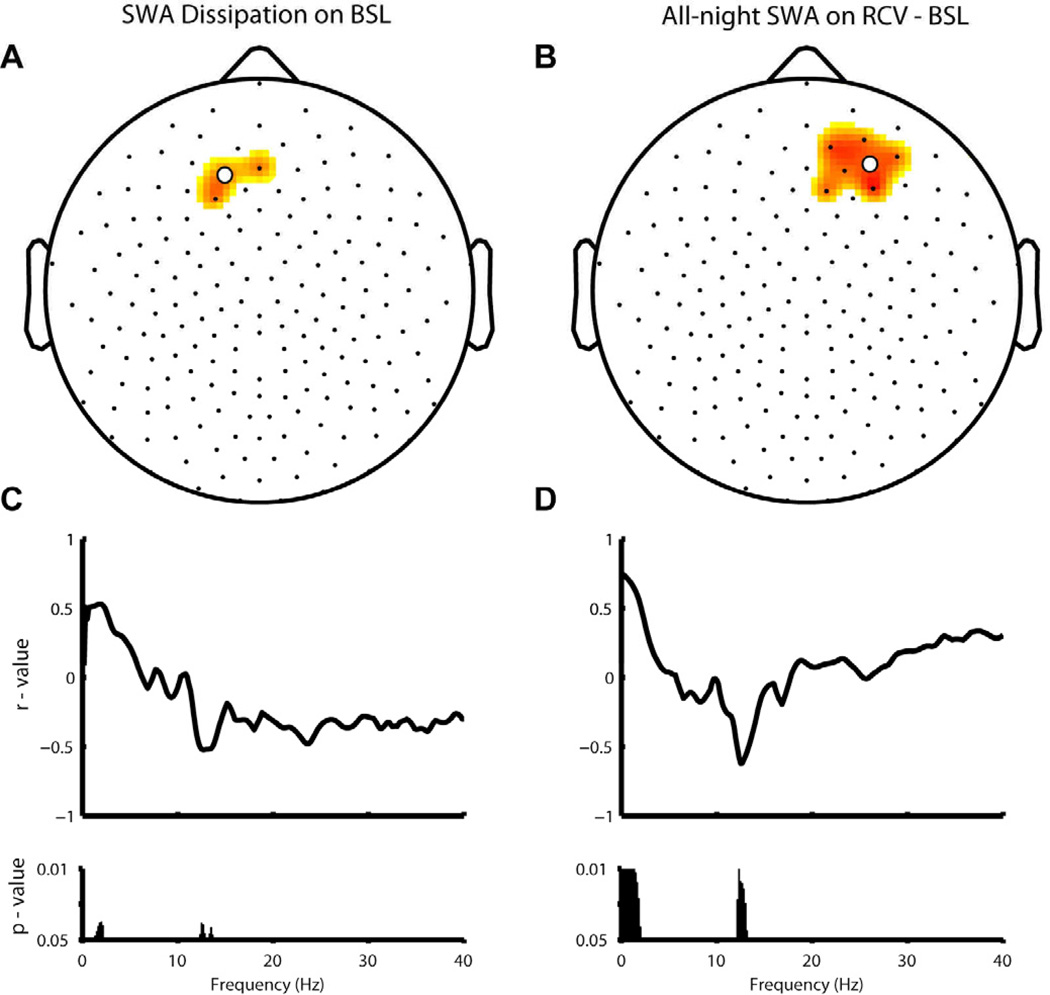
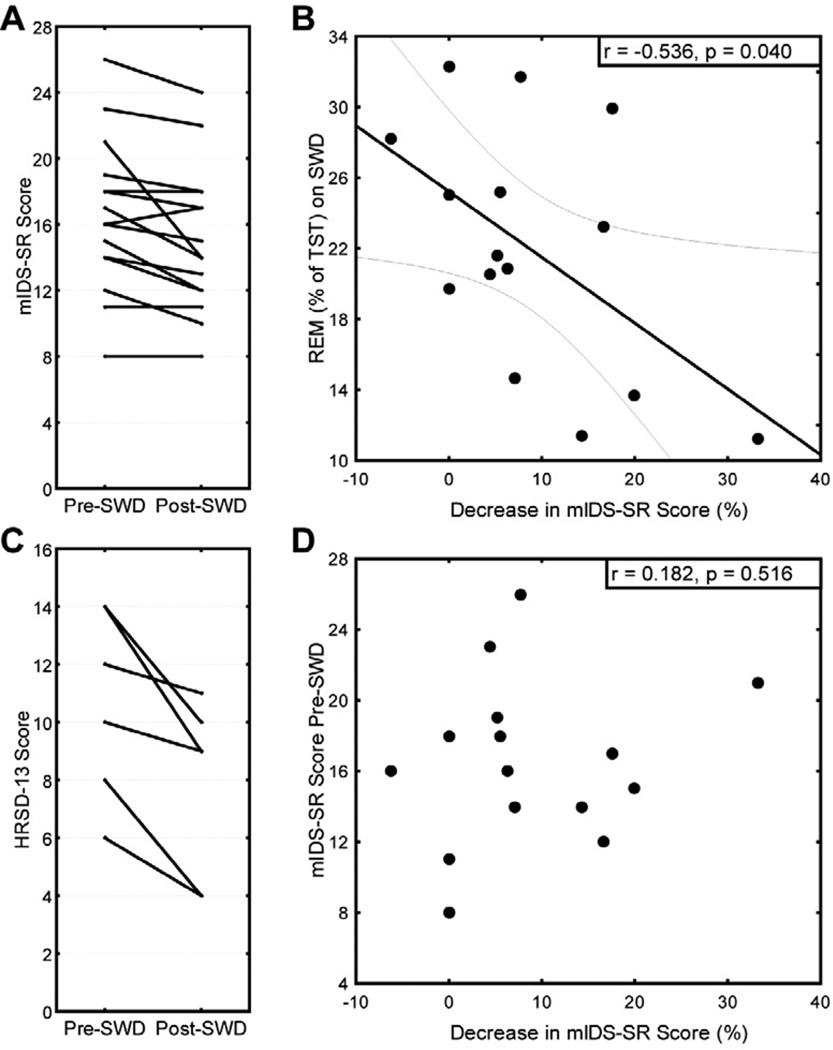
Sleep deprivation can acutely reverse depressive symptoms in some patients with major depression. Because abnormalities in slow wave sleep are one of the most consistent biological markers of depression, it is plausible that the antidepressant effects of sleep deprivation are due to the effects on slow wave homeostasis. This study tested the prediction that selectively reducing slow waves during sleep (slow wave deprivation; SWD), without disrupting total sleep time, will lead to an acute reduction in depressive symptomatology. As part of a multi-night, cross-over design study, participants with major depression (non-medicated; n = 17) underwent baseline, SWD, and recovery sleep sessions, and were recorded with high-density EEG (hdEEG). During SWD, acoustic stimuli were played to suppress subsequent slow waves, without waking up the participant. The effects of SWD on depressive symptoms were assessed with both self-rated and researcher-administered scales. Participants experienced a significant decrease in depressive symptoms according to both self-rated (p = .007) and researcher-administered (p = .010) scales, while vigilance was unaffected. The reduction in depressive symptoms correlated with the overnight dissipation of fronto-central slow wave activity (SWA) on baseline sleep, the rebound in right frontal all-night SWA on recovery sleep, and the amount of REM sleep on the SWD night. In addition to highlighting the benefits of hdEEG in detecting regional changes in brain activity, these findings suggest that SWD may help to better understand the pathophysiology of depression and may be a useful tool for the neuromodulatory reversal of depressive symptomatology.
睡眠剥夺可以使一些重度抑郁症患者的抑郁症状急性逆转。由于慢波睡眠异常是抑郁症最一致的生物学标志物之一,因此睡眠剥夺的抗抑郁作用可能是由于对慢波稳态的影响。本研究检验了这样一种假设,即选择性地减少睡眠中的慢波(慢波剥夺;SWD)而不破坏总睡眠时间,将导致抑郁症状的急性减轻。作为多夜交叉设计研究的一部分,患有重度抑郁症(未用药;n=17)的参与者进行了基线、SWD 和恢复睡眠阶段,并使用高密度脑电图(hdEEG)进行记录。在 SWD 期间,播放声音刺激以抑制随后的慢波,而不会唤醒参与者。使用自我评估和研究人员管理的量表评估 SWD 对抑郁症状的影响。参与者根据自我评估(p=0.007)和研究人员管理的量表(p=0.010)都经历了抑郁症状的显著减轻,而警觉性不受影响。抑郁症状的减轻与基线睡眠中额中央慢波活动(SWA)的整夜消散、恢复睡眠中右额部全夜 SWA 的反弹以及 SWD 夜间 REM 睡眠的量相关。除了强调 hdEEG 在检测大脑活动的区域变化方面的优势外,这些发现表明 SWD 可能有助于更好地理解抑郁症的病理生理学,并且可能是神经调节逆转抑郁症状的有用工具。