Department of Anesthesiology, Xinhua Hospital, Shanghai Jiaotong University School of Medicine, Kongjiang Road, Shanghai, China.
J Biomed Sci. 2011 Mar 16;18(1):22. doi: 10.1186/1423-0127-18-22.
Ischemic postconditioning (IPost) has aroused much attention since 2003 when it was firstly reported. The role of microRNAs (miRNAs or miRs) in IPost has rarely been reported. The present study was undertaken to investigate whether miRNAs were involved in the protective effect of IPost against myocardial ischemia-reperfusion (IR) injury and the probable mechanisms involved.
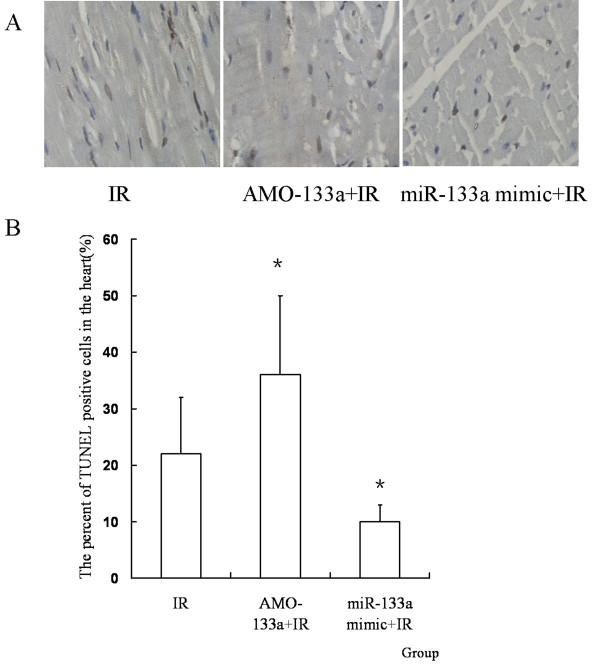
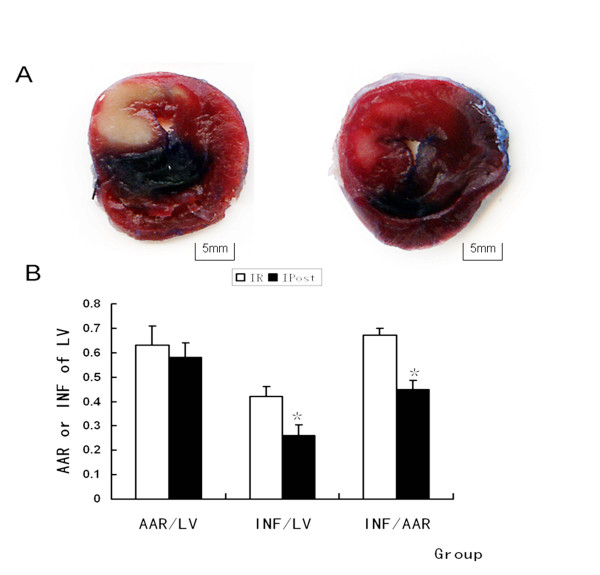
Thirty SD rats weighing 250-300 g were equally randomized to three groups: Control group, where the rats were treated with thoracotomy only; IR group, where the rats were treated with ischemia for 60 min and reperfusion for 180 min; and IPost group, where the rats were treated with 3 cycles of transient IR just before reperfusion. The extent of myocardial infarction, LDH and CK activities were measured immediately after treatment. Myocardial apoptosis was detected by TUNEL assay. The myocardial tissue was collected after IR or IPost stimulation to evaluate the miRNAs expression level by miRNA-microarray and quantitative real-time RT-PCR. Real-time PCR was conducted to identify changes in mRNA expression of apoptosis-related genes such as Bcl-2, Bax and Caspase-9 (CASP9), and Western blot was used to compare the protein expression level of CASP9 in the three groups. The miRNA mimics and anti-miRNA oligonucleotides (AMO) were transferred into the cultured neonatal cardiomyocytes and myocardium before they were treated with IR. The effect of miRNAs on apoptosis was determined by flow cytometry and TUNEL assay. CASP9, as one of the candidate target of miR-133a, was compared during IR after the miR-133a mimic or AMO-133a was transferred into the myocardium.
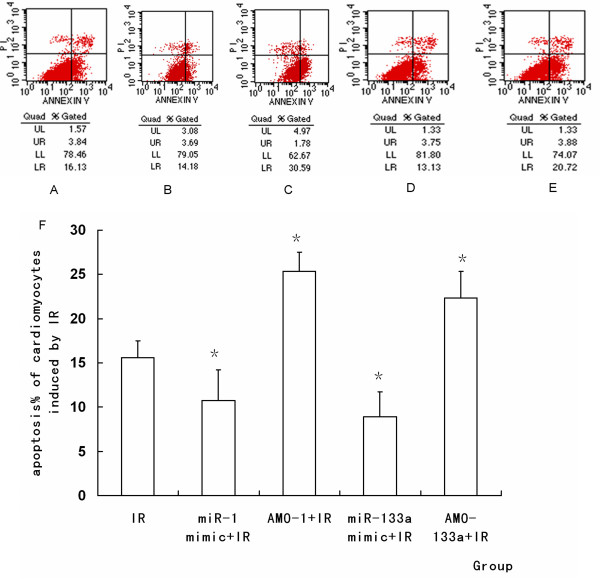
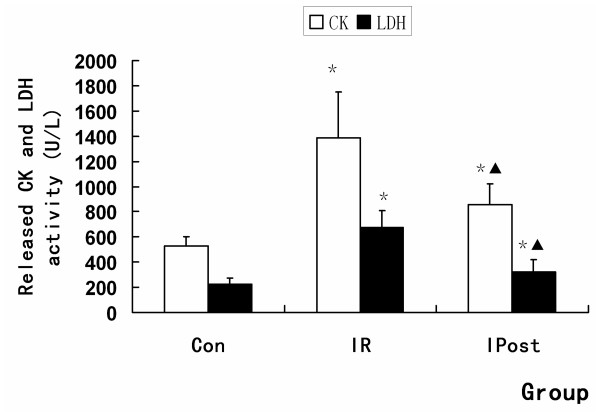
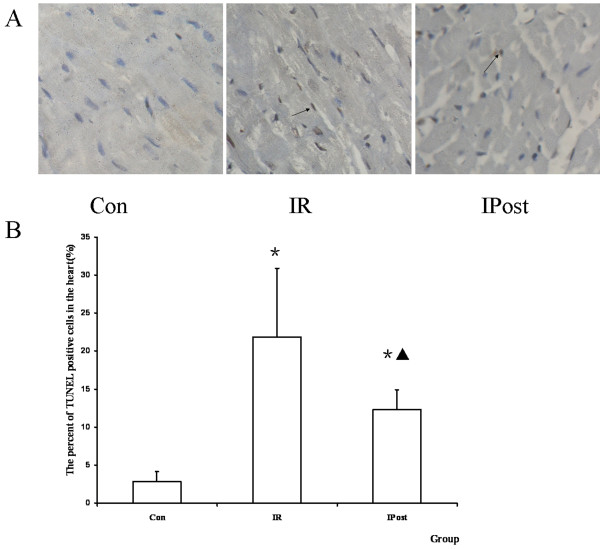
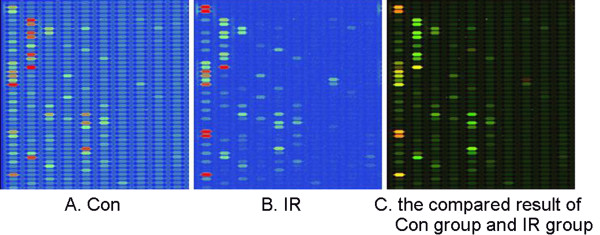
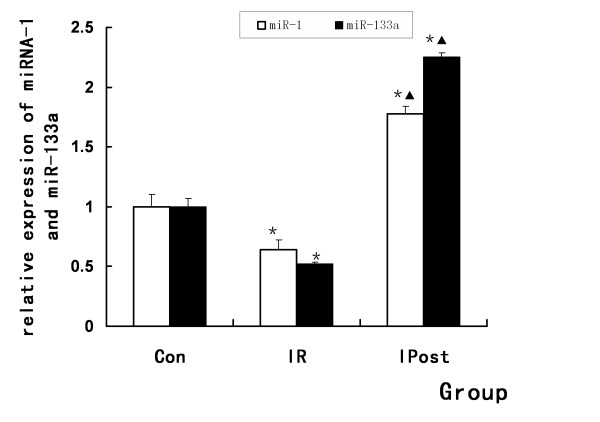
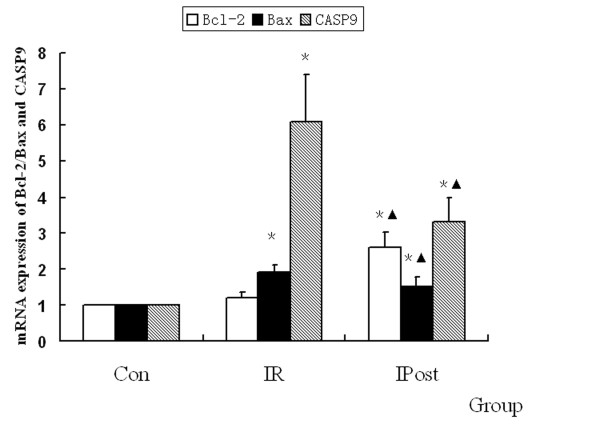
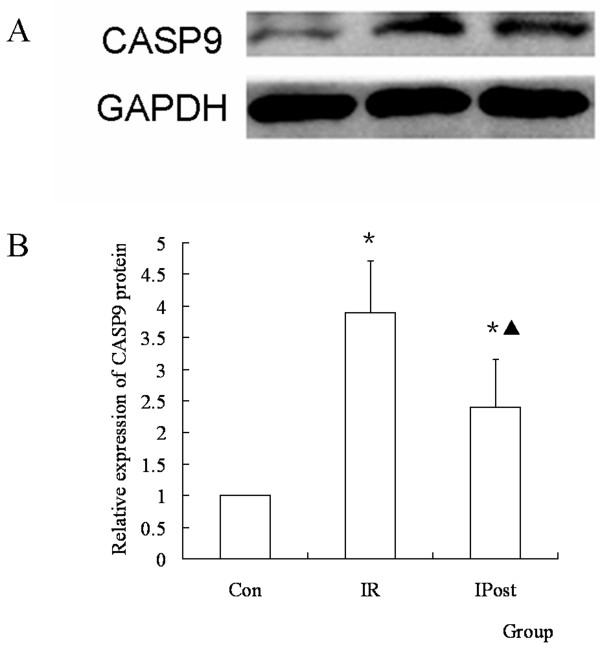
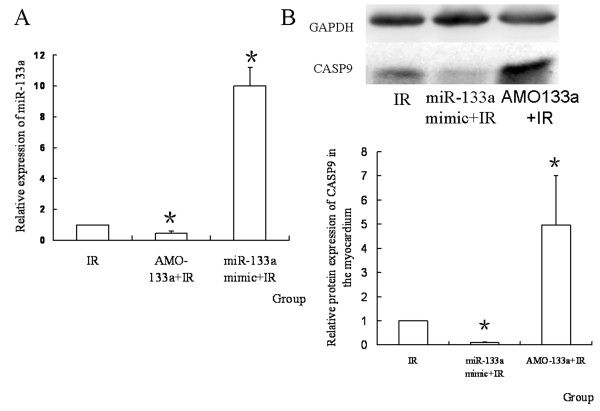
IPost reduced the IR-induced infarct size of the left ventricle, and decreased CK and LDH levels. TUNEL assay showed that myocardial apoptosis was attenuated by IPost compared with IR. MiRNA-microarray and RT-PCR showed that myocardial-specific miR-1 and miR-133a were down-regulated by IR, and up-regulated by IPost compared with IR. Furthermore, IPost up-regulated the mRNA expression of Bcl-2, down-regulated that of Bax and CASP9. Western blot showed that IPost also down-regulated the CASP9 protein expression compared with IR. The results of flow cytometry and TUNEL assay showed that up-regulation of miR-1 and miR-133a decreased apoptosis of cardiomyocytes. MiR-133a mimic down-regulated CASP9 protein expression and attenuated IR-induced apoptosis.
MiRNAs are associated with the protective effect of IPost against myocardial IR injury. IPost can up-regulate miR-1 and miR-133a, and decrease apoptosis of cardiomyocyte. Myocardial-specific miR-1 and miR-133a may play an important role in IPost protection by regulating apoptosis-related genes. MiR-133a may attenuate apoptosis of myocardiocytes by targeting CASP9.
自 2003 年首次报道以来,缺血后处理(IPost)引起了广泛关注。miRNAs(miRNAs 或 miRs)在 IPost 中的作用很少有报道。本研究旨在探讨 miRNAs 是否参与 IPost 对心肌缺血再灌注(IR)损伤的保护作用及其可能的机制。
30 只体重 250-300g 的 SD 大鼠随机等分为三组:对照组,仅行开胸手术;IR 组,缺血 60min 再灌注 180min;IPost 组,再灌注前给予 3 个循环短暂 IR。治疗后即刻测定心肌梗死范围、LDH 和 CK 活性。TUNEL 法检测心肌细胞凋亡。IR 或 IPost 刺激后取心肌组织,通过 miRNA 微阵列和实时定量 RT-PCR 评估 miRNA 表达水平。实时 PCR 检测凋亡相关基因 Bcl-2、Bax 和 Caspase-9(CASP9)mRNA 表达变化,Western blot 比较三组 CASP9 蛋白表达水平。将 miRNA 模拟物和反义 miRNA 寡核苷酸(AMO)转染培养的乳鼠心肌细胞和心肌组织,再进行 IR。通过流式细胞术和 TUNEL 法检测 miRNA 对细胞凋亡的影响。IR 后将 miR-133a 模拟物或 AMO-133a 转染心肌组织,比较 miR-133a 作为候选靶标之一的 CASP9 变化。
IPost 降低了左心室 IR 引起的梗死面积,降低了 CK 和 LDH 水平。TUNEL 法显示 IPost 可减轻与 IR 相比的心肌细胞凋亡。miRNA 微阵列和 RT-PCR 显示,IR 下调心肌特异性 miR-1 和 miR-133a,而 IPost 与 IR 相比上调。此外,IPost 还上调了 Bcl-2 的 mRNA 表达,下调了 Bax 和 CASP9 的表达。Western blot 显示 IPost 还下调了与 IR 相比的 CASP9 蛋白表达。流式细胞术和 TUNEL 法的结果表明,miR-1 和 miR-133a 的上调可减少心肌细胞凋亡。miR-133a 模拟物下调了 CASP9 蛋白表达并减轻了 IR 诱导的凋亡。
miRNAs 与 IPost 对心肌 IR 损伤的保护作用有关。IPost 可上调 miR-1 和 miR-133a,减少心肌细胞凋亡。心肌特异性 miR-1 和 miR-133a 可能通过调节凋亡相关基因在 IPost 保护中发挥重要作用。miR-133a 可能通过靶向 CASP9 减轻心肌细胞凋亡。