Clopper Cynthia G, Conrey Brianna, Pisoni David B
Indiana University.
J Lang Soc Psychol. 2005 Jun 1;24(2):182-206. doi: 10.1177/0261927X05275741.
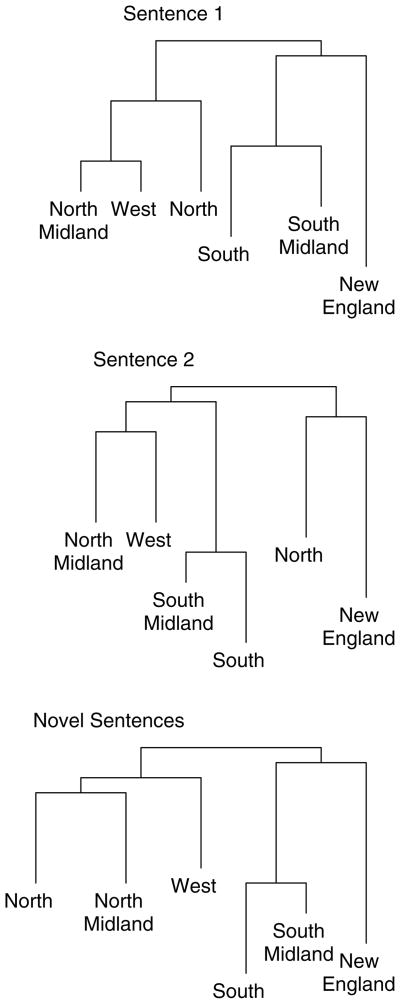
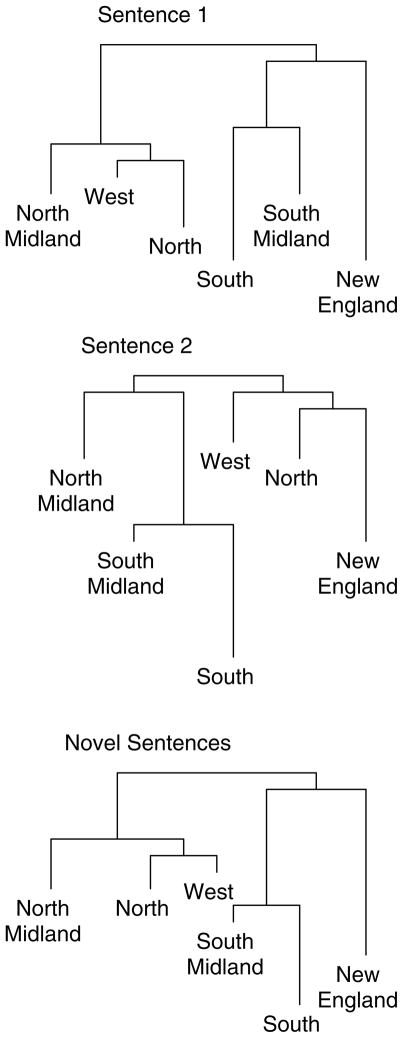
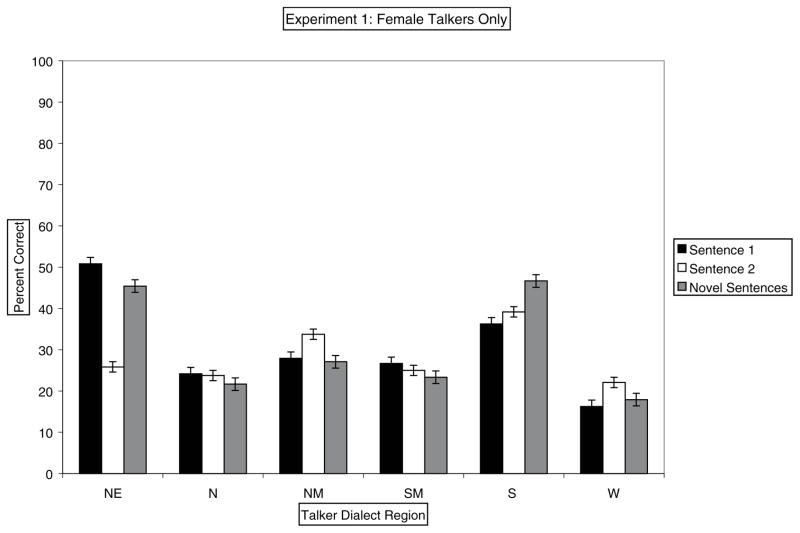
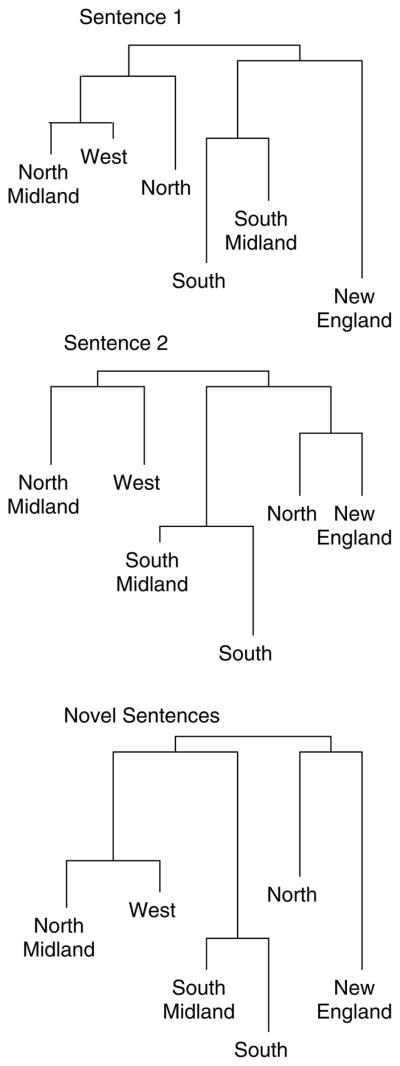
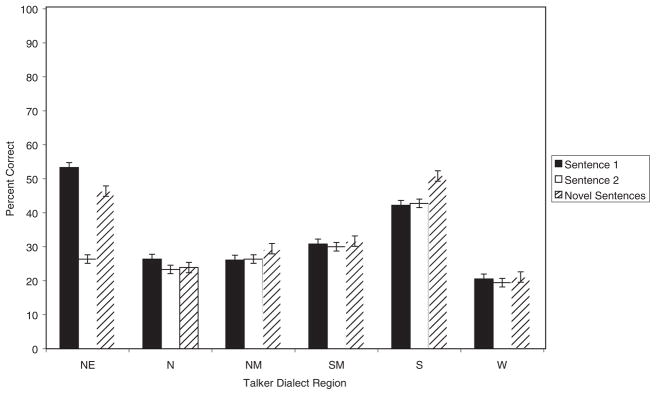
The identification of the gender of an unfamiliar talker is an easy and automatic process for naïve adult listeners. Sociolinguistic research has consistently revealed gender differences in the production of linguistic variables. Research on the perception of dialect variation, however, has been limited almost exclusively to male talkers. In the present study, naïve participants were asked to categorize unfamiliar talkers by dialect using sentence-length utterances under three presentation conditions: male talkers only, female talkers only, and a mixed gender condition. The results revealed no significant differences in categorization performance across the three presentation conditions. However, a clustering analysis of the listeners' categorization errors revealed significant effects of talker gender on the underlying perceptual similarity spaces. The present findings suggest that naïve listeners are sensitive to gender differences in speech production and are able to use those differences to reliably categorize unfamiliar male and female talkers by dialect.
对于未经训练的成年听众而言,识别陌生说话者的性别是一个轻松且自动的过程。社会语言学研究一直揭示出语言变量在使用上存在性别差异。然而,关于方言变体感知的研究几乎完全局限于男性说话者。在本研究中,要求未经训练的参与者在三种呈现条件下,根据方言对陌生说话者进行分类,使用的是句子长度的话语:仅男性说话者、仅女性说话者以及混合性别条件。结果显示,在这三种呈现条件下,分类表现没有显著差异。然而,对听众分类错误的聚类分析揭示了说话者性别对潜在感知相似性空间有显著影响。目前的研究结果表明,未经训练的听众对言语产生中的性别差异敏感,并且能够利用这些差异可靠地根据方言对陌生的男性和女性说话者进行分类。