Center for Microbial Ecology, Michigan State University, East Lansing, Michigan 48824-1325, USA.
BMC Microbiol. 2011 Mar 30;11:64. doi: 10.1186/1471-2180-11-64.
EtrA in Shewanella oneidensis MR-1, a model organism for study of adaptation to varied redox niches, shares 73.6% and 50.8% amino acid sequence identity with the oxygen-sensing regulators Fnr in E. coli and Anr in Pseudomonas aeruginosa, respectively; however, its regulatory role of anaerobic metabolism in Shewanella spp. is complex and not well understood.
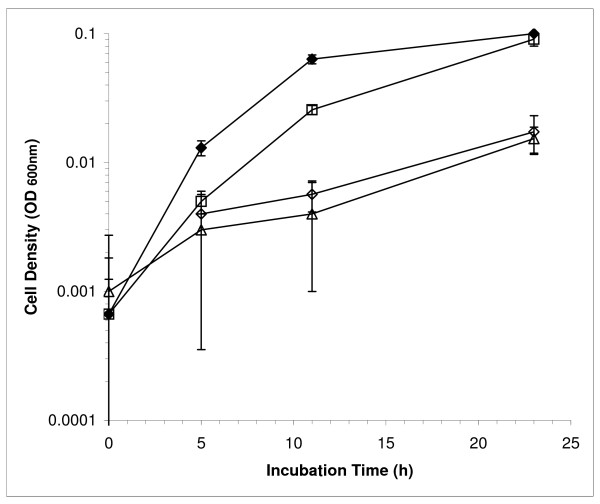
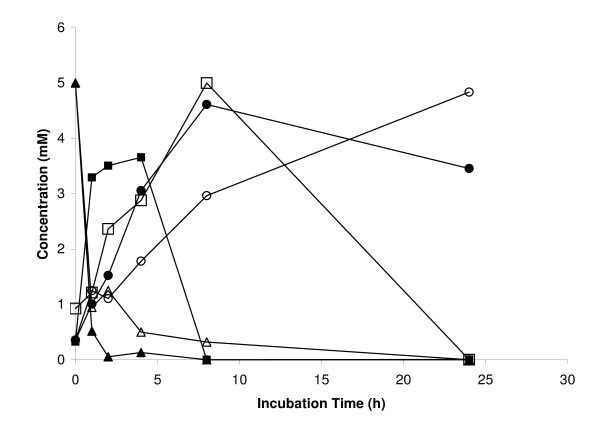
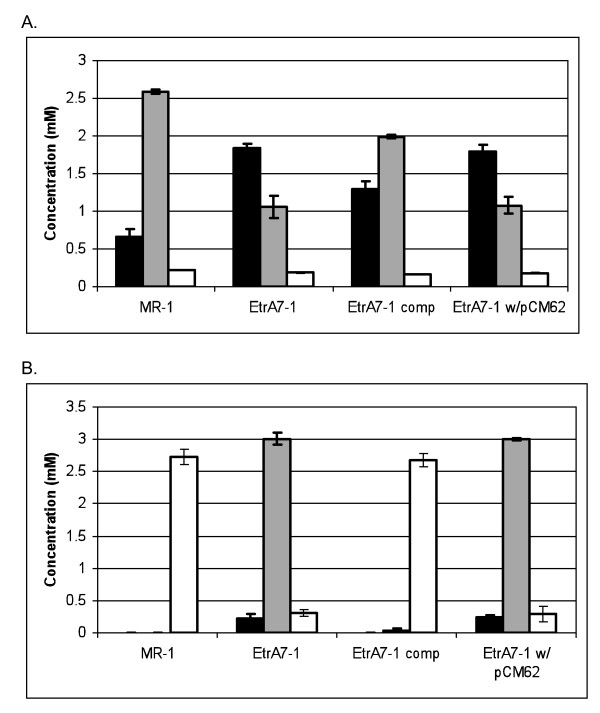
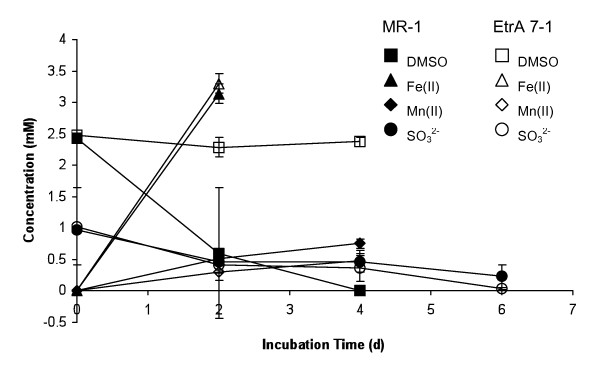
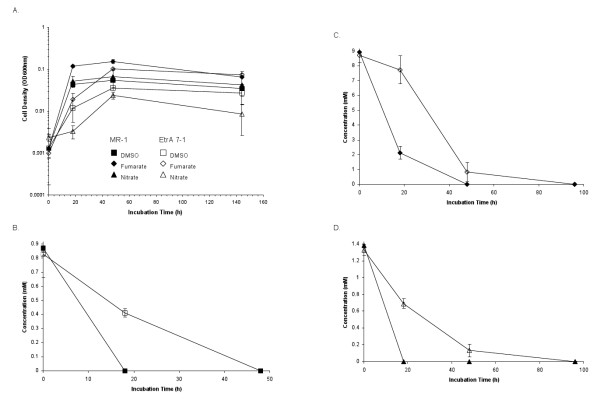
The expression of the nap genes, nrfA, cymA and hcp was significantly reduced in etrA deletion mutant EtrA7-1; however, limited anaerobic growth and nitrate reduction occurred, suggesting that multiple regulators control nitrate reduction in this strain. Dimethyl sulfoxide (DMSO) and fumarate reductase gene expression was down-regulated at least 2-fold in the mutant, which, showed lower or no reduction of these electron acceptors when compared to the wild type, suggesting both respiratory pathways are under EtrA control. Transcript analysis further suggested a role of EtrA in prophage activation and down-regulation of genes implicated in aerobic metabolism.
In contrast to previous studies that attributed a minor regulatory role to EtrA in Shewanella spp., this study demonstrates that EtrA acts as a global transcriptional regulator and, in conjunction with other regulators, fine-tunes the expression of genes involved in anaerobic metabolism in S. oneidensis strain MR-1. Transcriptomic and sequence analyses of the genes differentially expressed showed that those mostly affected by the mutation belonged to the "Energy metabolism" category, while stress-related genes were indirectly regulated in the mutant possibly as a result of a secondary perturbation (e.g. oxidative stress, starvation). We also conclude based on sequence, physiological and expression analyses that this regulator is more appropriately termed Fnr and recommend this descriptor be used in future publications.
埃特拉(EtrA)在希瓦氏菌属(Shewanella)MR-1 中,一种用于研究适应多样化氧化还原小生境的模式生物,与大肠杆菌(E. coli)中的氧气感应调节剂 Fnr 和铜绿假单胞菌(Pseudomonas aeruginosa)中的 Anr 分别具有 73.6%和 50.8%的氨基酸序列同一性;然而,其在希瓦氏菌属中对厌氧代谢的调节作用较为复杂,目前尚未得到充分的理解。
nap 基因、nrfA、cymA 和 hcp 的表达在 etrA 缺失突变体 EtrA7-1 中显著降低;然而,该突变体仅能进行有限的厌氧生长和硝酸盐还原,表明有多个调控因子控制该菌株中的硝酸盐还原。在突变体中,二甲基亚砜(DMSO)和延胡索酸还原酶基因的表达至少降低了 2 倍,与野生型相比,该突变体对这些电子受体的还原能力降低或丧失,这表明这两种呼吸途径均受到 EtrA 的控制。转录分析进一步表明 EtrA 参与了噬菌体的激活以及与需氧代谢相关基因的下调。
与之前将 EtrA 在希瓦氏菌属中仅赋予次要调节作用的研究不同,本研究表明 EtrA 作为一个全局转录调控因子,与其他调控因子一起,精细地调节了 S. oneidensis 菌株 MR-1 中参与厌氧代谢的基因的表达。对差异表达基因的转录组学和序列分析表明,那些受突变影响最大的基因大多属于“能量代谢”类别,而应激相关基因在突变体中受到间接调控,可能是由于二次扰动(例如氧化应激、饥饿)所致。我们还根据序列、生理和表达分析得出结论,该调控因子更恰当地被称为 Fnr,并建议在未来的出版物中使用这个描述符。