Biochemical Nutrition Laboratory, Dept. of Zoology, Rajiv Gandhi University, Arunachal Pradesh 791112, India.
J Ethnobiol Ethnomed. 2011 Mar 31;7:13. doi: 10.1186/1746-4269-7-13.
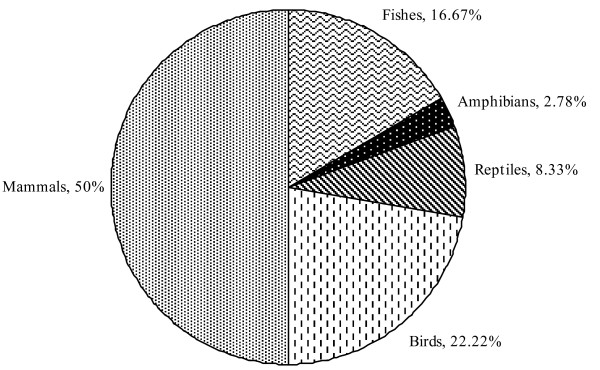
Arunachal Pradesh, the easternmost part of India, is endowed with diverse natural resources and inhabited by a variety of ethnic groups that have developed skills to exploit the biotic resources of the region for food and medicines. Information on animals and animal parts as components of folk remedies used by local healers and village headmen of the Nyishi and Galo tribes in their respective West Siang and Subansiri districts were obtained through interviews and structured questionnaires. Of a total of 36 vertebrate species used in treatments of ailments and diseases, mammals comprised 50%; they were followed by birds (22%), fishes (17%), reptiles (8%) and amphibians (3%). Approximately 20 common complaints of humans as well as foot and mouth disease of cattle were targets of zootherapies. Most commonly treated were fevers, body aches and pains, tuberculosis, malaria, wounds and burns, typhoid, smallpox, dysentery and diarrhoea, jaundice, and early pregnancy pains. Very few domestic animal species (e.g., goat and cattle) were used zootherapeutically. More frequently it was wild animals, including endangered or protective species like hornbill, pangolin, clouded leopard, tiger, bear, and wolf, whose various parts were either used in folk remedies or as food. Some of the animal-based traditional medicines or animal parts were sold at local markets, where they had to compete with modern, western pharmaceuticals. To record, document, analyze and test the animal-derived local medicines before they become replaced by western products is one challenge; to protect the already dwindling populations of certain wild animal species used as a resource for the traditional animal-derived remedies, is another.
阿鲁纳恰尔邦(即中国藏南地区)是印度最东部的一个邦,拥有丰富的自然资源,居住着多个民族,这些民族发展了利用该地区生物资源获取食物和药物的技能。通过访谈和结构化问卷,获取了当地治疗师和 Nyishi 和 Galo 部落的村长使用的民间疗法中涉及的动物和动物部位的信息。在所使用的总共 36 种脊椎动物物种中,哺乳动物占 50%;其次是鸟类(22%)、鱼类(17%)、爬行动物(8%)和两栖动物(3%)。约有 20 种人类常见疾病和牛的口蹄疫是动物疗法的治疗目标。最常治疗的是发热、身体疼痛、肺结核、疟疾、伤口和烧伤、伤寒、天花、痢疾和腹泻、黄疸和早孕疼痛。很少有家畜物种(如山羊和牛)用于动物疗法。更多的是野生动物,包括犀鸟、穿山甲、云豹、老虎、熊和狼等濒危或受保护物种,它们的各种部位被用于民间疗法或食物中。一些基于动物的传统药物或动物部位在当地市场上出售,与现代西药竞争。在被西药取代之前,记录、记录、分析和测试动物源性的当地药物是一个挑战;保护已经减少的某些野生动物物种的种群,这些物种是传统动物源性药物的资源,是另一个挑战。