School of Pharmacy, College of Medicine, National Taiwan University, Taipei, Taiwan.
J Biomed Sci. 2011 Apr 1;18(1):25. doi: 10.1186/1423-0127-18-25.
Sensitivity of cancer cells to recombinant arginine deiminase (rADI) depends on expression of argininosuccinate synthetase (AS), a rate-limiting enzyme in synthesis of arginine from citrulline. To understand the efficiency of RNA interfering of AS in sensitizing the resistant cancer cells to rADI, the down regulation of AS transiently and permanently were performed in vitro, respectively.
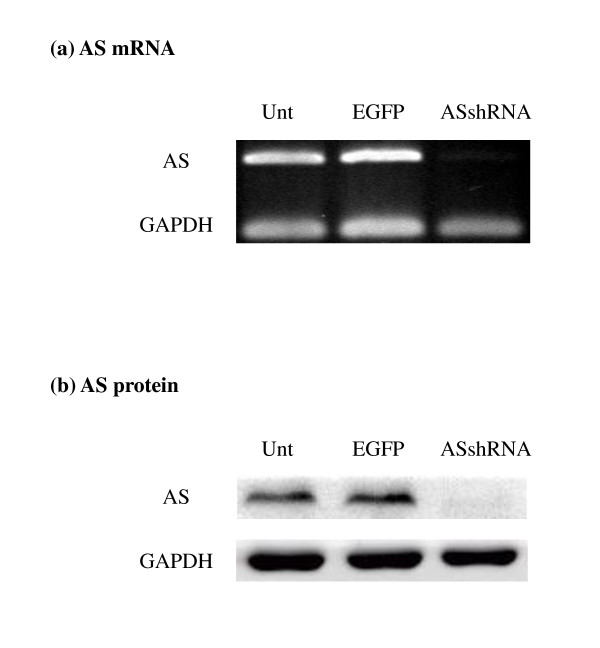
We studied the use of down-regulation of this enzyme by RNA interference in three human cancer cell lines (A375, HeLa, and MCF-7) as a way to restore sensitivity to rADI in resistant cells. The expression of AS at levels of mRNA and protein was determined to understand the effect of RNA interference. Cell viability, cell cycle, and possible mechanism of the restore sensitivity of AS RNA interference in rADI treated cancer cells were evaluated.
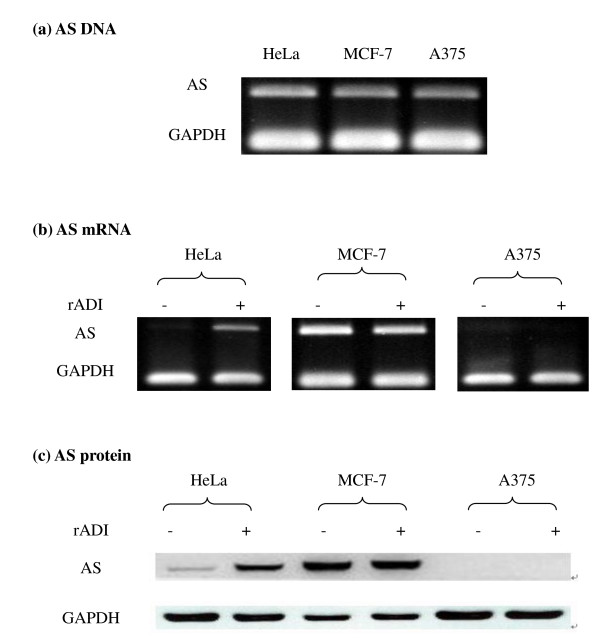
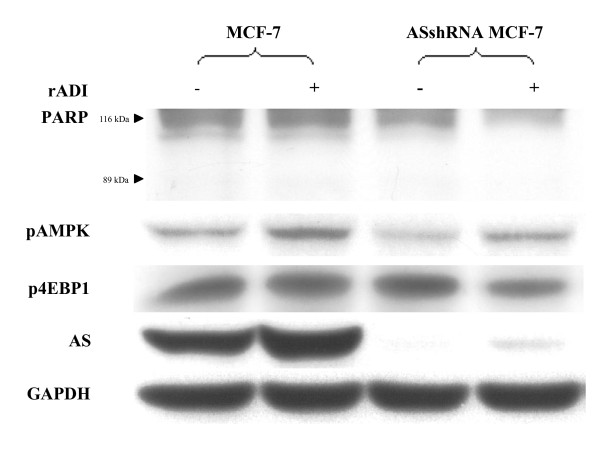
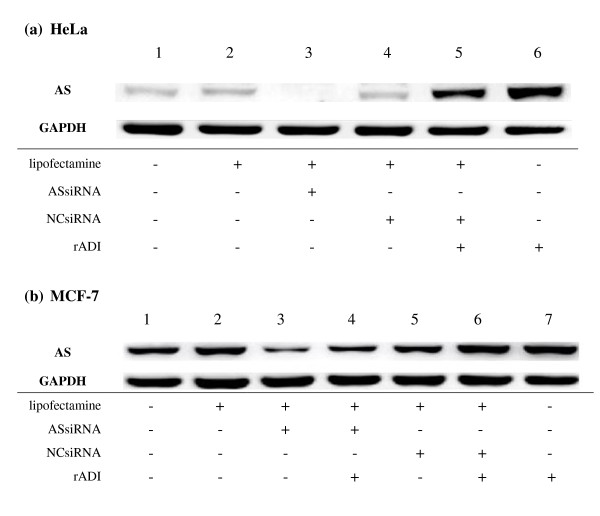
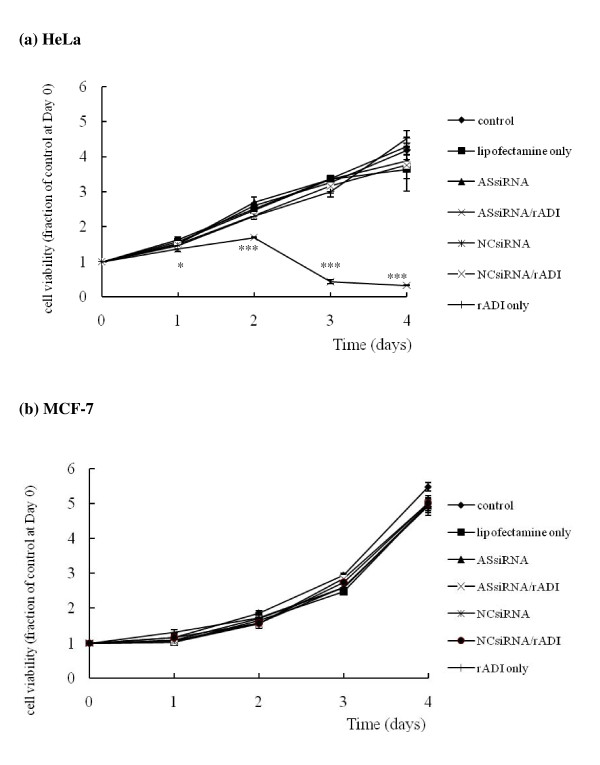
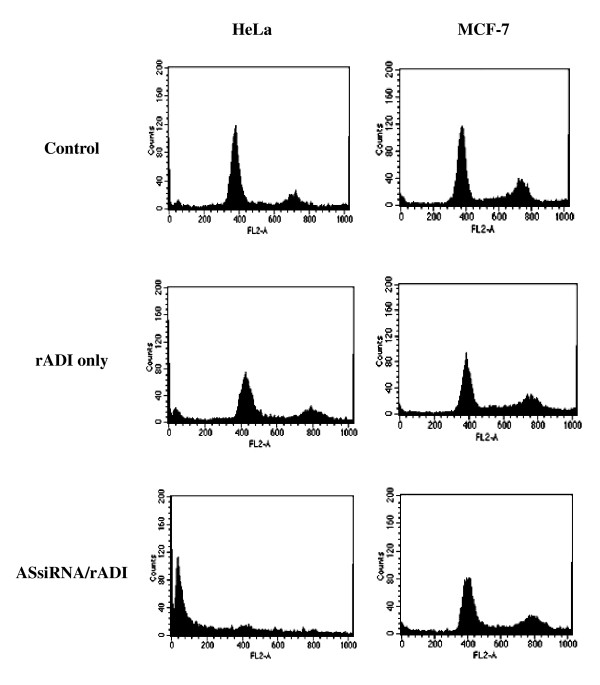
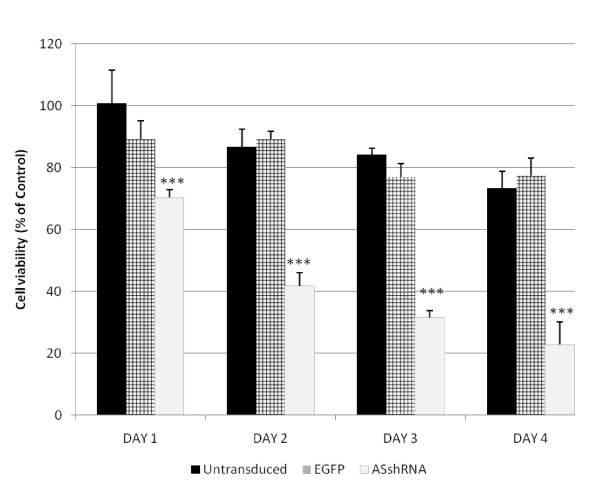
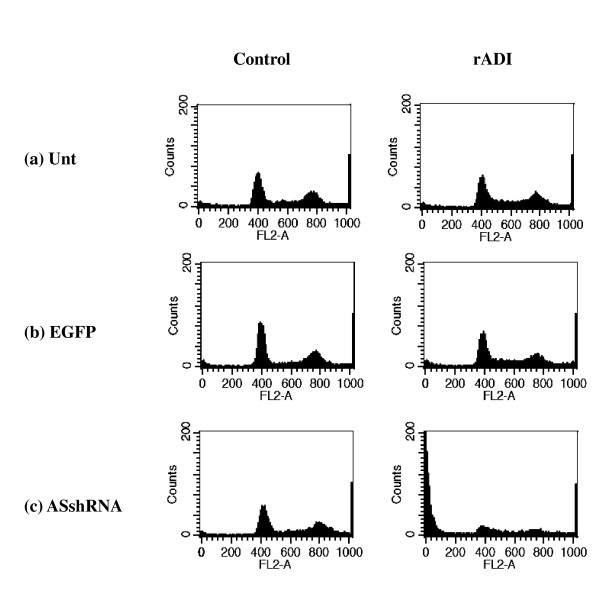
AS DNA was present in all cancer cell lines studied, however, the expression of this enzyme at the mRNA and protein level was different. In two rADI-resistant cell lines, one with endogenous AS expression (MCF-7 cells) and one with induced AS expression (HeLa cells), AS small interference RNA (siRNA) inhibited 37-46% of the expression of AS in MCF-7 cells. ASsiRNA did not affect cell viability in MCF-7 which may be due to the certain amount of residual AS protein. In contrast, ASsiRNA down-regulated almost all AS expression in HeLa cells and caused cell death after rADI treatment. Permanently down-regulated AS expression by short hairpin RNA (shRNA) made MCF-7 cells become sensitive to rADI via the inhibition of 4E-BP1-regulated mTOR signaling pathway.
Our results demonstrate that rADI-resistance can be altered via AS RNA interference. Although transient enzyme down-regulation (siRNA) did not affect cell viability in MCF-7 cells, permanent down-regulation (shRNA) overcame the problem of rADI-resistance due to the more efficiency in AS silencing.
癌细胞对重组精氨酸脱亚氨酶(rADI)的敏感性取决于精氨酸合成酶(AS)的表达,这是从瓜氨酸合成精氨酸的限速酶。为了了解 AS 的 RNA 干扰在使耐药癌细胞对 rADI 敏感方面的效率,分别在体外瞬时和永久下调 AS。
我们研究了通过 RNA 干扰下调这种酶在三种人类癌细胞系(A375、HeLa 和 MCF-7)中的作用,作为恢复耐药细胞对 rADI 敏感性的一种方法。测定 AS 的表达水平的 mRNA 和蛋白来理解 RNA 干扰的影响。评估细胞活力、细胞周期和 AS RNA 干扰在 rADI 处理的癌细胞中恢复敏感性的可能机制。
AS DNA 存在于所有研究的癌细胞系中,但该酶在 mRNA 和蛋白水平上的表达不同。在两种 rADI 耐药细胞系中,一种具有内源性 AS 表达(MCF-7 细胞),另一种具有诱导的 AS 表达(HeLa 细胞),AS 小干扰 RNA(siRNA)抑制 MCF-7 细胞中 37-46%的 AS 表达。ASsiRNA 对 MCF-7 细胞的活力没有影响,这可能是由于存在一定量的残留 AS 蛋白。相比之下,ASsiRNA 几乎完全下调了 HeLa 细胞中的所有 AS 表达,并在 rADI 处理后导致细胞死亡。通过短发夹 RNA(shRNA)永久下调 AS 表达使 MCF-7 细胞通过抑制 4E-BP1 调节的 mTOR 信号通路对 rADI 敏感。
我们的结果表明,rADI 耐药性可以通过 AS RNA 干扰改变。虽然瞬时酶下调(siRNA)对 MCF-7 细胞的活力没有影响,但由于 AS 沉默的效率更高,永久下调(shRNA)克服了 rADI 耐药性的问题。