Robert Stempel College of Public Health and Social Work, 11200 SW 8th Street, Miami, FL 33199, USA.
BMC Womens Health. 2011 Apr 2;11:9. doi: 10.1186/1472-6874-11-9.
For low income and uninsured populations, safety net clinics are an important source of health care, including preventive services such as mammography screening. However, little is known about how well breast health is coordinated within the safety net clinic environment and what barriers patients encounter.
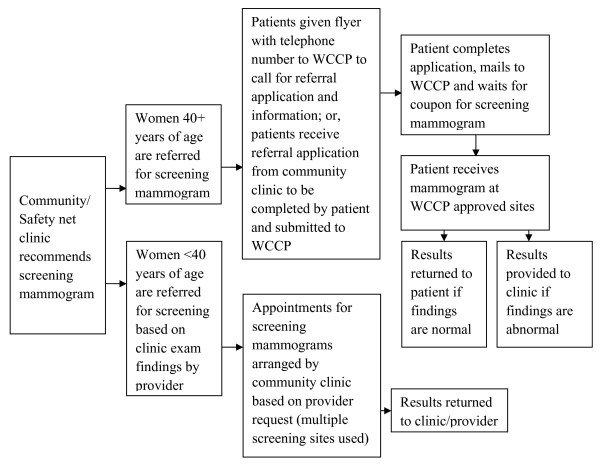
A needs assessment was conducted among eight community-based safety net clinics located in Montgomery County, Maryland to learn about breast cancer referral and screening procedures. Structured in-depth interviews were conducted with clinic staff during the summer of 2008.
Safety net clinics reported that they routinely identified women who need mammography screening and referred women to mammography screening facilities. However, clinics were not aware of the limited number of free or low cost mammography screening slots available in the county or the waiting time to receive mammography services. Overall, screening barriers were common in the safety net system and only a few procedures were in place to help women overcome these barriers.
Safety net clinics face multiple barriers in providing and coordinating breast cancer screening services for low income or uninsured patients. These barriers prevent the efficient allocation of mammography screening services and prevent underserved women from accessing an important preventive health service.
对于低收入和没有保险的人群来说,医疗服务提供机构是获得医疗服务的一个重要来源,包括乳腺癌筛检等预防性服务。然而,人们对服务提供机构内部乳腺癌防治服务的协调情况以及患者所面临的障碍知之甚少。
马里兰州蒙哥马利县的 8 家社区医疗服务提供机构参与了一项需求评估,以了解乳腺癌转诊和筛检程序。2008 年夏季,研究人员对诊所工作人员进行了结构化深入访谈。
医疗服务提供机构报告称,他们经常会发现需要进行乳房 X 光筛检的女性,并将这些女性转介到乳房 X 光筛检机构。然而,诊所并不知道该县可提供的免费或低价乳房 X 光筛检名额有限,也不知道接受乳房 X 光服务所需的等待时间。总的来说,筛检障碍在医疗服务提供机构中很常见,但只有少数程序可以帮助女性克服这些障碍。
医疗服务提供机构在为低收入或没有保险的患者提供和协调乳腺癌筛检服务方面面临多重障碍。这些障碍妨碍了乳房 X 光筛检服务的有效分配,使服务不足的女性无法获得这一重要的预防性健康服务。