Institute of Pharmaceutical Science, King's College London, London, UK.
Psychoneuroendocrinology. 2011 Oct;36(9):1351-60. doi: 10.1016/j.psyneuen.2011.03.008. Epub 2011 Apr 11.
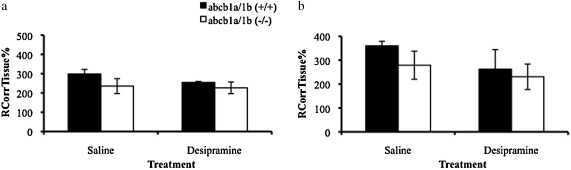
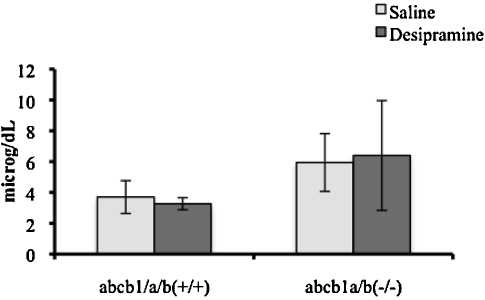
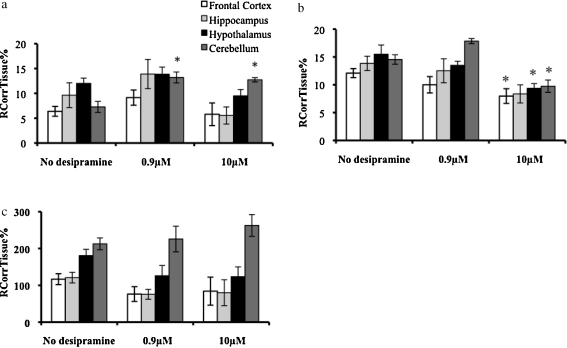
Hyperactivity of the hypothalamic-pituitary-adrenal (HPA) axis in patients with depression can be reduced by antidepressants, which are thought to improve endogenous glucocorticoid-mediated negative feedback. A proportion of peripherally released glucocorticoids need to enter brain tissue, protected by the blood-brain barrier (BBB), in order to achieve this negative feedback effect at the level of the central nervous systems (CNS). The multidrug resistance transporter P-glycoprotein (P-gp) has been shown to actively transport glucocorticoid hormones and has been implicated in the regulation of glucocorticoid access to the CNS. Using an in situ brain/choroid plexus perfusion method, we tested the hypothesis that the antidepressant desipramine increases glucocorticoid accumulation in the mouse brain by inhibiting P-gp, following either chronic treatment (8 days, 20 mg/kg/day, IP) or acute administration (20 min brain perfusion in the presence of either 0.9 μM or 10 μM desipramine). Contrary to our hypothesis, chronic treatment with desipramine did not affect the accumulation of [³H]dexamethasone in any sample compared to saline-treated mice. Acute desipramine had limited and variable effects on glucocorticoid accumulation in the CNS, with accumulation of [³H]dexamethasone increased in the cerebellum, accumulation of [³H]cortisol reduced in the frontal cortex, hypothalamus, and cerebellum, and accumulation of [³H]corticosterone (the endogenous glucocorticoid in rodents) not affected. Overall, under the conditions tested, these results do not support the hypothesis that treatment with desipramine can inhibit P-gp at the BBB and subsequently increase the accumulation of glucocorticoids in the brain.
抑郁症患者的下丘脑-垂体-肾上腺(HPA)轴活性亢进可被抗抑郁药降低,而这些药物被认为可以改善内源性糖皮质激素介导的负反馈。一部分外周释放的糖皮质激素需要进入脑组织,受到血脑屏障(BBB)的保护,才能在中枢神经系统(CNS)水平发挥这种负反馈作用。多药耐药转运蛋白 P-糖蛋白(P-gp)已被证明可主动转运糖皮质激素激素,并与糖皮质激素进入中枢神经系统的调节有关。我们使用原位脑/脉络丛灌流方法,测试了以下假设:抗抑郁药去甲丙咪嗪通过抑制 P-gp 增加了糖皮质激素在小鼠脑中的积累,该假设是在慢性治疗(8 天,20mg/kg/天,腹腔注射)或急性给药(在存在 0.9μM 或 10μM 去甲丙咪嗪的情况下,进行 20 分钟脑灌注)之后。与我们的假设相反,与生理盐水处理的小鼠相比,去甲丙咪嗪的慢性治疗并未影响[³H]地塞米松在任何样本中的积累。急性去甲丙咪嗪对中枢神经系统中糖皮质激素的积累仅有有限且可变的影响,导致小脑中[³H]地塞米松的积累增加,而额皮质、下丘脑和小脑中[³H]皮质醇的积累减少,而内源性糖皮质激素[³H]皮质酮则不受影响。总的来说,在测试的条件下,这些结果不支持去甲丙咪嗪治疗可抑制 BBB 处的 P-gp 并随后增加脑内糖皮质激素积累的假设。