Fred A. Litwin Centre for Cancer Genetics, Samuel Lunenfeld Research Institute, Mount Sinai Hospital, Toronto, Canada.
PLoS One. 2011 Apr 4;6(4):e18306. doi: 10.1371/journal.pone.0018306.
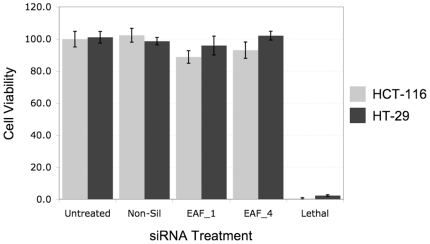
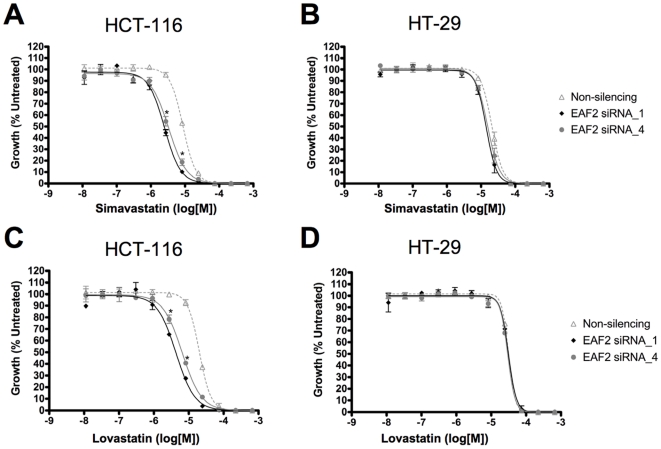
Simvastatin and lovastatin are statins traditionally used for lowering serum cholesterol levels. However, there exists evidence indicating their potential chemotherapeutic characteristics in cancer. In this study, we used bioinformatic analysis of publicly available data in order to systematically identify the genes involved in resistance to cytotoxic effects of these two drugs in the NCI60 cell line panel. We used the pharmacological data available for all the NCI60 cell lines to classify simvastatin or lovastatin resistant and sensitive cell lines, respectively. Next, we performed whole-genome single marker case-control association tests for the lovastatin and simvastatin resistant and sensitive cells using their publicly available Affymetrix 125K SNP genomic data. The results were then evaluated using RNAi methodology. After correction of the p-values for multiple testing using False Discovery Rate, our results identified three genes (NRP1, COL13A1, MRPS31) and six genes (EAF2, ANK2, AKAP7, STEAP2, LPIN2, PARVB) associated with resistance to simvastatin and lovastatin, respectively. Functional validation using RNAi confirmed that silencing of EAF2 expression modulated the response of HCT-116 colon cancer cells to both statins. In summary, we have successfully utilized the publicly available data on the NCI60 cell lines to perform whole-genome association studies for simvastatin and lovastatin. Our results indicated genes involved in the cellular response to these statins and siRNA studies confirmed the role of the EAF2 in response to these drugs in HCT-116 colon cancer cells.
辛伐他汀和洛伐他汀是传统用于降低血清胆固醇水平的他汀类药物。然而,有证据表明它们在癌症中有潜在的化疗特性。在这项研究中,我们使用公共可用数据的生物信息学分析,系统地确定了 NCI60 细胞系面板中与这两种药物细胞毒性作用耐药相关的基因。我们使用了所有 NCI60 细胞系的药理学数据,分别对辛伐他汀或洛伐他汀耐药和敏感细胞系进行分类。接下来,我们使用公开的 Affymetrix 125K SNP 基因组数据,对 lovastatin 和 simvastatin 耐药和敏感细胞进行全基因组单标记病例对照关联测试。然后使用 RNAi 方法评估结果。在使用错误发现率对多重检验进行 p 值校正后,我们的结果确定了三个基因(NRP1、COL13A1、MRPS31)和六个基因(EAF2、ANK2、AKAP7、STEAP2、LPIN2、PARVB)与辛伐他汀和洛伐他汀耐药相关。使用 RNAi 进行功能验证证实,沉默 EAF2 的表达可调节 HCT-116 结肠癌细胞对两种他汀类药物的反应。总之,我们成功地利用 NCI60 细胞系的公共可用数据,对辛伐他汀和洛伐他汀进行了全基因组关联研究。我们的结果表明,与这些他汀类药物的细胞反应相关的基因,siRNA 研究证实了 EAF2 在 HCT-116 结肠癌细胞对这些药物反应中的作用。