Dana-Farber Cancer Institute, Boston, Massachusetts, United States of America.
PLoS One. 2011 Mar 31;6(3):e18207. doi: 10.1371/journal.pone.0018207.
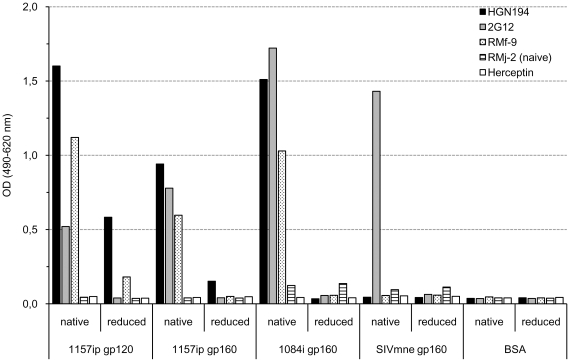
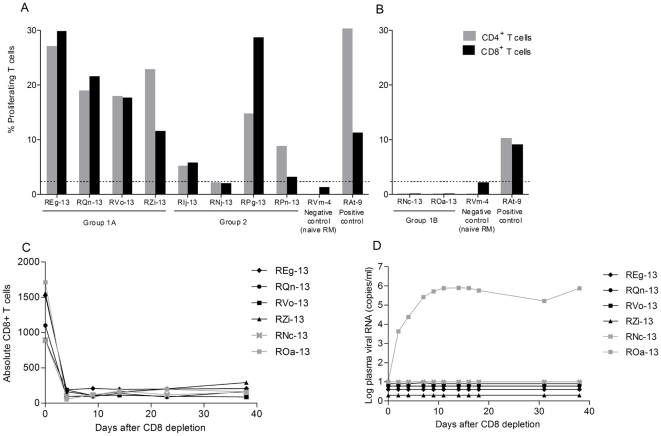
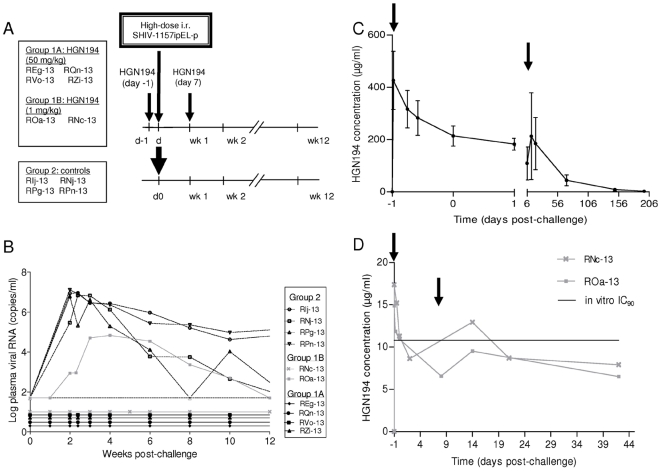
Neutralizing antibodies have been shown to protect macaques against SHIV challenge. However, genetically diverse HIV-1 clades have evolved, and a key question left unanswered is whether neutralizing antibodies can confer cross-clade protection in vivo. The novel human monoclonal antibody HGN194 was isolated from an individual infected with an HIV-1 clade AG recombinant circulating recombinant form (CRF). HGN194 targets an epitope in the third hypervariable loop (V3) of HIV-1 gp120 and neutralizes a range of relatively neutralization-sensitive and resistant viruses. We evaluated the potential of HGN194 to protect infant rhesus monkeys against a SHIV encoding a primary CCR5-tropic HIV-1 clade C envelope. After high-dose mucosal challenge, all untreated controls became highly viremic while all HGN194-treated animals (50 mg/kg) were completely protected. When HGN194 was given at 1 mg/kg, one out of two monkeys remained aviremic, whereas the other had delayed, lower peak viremia. Interestingly, all protected monkeys given high-dose HGN194 developed Gag-specific proliferative responses of both CD4+ and CD8+ T cells. To test whether generation of the latter involved cryptic infection, we ablated CD8+ cells after HGN194 clearance. No viremia was detected in any protected monkeys, thus ruling out virus reservoirs. Thus, induction of CD8 T-cell immunity may have resulted from transient "Hit and Run" infection or cross priming via Ag-Ab-mediated cross-presentation. Together, our data identified the HGN194 epitope as protective and provide proof-of-concept that this anti-V3 loop mAb can prevent infection with sterilizing immunity after challenge with virus of a different clade, implying that V3 is a potential vaccine target.
中和抗体已被证明可保护猕猴免受 SHIV 攻击。然而,HIV-1 已进化出多种遗传分化的亚型,一个关键问题仍未得到解答,即中和抗体是否能在体内提供针对不同亚型的交叉保护。新型人源单克隆抗体 HGN194 是从一名感染 HIV-1 重组型 AG 循环重组型(CRF)的个体中分离出来的。HGN194 针对 HIV-1 gp120 第三高变环(V3)中的一个表位,可中和一系列相对敏感和耐药的病毒。我们评估了 HGN194 保护婴儿恒河猴免受编码主要 CCR5 嗜性 HIV-1 亚型 C 包膜的 SHIV 攻击的潜力。在高剂量黏膜挑战后,所有未治疗的对照组均出现高度病毒血症,而所有接受 HGN194 治疗的动物(50mg/kg)均完全受到保护。当给予 HGN194 1mg/kg 时,2 只猴子中有 1 只仍保持无病毒血症,而另 1 只则出现病毒血症延迟和峰值降低。有趣的是,所有接受高剂量 HGN194 治疗的受保护猴子均产生了 Gag 特异性 CD4+和 CD8+T 细胞的增殖反应。为了测试后者的产生是否涉及隐匿性感染,我们在 HGN194 清除后消除了 CD8+细胞。在任何受保护的猴子中均未检测到病毒血症,从而排除了病毒库的存在。因此,CD8 T 细胞免疫的诱导可能是由于短暂的“命中和逃逸”感染或通过 Ag-Ab 介导的交叉呈递进行的交叉引发。总之,我们的数据确定了 HGN194 表位具有保护性,并提供了概念验证,即这种抗 V3 环单克隆抗体可在不同亚型的病毒攻击后产生具有杀菌作用的免疫,这意味着 V3 是一个潜在的疫苗靶点。