INSERM, Unité U955, Créteil, France.
PLoS One. 2011 Mar 31;6(3):e18334. doi: 10.1371/journal.pone.0018334.
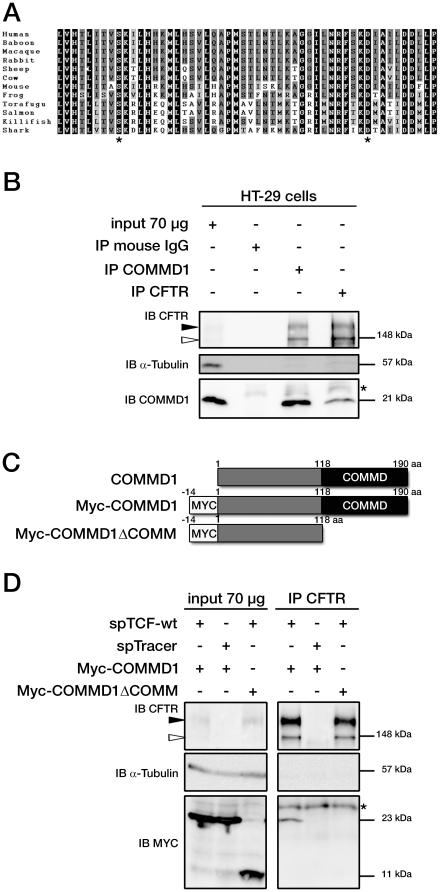
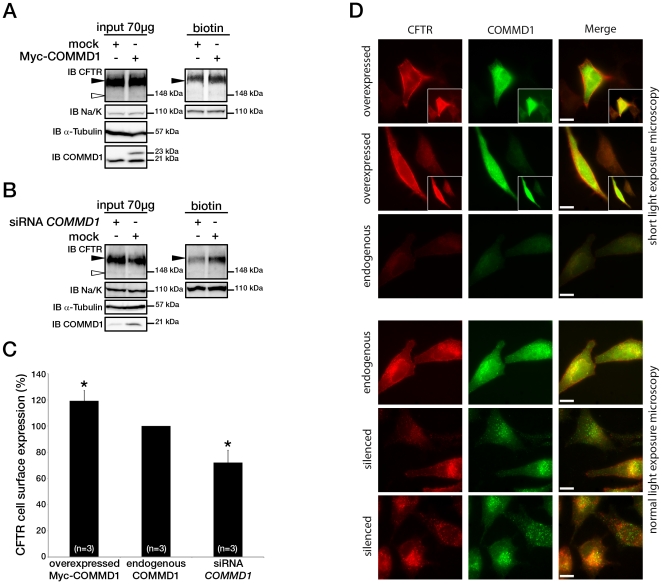
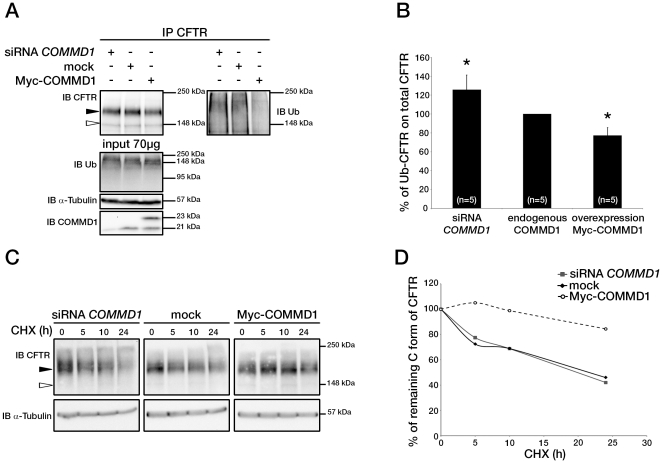
The CFTR (cystic fibrosis transmembrane conductance regulator) protein is a large polytopic protein whose biogenesis is inefficient. To better understand the regulation of CFTR processing and trafficking, we conducted a genetic screen that identified COMMD1 as a new CFTR partner. COMMD1 is a protein associated with multiple cellular pathways, including the regulation of hepatic copper excretion, sodium uptake through interaction with ENaC (epithelial sodium channel) and NF-kappaB signaling. In this study, we show that COMMD1 interacts with CFTR in cells expressing both proteins endogenously. This interaction promotes CFTR cell surface expression as assessed by biotinylation experiments in heterologously expressing cells through regulation of CFTR ubiquitination. In summary, our data demonstrate that CFTR is protected from ubiquitination by COMMD1, which sustains CFTR expression at the plasma membrane. Thus, increasing COMMD1 expression may provide an approach to simultaneously inhibit ENaC absorption and enhance CFTR trafficking, two major issues in cystic fibrosis.
CFTR(囊性纤维化跨膜电导调节因子)蛋白是一种大型多域蛋白,其生物发生效率低下。为了更好地理解 CFTR 加工和运输的调节,我们进行了一项遗传筛选,发现 COMMD1 是 CFTR 的新伴侣。COMMD1 是一种与多种细胞途径相关的蛋白质,包括肝脏铜排泄的调节、通过与 ENaC(上皮钠通道)相互作用的钠摄取以及 NF-κB 信号转导。在这项研究中,我们表明 COMMD1 与表达两种蛋白质的细胞内的 CFTR 相互作用。这种相互作用通过调节 CFTR 泛素化,促进细胞表面表达的 CFTR 通过异源表达细胞中的生物素化实验进行评估。总之,我们的数据表明 CFTR 受到 COMMD1 的保护,免受泛素化,从而维持 CFTR 在质膜上的表达。因此,增加 COMMD1 的表达可能提供一种方法来同时抑制 ENaC 的吸收并增强 CFTR 的运输,这是囊性纤维化的两个主要问题。