Department of Molecular and Cellular Physiology, Graduate School of Medicine, University of the Ryukyus, 207 Uehara, Nishihara, Okinawa 903-0215, Japan.
Nucleic Acids Res. 2011 Aug;39(14):6086-99. doi: 10.1093/nar/gkr194. Epub 2011 Apr 12.
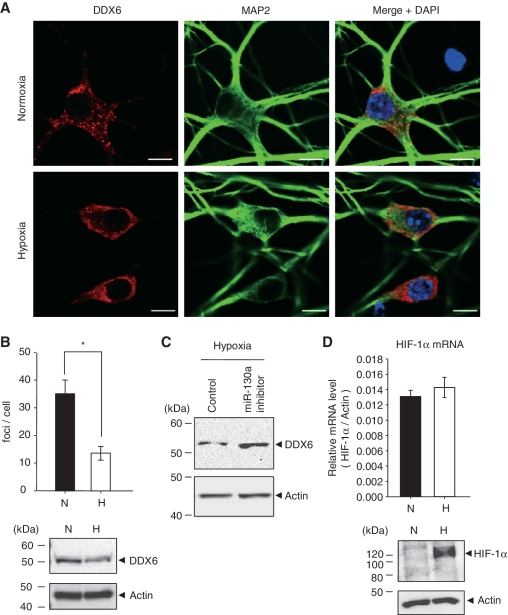
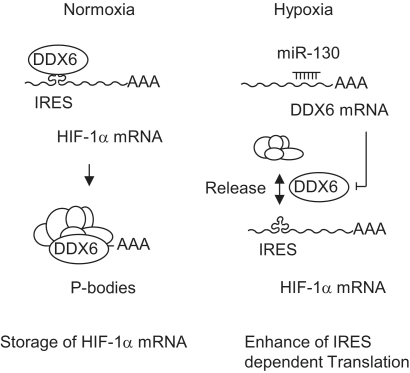
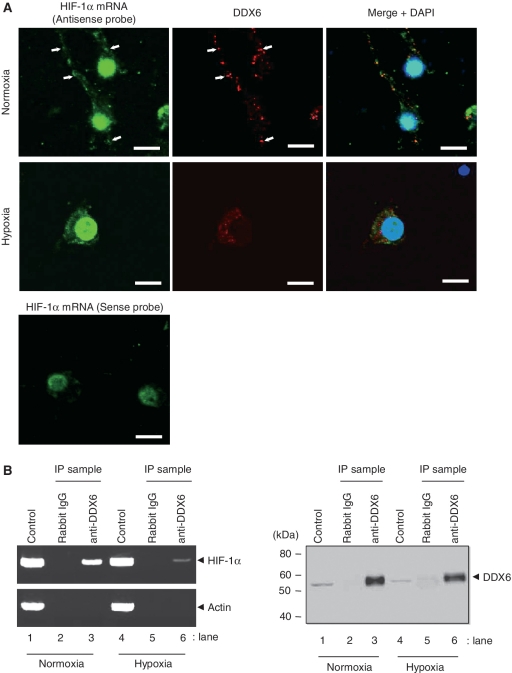
The transcription factor HIF-1α (hypoxia inducible factor 1α) has an essential role in the maintenance of oxygen homeostasis in metazoans. HIF-1α expression and activity in the hypoxic response is regulated at the translation and post-translational levels. However, the mechanism and modulator of HIF-1α translation during hypoxia is not fully understood. We found that HIF-1α expression during hypoxia was upregulated by the microRNA 130 (miR-130) family. Levels of the miR-130 family are elevated under hypoxia, and their target is DDX6 mRNA, which is a component of the P-bodies. Furthermore, we found that a decrease of DDX6 expression by the miR-130 family enhanced the translation of HIF-1α in an internal ribosome entry site element-dependent manner. These results reveal a new HIF-1α translational mechanism and a role for P-bodies in hypoxic stress.
转录因子 HIF-1α(缺氧诱导因子 1α)在后生动物的氧稳态维持中起着至关重要的作用。在低氧反应中,HIF-1α 的表达和活性受到翻译和翻译后水平的调节。然而,低氧条件下 HIF-1α 翻译的机制和调节剂尚不完全清楚。我们发现,低氧条件下 HIF-1α 的表达受 microRNA 130(miR-130)家族的上调调控。miR-130 家族在低氧下水平升高,其靶标是 DDX6 mRNA,它是 P 体的组成部分。此外,我们发现 miR-130 家族通过降低 DDX6 表达来增强 HIF-1α 的翻译,这依赖于内部核糖体进入位点元件。这些结果揭示了 HIF-1α 翻译的新机制以及 P 体在低氧应激中的作用。