Hematology and Oncology Division, Weill Cornell Medical College, Cornell University, New York, New York, United States of America.
PLoS One. 2011 Apr 8;6(4):e18436. doi: 10.1371/journal.pone.0018436.
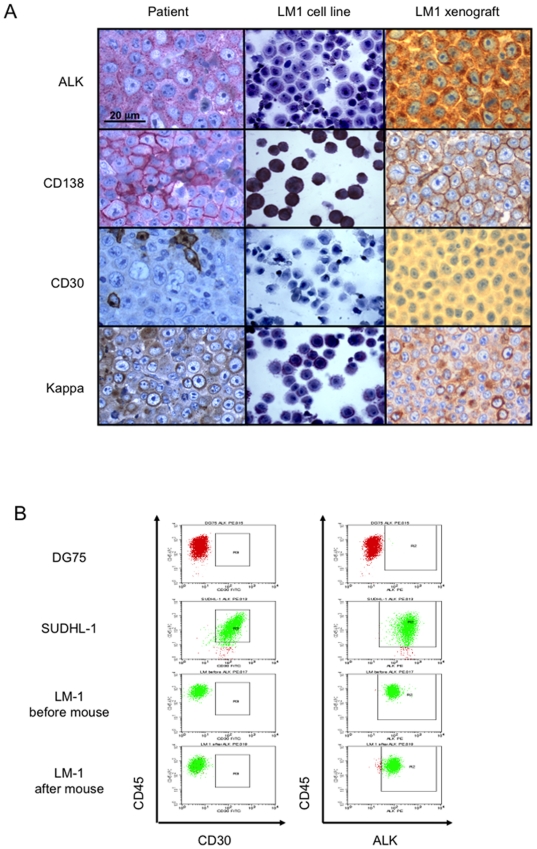
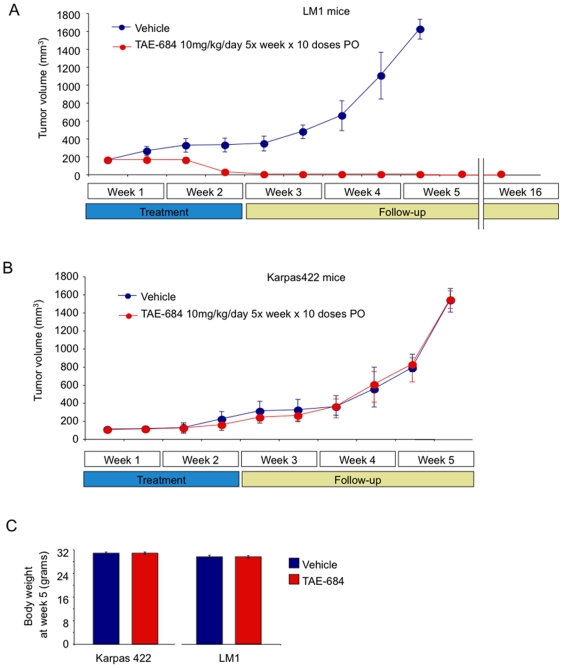
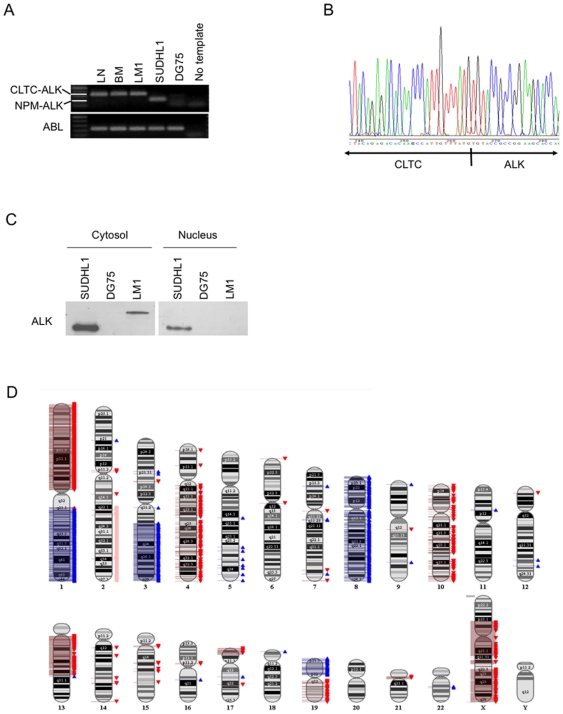
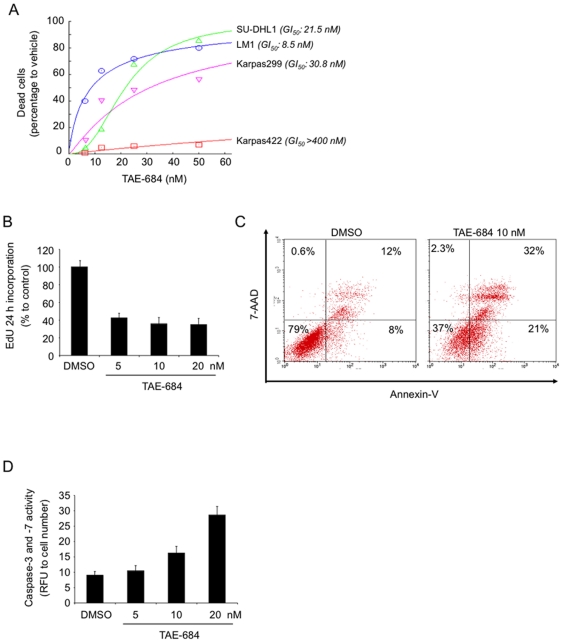
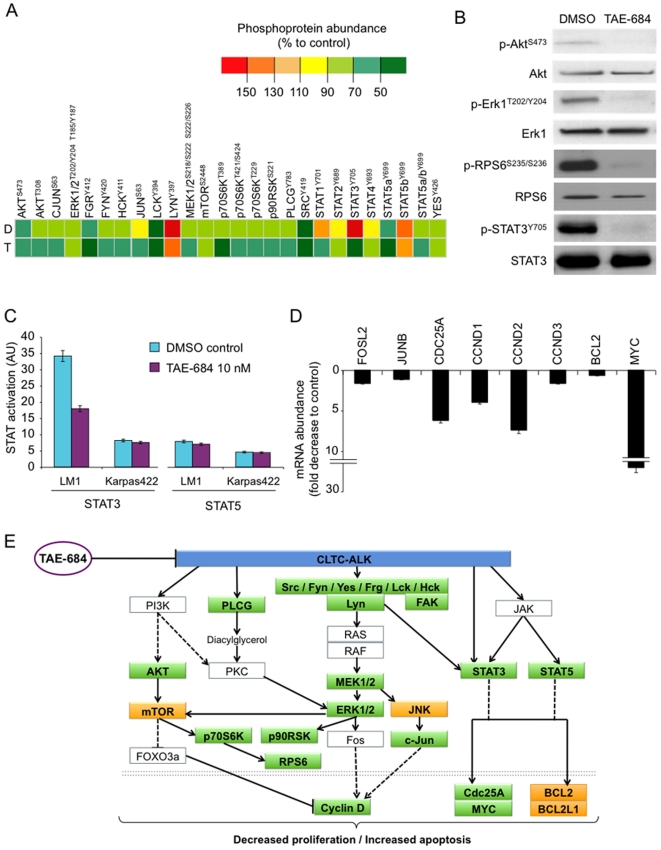
ALK positive diffuse large B-cell lymphomas (DLBCL) are a distinct lymphoma subtype associated with a poor outcome. Most of them feature a t(2;17) encoding a clathrin (CLTC)-ALK fusion protein. The contribution of deregulated ALK-activity in the pathogenesis and maintenance of these DLBCLs is not yet known. We established and characterized the first CLTC-ALK positive DLBCL cell line (LM1). LM1 formed tumors in NOD-SCID mice. The selective ALK inhibitor NVP-TAE684 inhibited growth of LM1 cells in vitro at nanomolar concentrations. NVP-TAE684 repressed ALK-activated signalling pathways and induced apoptosis of LM1 DLBCL cells. Inhibition of ALK-activity resulted in sustained tumor regression in the xenotransplant tumor model. These data indicate a role of CLTC-ALK in the maintenance of the malignant phenotype thereby providing a rationale therapeutic target for these otherwise refractory tumors.
间变性大细胞淋巴瘤(ALK 阳性 DLBCL)是一种与不良预后相关的独特淋巴瘤亚型。它们中的大多数具有编码网格蛋白(CLTC)-ALK 融合蛋白的 t(2;17)。ALK 活性失调在这些 DLBCL 的发病机制和维持中的作用尚不清楚。我们建立并鉴定了首个 CLTC-ALK 阳性 DLBCL 细胞系(LM1)。LM1 在 NOD-SCID 小鼠中形成肿瘤。选择性 ALK 抑制剂 NVP-TAE684 以纳摩尔浓度在体外抑制 LM1 细胞的生长。NVP-TAE684 抑制 ALK 激活的信号通路并诱导 LM1 DLBCL 细胞凋亡。ALK 活性的抑制导致异种移植肿瘤模型中的肿瘤持续消退。这些数据表明 CLTC-ALK 在维持恶性表型中的作用,从而为这些其他情况下难治性的肿瘤提供了合理的治疗靶点。