Department of Anatomy, University of California, San Francisco, California, USA.
Nat Neurosci. 2011 May;14(5):612-9. doi: 10.1038/nn.2805. Epub 2011 Apr 17.
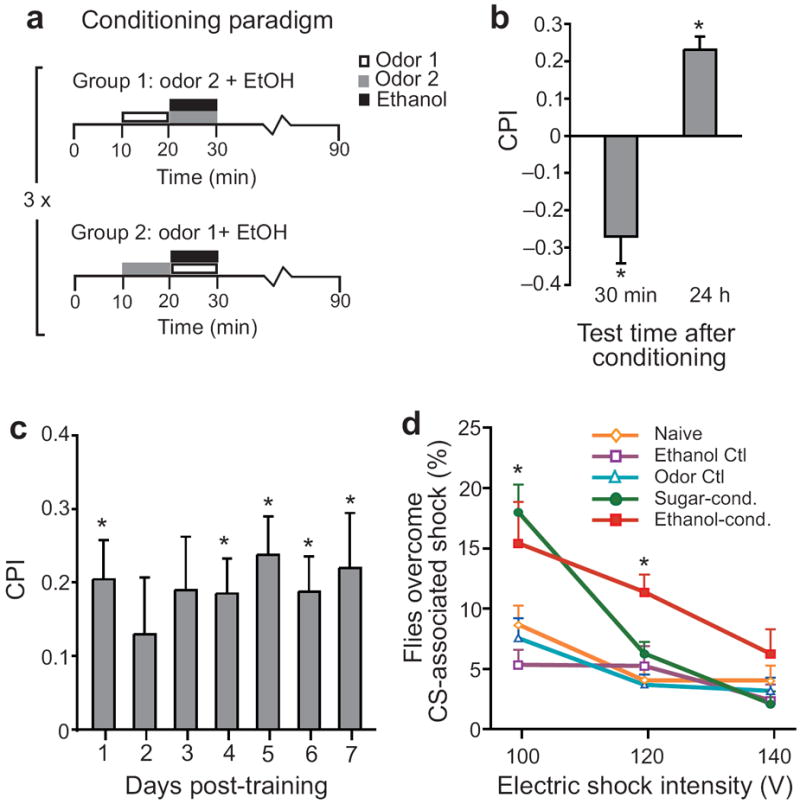
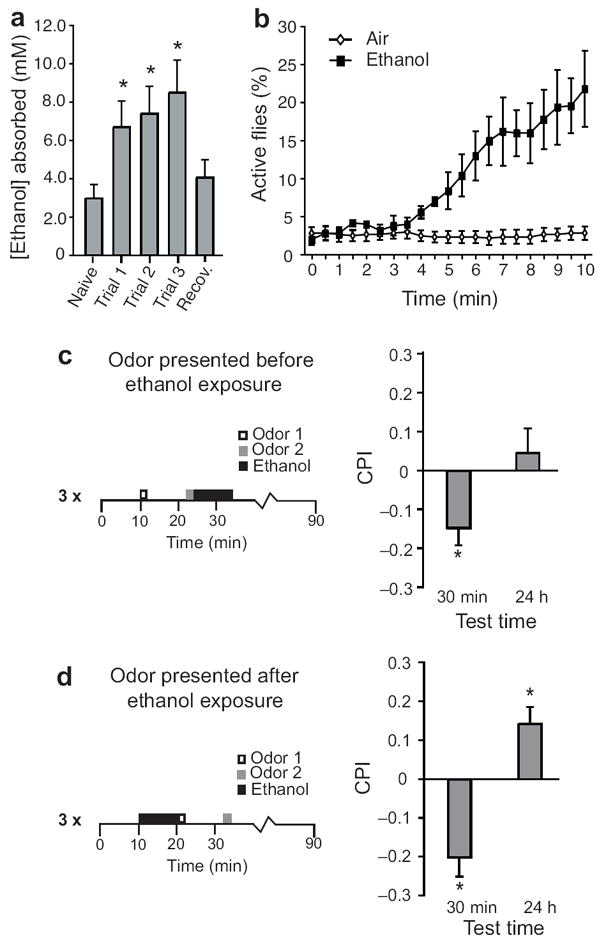
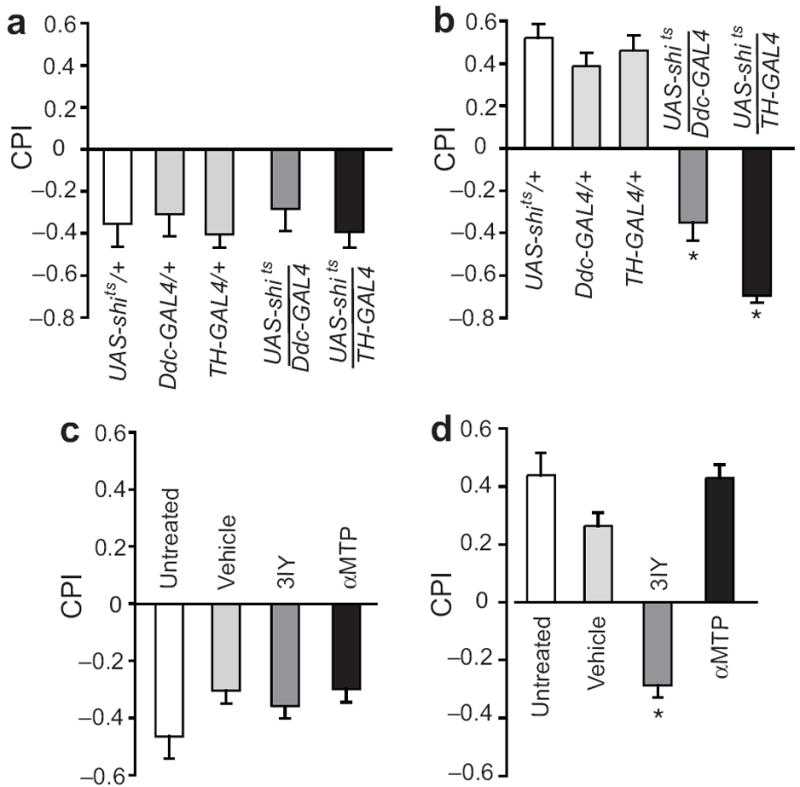
The rewarding properties of drugs contribute to the development of abuse and addiction. We developed a new assay for investigating the motivational properties of ethanol in the genetically tractable model Drosophila melanogaster. Flies learned to associate cues with ethanol intoxication and, although transiently aversive, the experience led to a long-lasting attraction for the ethanol-paired cue, implying that intoxication is rewarding. Temporally blocking transmission in dopaminergic neurons revealed that flies require activation of these neurons to express, but not develop, conditioned preference for ethanol-associated cues. Moreover, flies acquired, consolidated and retrieved these rewarding memories using distinct sets of neurons in the mushroom body. Finally, mutations in scabrous, encoding a fibrinogen-related peptide that regulates Notch signaling, disrupted the formation of memories for ethanol reward. Our results thus establish that Drosophila can be useful for understanding the molecular, genetic and neural mechanisms underling the rewarding properties of ethanol.
药物的奖赏特性导致了滥用和成瘾的发展。我们开发了一种新的测定方法,用于研究遗传上可操作的黑腹果蝇模型中乙醇的动机特性。果蝇学会了将线索与乙醇中毒联系起来,尽管这种体验暂时是厌恶的,但它导致了对乙醇配对线索的持久吸引力,这意味着中毒是有奖励的。在多巴胺能神经元中暂时阻断传递表明,果蝇需要这些神经元的激活来表达,但不是发展,对乙醇相关线索的条件偏好。此外,果蝇使用蘑菇体中不同的神经元来获得、巩固和检索这些奖赏记忆。最后,编码一种调节 Notch 信号的纤维蛋白原相关肽的 scabrous 突变,破坏了对乙醇奖赏的记忆形成。因此,我们的研究结果表明,果蝇可用于理解乙醇奖赏特性的分子、遗传和神经机制。