Cephalon, Inc., Research Drug Discovery, 145 Brandywine Parkway, Building 200, West Chester, PA 19380-4249, USA.
Arthritis Res Ther. 2011 Apr 21;13(2):R68. doi: 10.1186/ar3329.
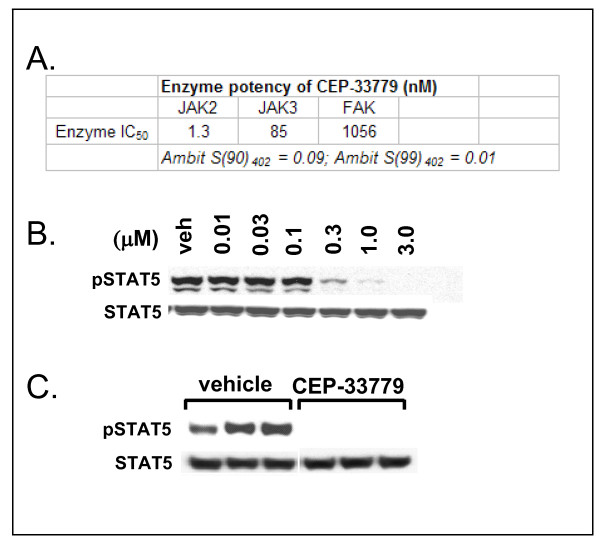
Janus kinase 2 (JAK2) is involved in the downstream activation of signal transducer and activator of transcription 3 (STAT3) and STAT5 and is responsible for transducing signals for several proinflammatory cytokines involved in the pathogenesis of rheumatoid arthritis (RA), including interleukin (IL)-6, interferon γ (IFNγ) and IL-12. In this paper, we describe the efficacy profile of CEP-33779, a highly selective, orally active, small-molecule inhibitor of JAK2 evaluated in two mouse models of RA.
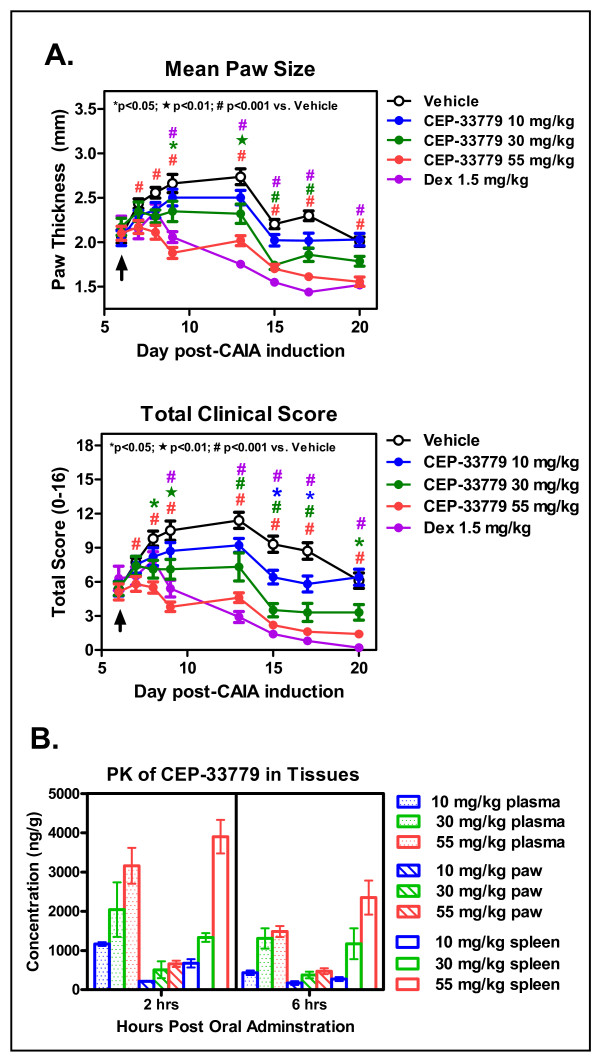
Collagen antibody-induced arthritis (CAIA) and collagen type II (CII)-induced arthritis (CIA) were established before the oral administration of a small-molecule JAK2 inhibitor, CEP-33779, twice daily at 10 mg/kg, 30 mg/kg, 55 mg/kg or 100 mg/kg over a period of 4 to 8 weeks.
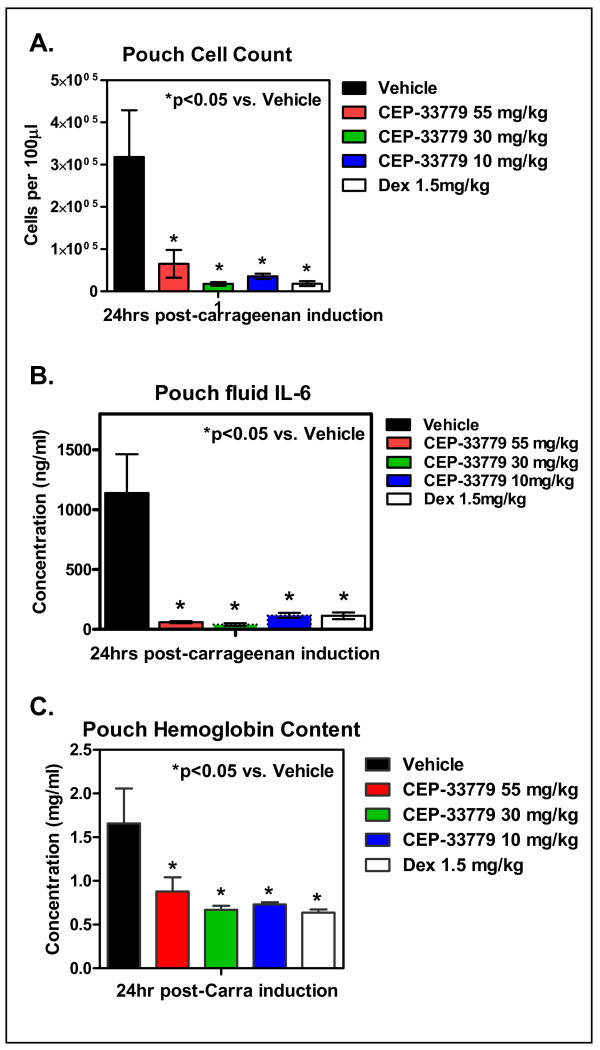
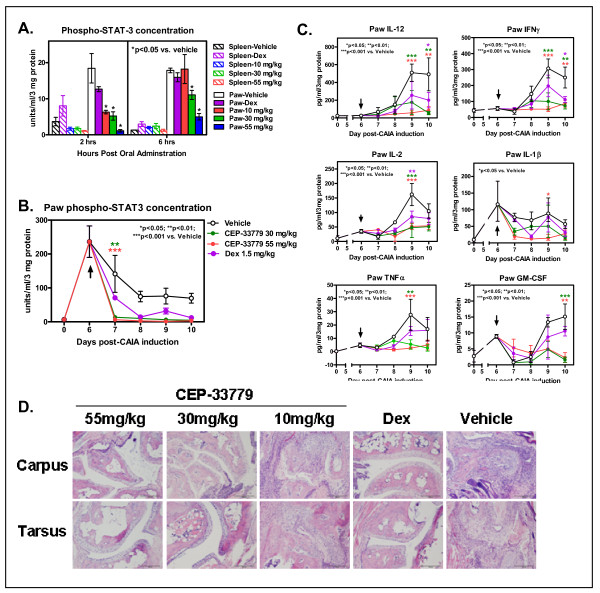
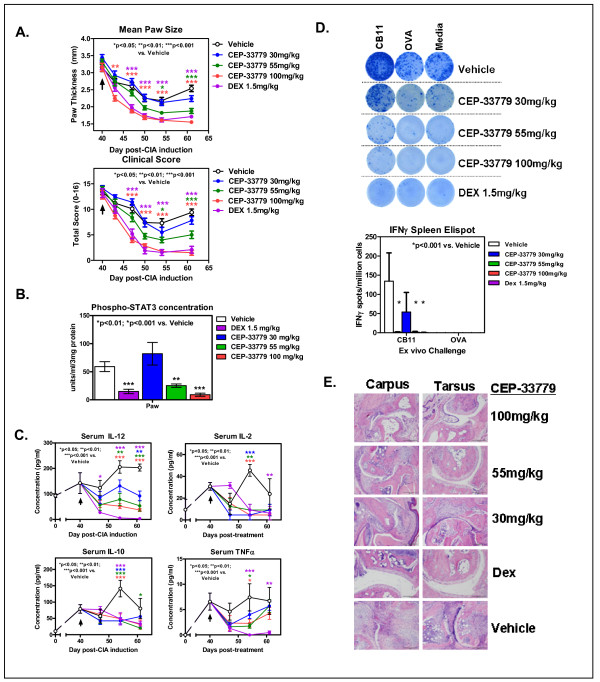
Pharmacodynamic inhibition of JAK2 reduced mean paw edema and clinical scores in both CIA and CAIA models of arthritis. Reduction in paw cytokines (IL-12, IFNγ and tumor necrosis factor α) and serum cytokines (IL-12 and IL-2) correlated with reduced spleen CII-specific T helper 1 cell frequencies as measured by ex vivo IFNγ enzyme-linked immunosorbent spot assay. Both models demonstrated histological evidence of disease amelioration upon treatment (for example, reduced matrix erosion, subchondral osteolysis, pannus formation and synovial inflammation) and reduced paw phosphorylated STAT3 levels. No changes in body weight or serum anti-CII autoantibody titers were observed in either RA model.
This study demonstrates the utility of using a potent and highly selective, orally bioavailable JAK2 inhibitor for the treatment of RA. Using a selective inhibitor of JAK2 rather than pan-JAK inhibitors avoids the potential complication of immunosuppression while targeting critical signaling pathways involved in autoimmune disease progression.
Janus 激酶 2(JAK2)参与信号转导和转录激活因子 3(STAT3)和 STAT5 的下游激活,负责转导几种参与类风湿关节炎(RA)发病机制的促炎细胞因子的信号,包括白细胞介素(IL)-6、干扰素 γ(IFNγ)和 IL-12。在本文中,我们描述了 CEP-33779 的疗效概况,这是一种高度选择性、口服活性的 JAK2 小分子抑制剂,在两种 RA 小鼠模型中进行了评估。
在口服小分子 JAK2 抑制剂 CEP-33779 之前,通过两次每日给药,分别以 10mg/kg、30mg/kg、55mg/kg 或 100mg/kg 的剂量,在 4 至 8 周的时间内建立胶原抗体诱导性关节炎(CAIA)和胶原 II 诱导性关节炎(CIA)。
JAK2 的药效学抑制降低了 CIA 和 CAIA 关节炎模型中平均爪肿胀和临床评分。爪细胞因子(IL-12、IFNγ 和肿瘤坏死因子 α)和血清细胞因子(IL-12 和 IL-2)的减少与脾 CII 特异性辅助性 T 细胞频率的降低相关,该频率通过体外 IFNγ 酶联免疫斑点测定来测量。两种模型在治疗后均显示出疾病改善的组织学证据(例如,基质侵蚀、软骨下骨溶解、滑膜增生和滑膜炎减少),并且爪中磷酸化 STAT3 水平降低。在两种 RA 模型中均未观察到体重或血清抗 CII 自身抗体滴度的变化。
这项研究证明了使用强效且高度选择性、口服生物可利用的 JAK2 抑制剂治疗 RA 的效用。使用 JAK2 的选择性抑制剂而不是泛 JAK 抑制剂可以避免靶向自身免疫疾病进展中关键信号通路的同时避免潜在的免疫抑制并发症。