Antoniou Antony N, Lenart Izabela, Guiliano David B
Division of Infection and Immunity/Centre of Rheumatology, Department of Immunology and Molecular Pathology, University College London, Windeyer Institute of Medical Science, 46 Cleveland Street, London W1T 4JF, UK.
Int J Rheumatol. 2011;2011:486856. doi: 10.1155/2011/486856. Epub 2011 Mar 30.
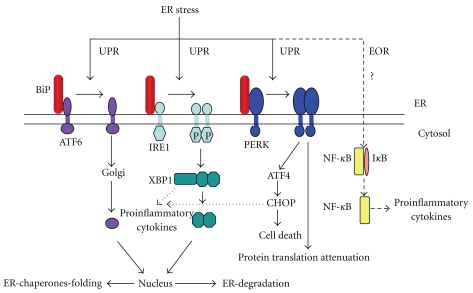
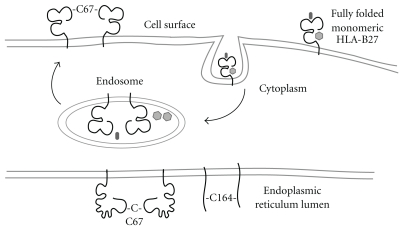
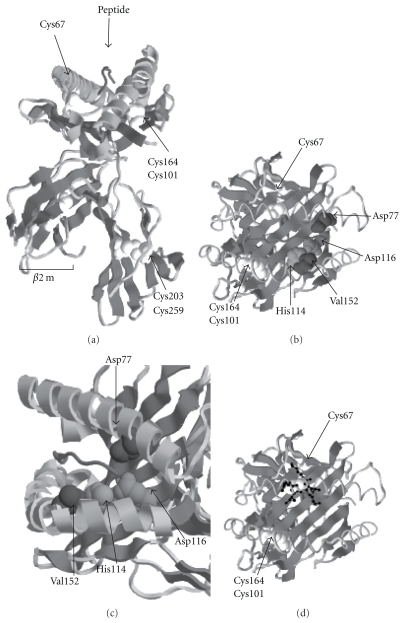
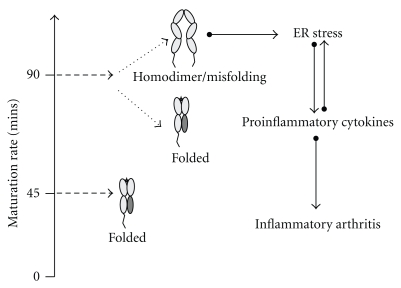
The association between HLA-B27 and the group of autoimmune inflammatory arthritic diseases, the spondyloarthropathies (SpAs) which include ankylosing spondylitis (AS) and Reactive Arthritis (ReA), has been well established and remains the strongest association between any HLA molecule and autoimmune disease. The mechanism behind this striking association remains elusive; however animal model and biochemical data suggest that HLA-B27 misfolding may be key to understanding its association with the SpAs. Recent investigations have focused on the unusual biochemical structures of HLA-B27 and their potential role in SpA pathogenesis. Here we discuss how these unusual biochemical structures may participate in cellular events leading to chronic inflammation and thus disease progression.
HLA - B27与自身免疫性炎性关节疾病(一组包括强直性脊柱炎(AS)和反应性关节炎(ReA)的脊柱关节炎(SpA))之间的关联已得到充分证实,并且仍然是任何HLA分子与自身免疫性疾病之间最强的关联。这种显著关联背后的机制仍然难以捉摸;然而,动物模型和生化数据表明,HLA - B27的错误折叠可能是理解其与脊柱关节炎关联的关键。最近的研究集中在HLA - B27不同寻常的生化结构及其在脊柱关节炎发病机制中的潜在作用。在此,我们讨论这些不同寻常的生化结构如何参与导致慢性炎症从而引发疾病进展的细胞事件。