School of Biomedical Sciences, University of Nottingham, Queen's Medical Centre, Nottingham NG7 2UH, UK.
Nucleic Acids Res. 2011 Aug;39(15):6660-8. doi: 10.1093/nar/gkr309. Epub 2011 May 11.
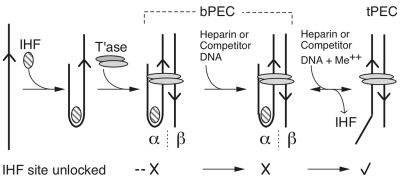
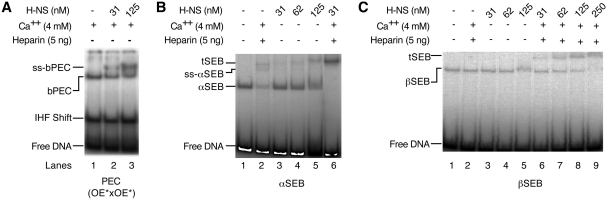
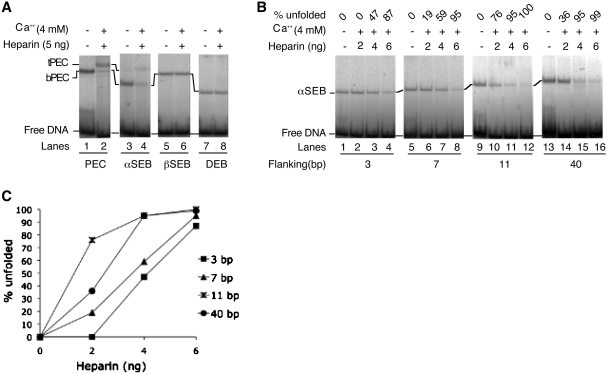
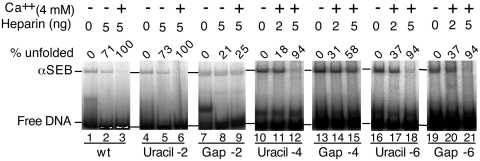
Tn10/IS10 transposition takes place in the context of a protein-DNA complex called a transpososome. During the reaction, the transpososome undergoes several conformational changes. The host proteins IHF and H-NS, which also are global regulators of gene expression, play important roles in directing these architectural changes. IHF binds tightly to only one of two transposon ends within the transpososome, folding this end into a DNA loop structure. Unfolding this DNA loop is necessary for excising the transposon from flanking donor DNA and preventing integration of the transposon into itself. We show here that efficient DNA loop unfolding relies on the continuity of the flanking donor DNA on the side of the transpososome opposite to the folded transposon end. We also show this same donor DNA is a preferred binding site for H-NS, which promotes opening of the IHF-loop, which is required for productive target interactions. This is counter to the usual mode of H-NS action, which is repressive due to its propensity to coat DNA. The interplay between IHF and H-NS likely serves to couple the rate of transposition to the host cell physiology as both of these proteins are integrated into cellular stress response pathways.
Tn10/IS10 转座发生在一种称为转座体的蛋白质-DNA 复合物的背景下。在反应过程中,转座体经历了几个构象变化。宿主蛋白 IHF 和 H-NS,它们也是基因表达的全局调节剂,在指导这些结构变化方面发挥着重要作用。IHF 仅紧密结合转座体中两个转座子末端之一,将该末端折叠成 DNA 环结构。解开这个 DNA 环对于从侧翼供体 DNA 中切除转座子并防止转座子自身整合是必要的。我们在这里表明,有效的 DNA 环展开依赖于转座体对面折叠转座子末端的侧翼供体 DNA 的连续性。我们还表明,同一供体 DNA 是 H-NS 的首选结合位点,H-NS 促进 IHF 环的打开,这对于有效的靶标相互作用是必需的。这与 H-NS 通常的作用模式相反,由于其倾向于覆盖 DNA,因此它是抑制性的。IHF 和 H-NS 之间的相互作用可能会将转座的速度与宿主细胞生理学联系起来,因为这两种蛋白质都整合到细胞应激反应途径中。