Institut für Physikalische Biologie, Heinrich-Heine-Universität Düsseldorf, Düsseldorf, Germany.
PLoS One. 2011 May 6;6(5):e19235. doi: 10.1371/journal.pone.0019235.
Among the seven different sigma factors in E. coli σ(70) has the highest concentration and affinity for the core RNA polymerase. The E. coli protein Rsd is regarded as an anti-sigma factor, inhibiting σ(70)-dependent transcription at the onset of stationary growth. Although binding of Rsd to σ(70) has been shown and numerous structural studies on Rsd have been performed the detailed mechanism of action is still unknown.
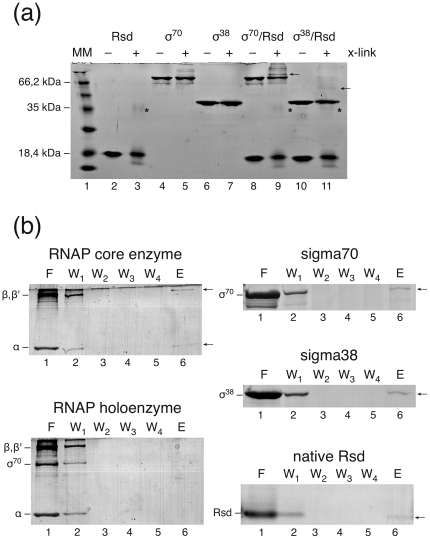
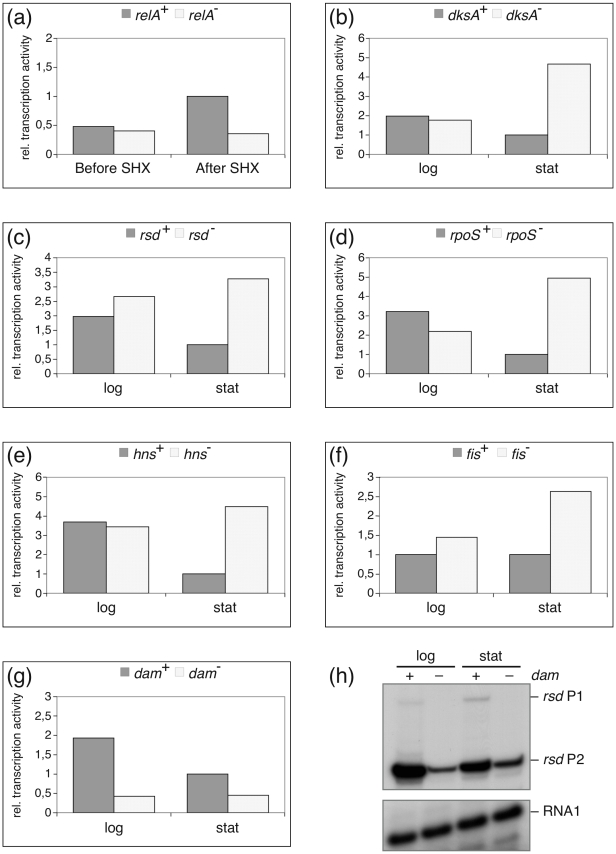
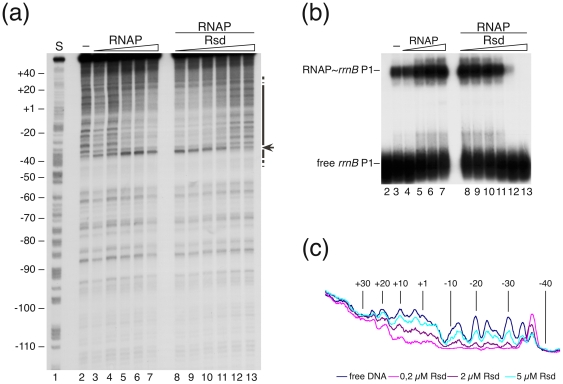
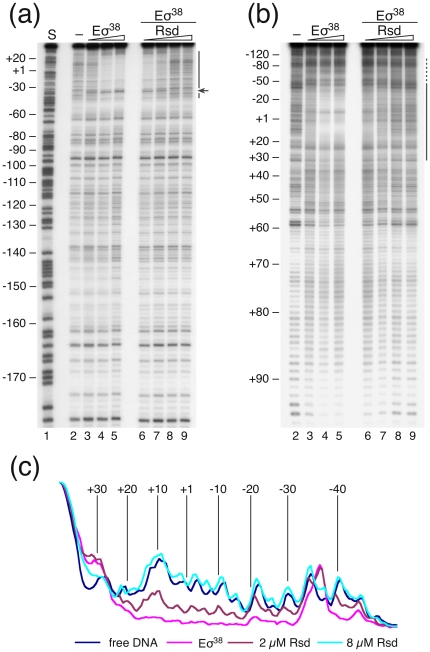
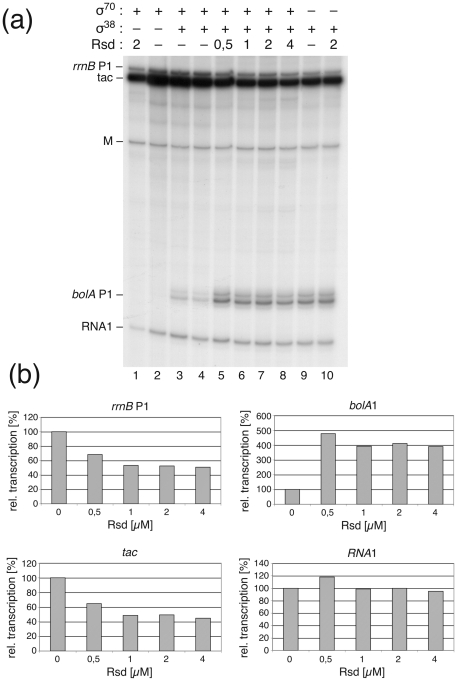
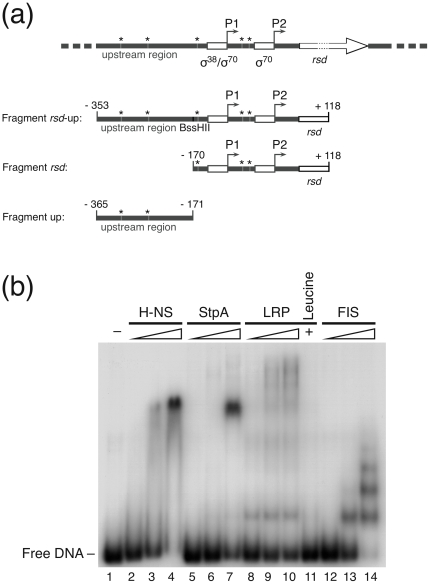
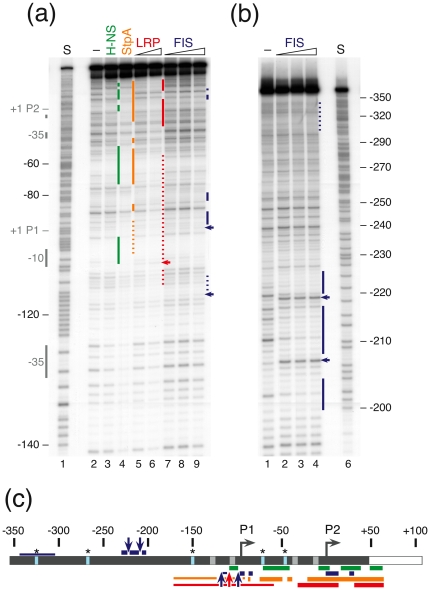
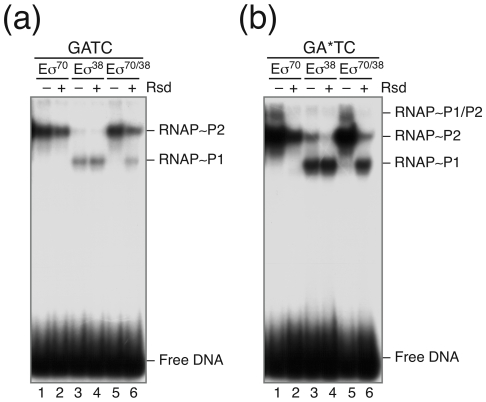
METHODOLOGY/PRINCIPAL FINDINGS: We have performed studies to unravel the function and regulation of Rsd expression in vitro and in vivo. Cross-linking and affinity binding revealed that Rsd is able to interact with σ(70), with the core enzyme of RNA polymerase and is able to form dimers in solution. Unexpectedly, we find that Rsd does also interact with σ(38), the stationary phase-specific sigma factor. This interaction was further corroborated by gel retardation and footprinting studies with different promoter fragments and σ(38)- or σ(70)-containing RNA polymerase in presence of Rsd. Under competitive in vitro transcription conditions, in presence of both sigma factors, a selective inhibition of σ(70)-dependent transcription was prevailing, however. Analysis of rsd expression revealed that the nucleoid-associated proteins H-NS and FIS, StpA and LRP bind to the regulatory region of the rsd promoters. Furthermore, the major promoter P2 was shown to be down-regulated in vivo by RpoS, the stationary phase-specific sigma factor and the transcription factor DksA, while induction of the stringent control enhanced rsd promoter activity. Most notably, the dam-dependent methylation of a cluster of GATC sites turned out to be important for efficient rsd transcription.
CONCLUSIONS/SIGNIFICANCE: The results contribute to a better understanding of the intricate mechanism of Rsd-mediated sigma factor specificity changes during stationary phase.
在大肠杆菌的七种不同σ因子中,σ(70)的浓度和对核心 RNA 聚合酶的亲和力最高。大肠杆菌蛋白 Rsd 被认为是一种抗σ因子,在静止生长开始时抑制 σ(70)依赖性转录。尽管已经表明 Rsd 与 σ(70)结合,并且已经进行了许多关于 Rsd 的结构研究,但作用的详细机制仍不清楚。
方法/主要发现:我们已经进行了研究,以揭示 Rsd 在体外和体内的表达功能和调节。交联和亲和结合表明,Rsd 能够与 σ(70)、RNA 聚合酶的核心酶相互作用,并能够在溶液中形成二聚体。出乎意料的是,我们发现 Rsd 也与 σ(38),即静止期特异性σ因子相互作用。这一相互作用进一步通过凝胶阻滞和足迹研究得到证实,研究中使用了不同的启动子片段和含有 σ(38)或 σ(70)的 RNA 聚合酶,同时存在 Rsd。在竞争体外转录条件下,在存在两种σ因子的情况下,优先抑制 σ(70)依赖性转录。rsd 表达分析表明,核相关蛋白 H-NS 和 FIS、StpA 和 LRP 结合到 rsd 启动子的调节区。此外,主要启动子 P2 被证明在体内受到 RpoS(静止期特异性 σ 因子)和转录因子 DksA 的下调,而严格控制的诱导增强了 rsd 启动子活性。最值得注意的是,GATC 位点簇的 dam 依赖性甲基化对于有效 rsd 转录至关重要。
结论/意义:这些结果有助于更好地理解在静止期 Rsd 介导的σ因子特异性变化的复杂机制。