Department of Gastroenterology, the Second Affiliated Hospital of Xi'an Jiaotong University, Xi'an, Shaanxi Province-710004, China.
Lipids Health Dis. 2011 May 18;10:81. doi: 10.1186/1476-511X-10-81.
Lipid accumulation in non-adipose tissues leads to cell dysfunction and apoptosis, a phenomenon known as lipotoxicity. Unsaturated fatty acids may offset the lipotoxicity associated with saturated fatty acids. Stearic acid induced endoplasmic reticulum (ER) stress and caused apoptotic and necrotic cell death in the primary rat hepatocytes.
Cell viability was investigated using MTT assay, and apoptosis was evaluated with Hoechst 33342 staining. Western blot analysis was used to examine the changes in the expression levels of glucose regulated protein 78 (GRP78), glucose regulated protein 94 (GRP94), and C/EBP homologous protein (CHOP). Caspase-3 activity was evaluated using a Caspase-3 substrate kit.
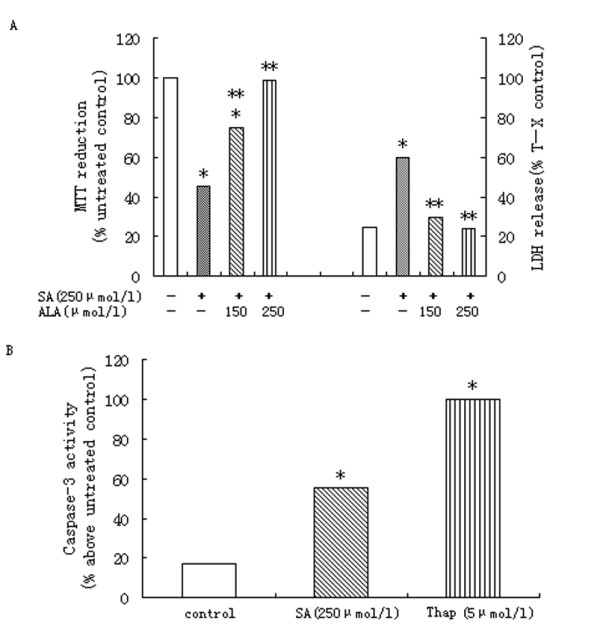
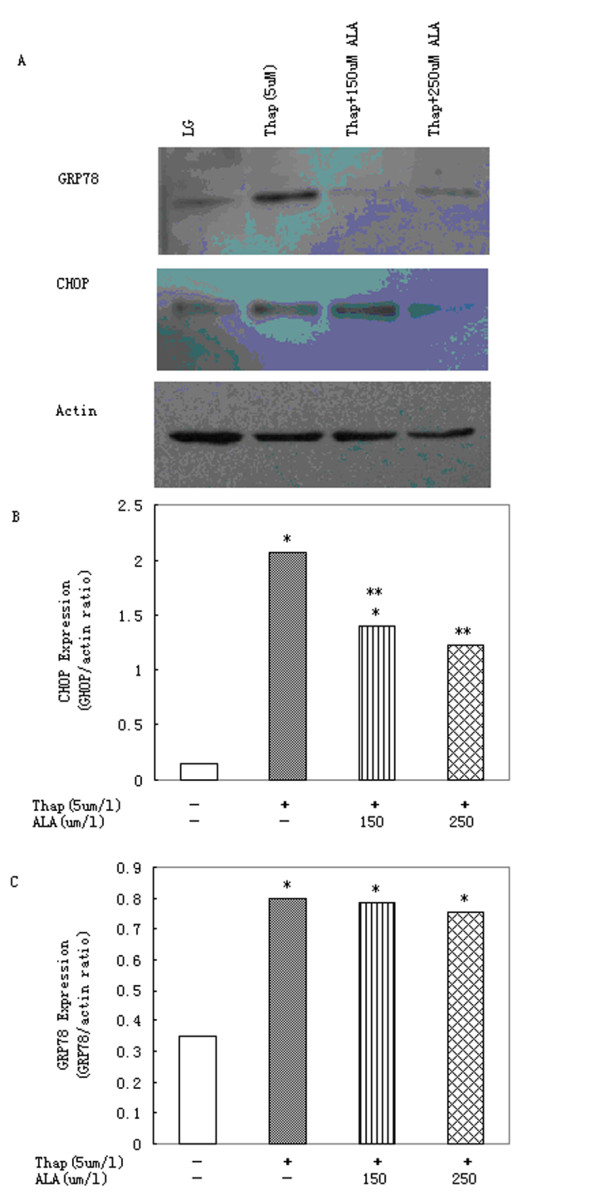
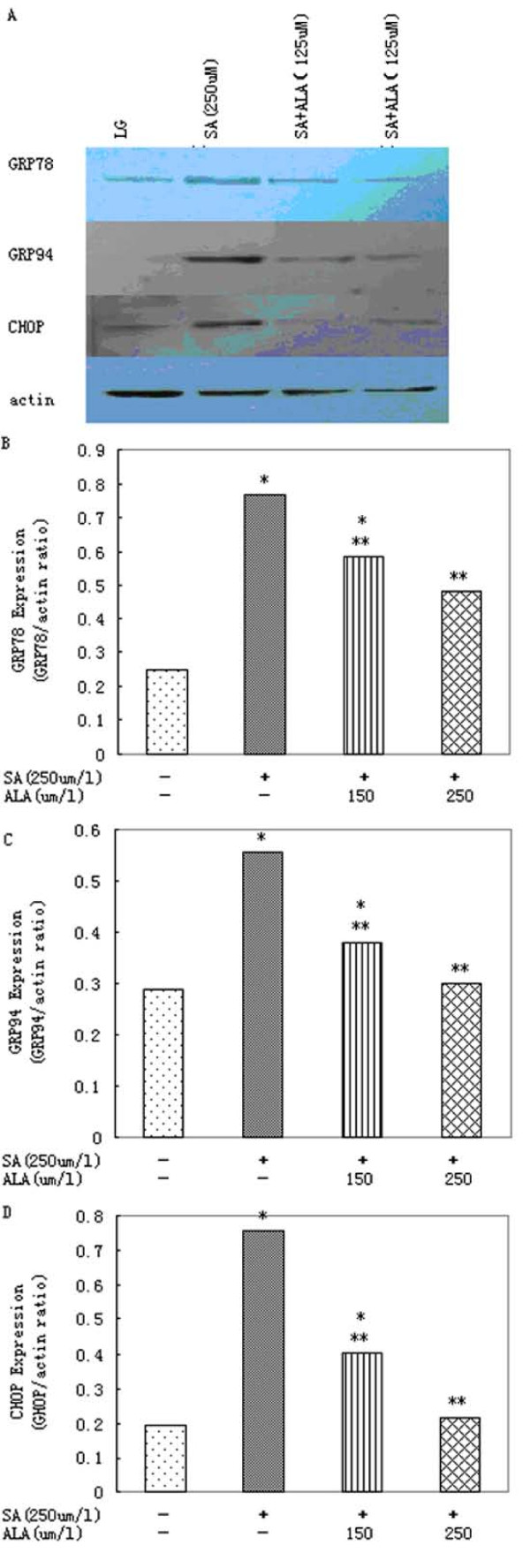
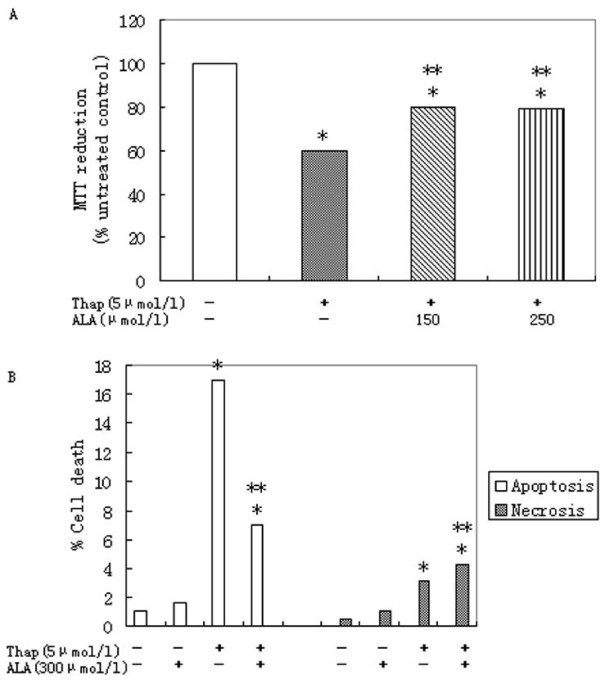
We have studied the ability of α-linolenic acid to prevent endoplasmic reticulum stress-mediated apoptosis of rat hepatocytes elicited by stearic acid and thapsigargin. Incubation of primary rat hepatocytes for 16 h with stearic acid produced a significant increase in cell death. Stearic acid also increased levels of three indicators of ER stress -- GRP78, CHOP, and GRP94. α-Linolenic acid distinctly reduced cell death and levels of all three indicators of ER stress brought about by stearic acid. Thapsigargin, which induces ER stress produced similar effects to those obtained using stearic acid; its effects were partly reversed by α-linolenic acid.
These results suggest that α-linolenic acid prevents ER stress-mediated apoptosis of stearic acid lipotoxicity on primary rat hepatocytes might become a target to develop new antiapoptotic compounds in nonalcoholic fatty liver disease (NAFLD).
非脂肪组织中的脂质积累导致细胞功能障碍和细胞凋亡,这种现象称为脂毒性。不饱和脂肪酸可能会抵消饱和脂肪酸相关的脂毒性。硬脂酸诱导内质网(ER)应激,并导致原代大鼠肝细胞发生凋亡和坏死性细胞死亡。
使用 MTT 测定法研究细胞活力,并通过 Hoechst 33342 染色评估细胞凋亡。使用 Western blot 分析检测葡萄糖调节蛋白 78(GRP78)、葡萄糖调节蛋白 94(GRP94)和 C/EBP 同源蛋白(CHOP)表达水平的变化。使用 Caspase-3 底物试剂盒评估 Caspase-3 活性。
我们研究了α-亚麻酸预防硬脂酸和他普西龙引发的大鼠肝细胞内质网应激介导的凋亡的能力。将原代大鼠肝细胞孵育 16 小时后,硬脂酸会导致细胞死亡明显增加。硬脂酸还增加了三种内质网应激指标——GRP78、CHOP 和 GRP94 的水平。α-亚麻酸明显降低了硬脂酸引起的细胞死亡和三种内质网应激指标的水平。他普西龙诱导内质网应激产生的效果与使用硬脂酸获得的效果相似;其作用部分被α-亚麻酸逆转。
这些结果表明,α-亚麻酸可预防 ER 应激介导的硬脂酸脂毒性诱导的原代大鼠肝细胞凋亡,这可能成为开发非酒精性脂肪性肝病(NAFLD)中新型抗凋亡化合物的靶点。