] Indiana University School of Medicine-Northwest, Gary, Indiana, USA.
Nat Med. 2011 Jun;17(6):676-83. doi: 10.1038/nm.2357. Epub 2011 May 22.
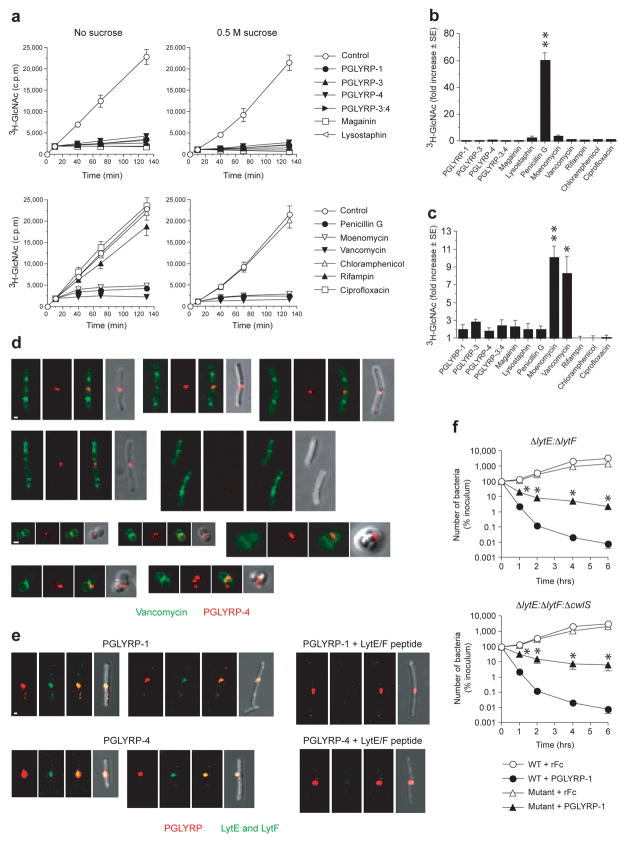
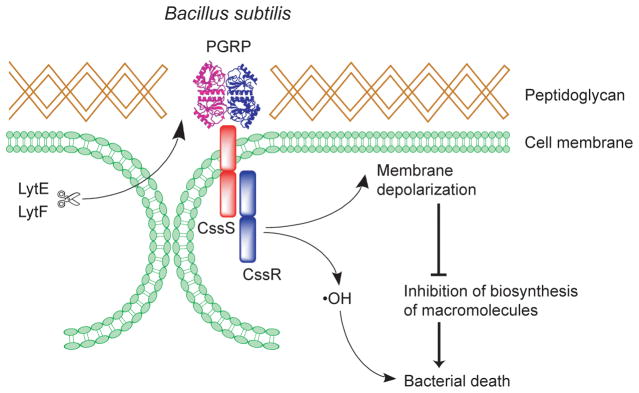
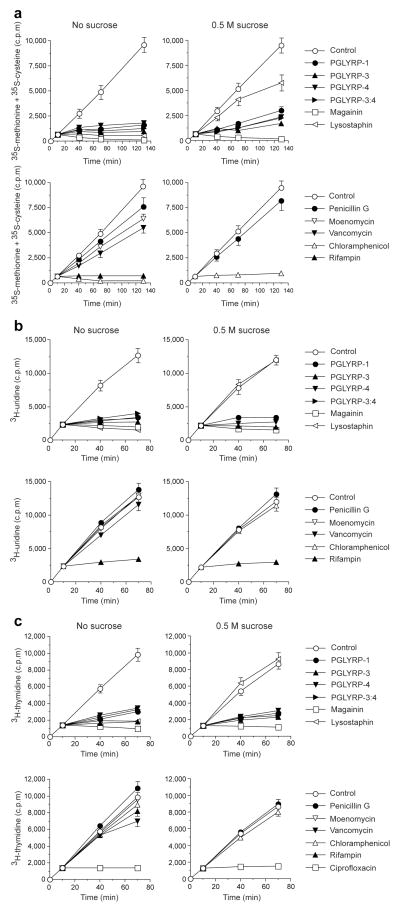
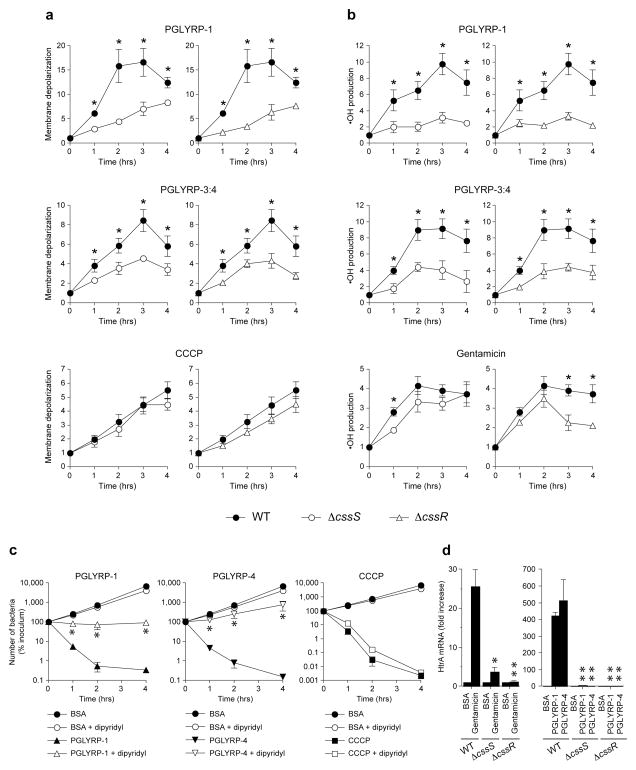
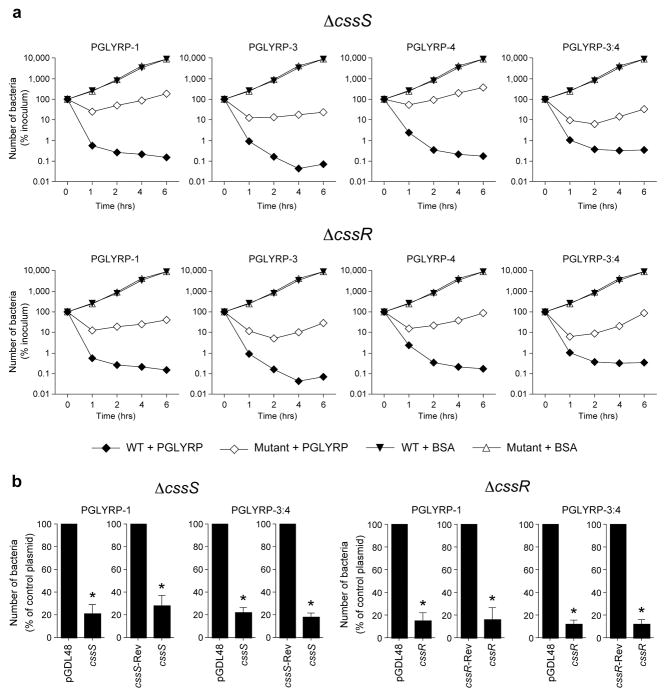
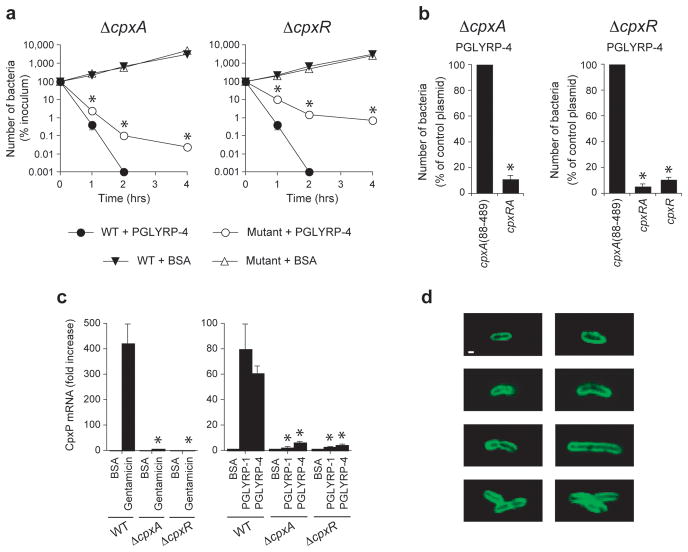
Mammalian peptidoglycan recognition proteins (PGRPs), similar to antimicrobial lectins, bind the bacterial cell wall and kill bacteria through an unknown mechanism. We show that PGRPs enter the Gram-positive cell wall at the site of daughter cell separation during cell division. In Bacillus subtilis, PGRPs activate the CssR-CssS two-component system that detects and disposes of misfolded proteins that are usually exported out of bacterial cells. This activation results in membrane depolarization, cessation of intracellular peptidoglycan, protein, RNA and DNA synthesis, and production of hydroxyl radicals, which are responsible for bacterial death. PGRPs also bind the outer membrane of Escherichia coli and activate the functionally homologous CpxA-CpxR two-component system, which kills the bacteria. We exclude other potential bactericidal mechanisms, including inhibition of extracellular peptidoglycan synthesis, hydrolysis of peptidoglycan and membrane permeabilization. Thus, we reveal a previously unknown mechanism by which innate immunity proteins that bind the cell wall or outer membrane exploit the bacterial stress defense response to kill bacteria.
哺乳动物肽聚糖识别蛋白(PGRPs)与抗菌凝集素相似,通过未知机制结合细菌细胞壁并杀死细菌。我们发现 PGRPs 在细胞分裂过程中,于子细胞分离部位进入革兰氏阳性细胞壁。在枯草芽孢杆菌中,PGRPs 激活 CssR-CssS 双组分系统,该系统检测并处理通常从细菌细胞中输出的错误折叠蛋白。这种激活导致膜去极化、细胞内肽聚糖、蛋白质、RNA 和 DNA 合成停止,并产生负责细菌死亡的羟基自由基。PGRPs 还与大肠杆菌的外膜结合并激活功能同源的 CpxA-CpxR 双组分系统,从而杀死细菌。我们排除了其他潜在的杀菌机制,包括抑制细胞外肽聚糖合成、肽聚糖水解和膜通透性。因此,我们揭示了一种以前未知的机制,即结合细胞壁或外膜的先天免疫蛋白利用细菌应激防御反应来杀死细菌。