Endocrine Unit, Massachusetts General Hospital, Boston, USA.
Am J Med. 2011 Jun;124(6):519-26. doi: 10.1016/j.amjmed.2011.01.007.
Concerns have been raised about the risk of fractures with acid-suppressive medications, such as proton pump inhibitors and histamine(2)-receptor antagonists.
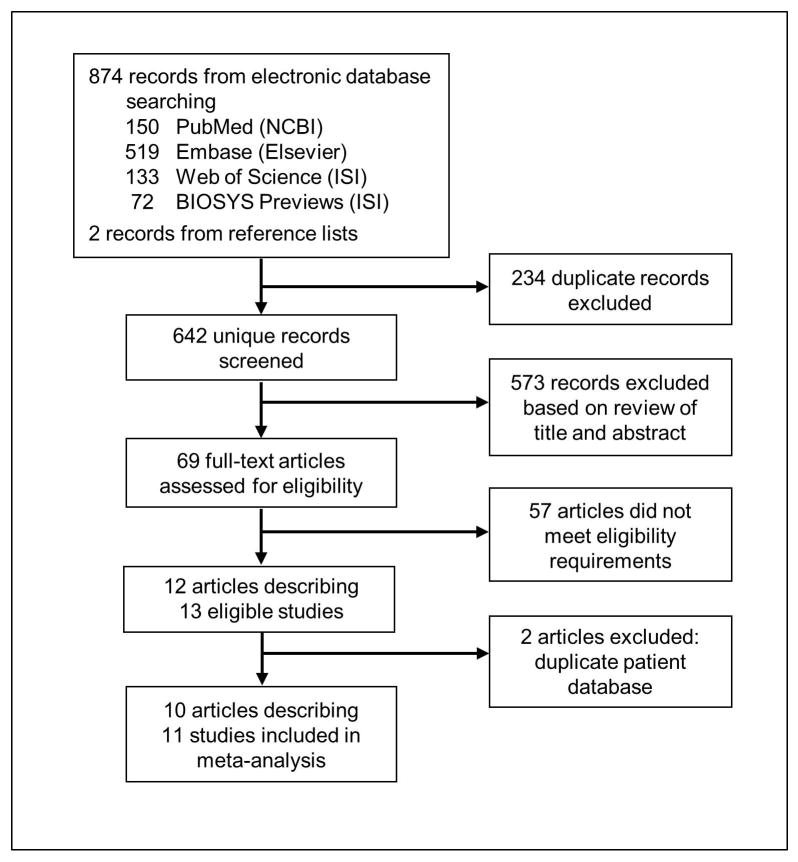
This meta-analysis evaluated the association between proton pump inhibitor or histamine(2)-receptor antagonist use and fractures. We performed a systematic search of published literature (1970 to October 10, 2010) in MEDLINE, EMBASE, and other sources. Ten publications reporting 11 studies were considered eligible for analysis.
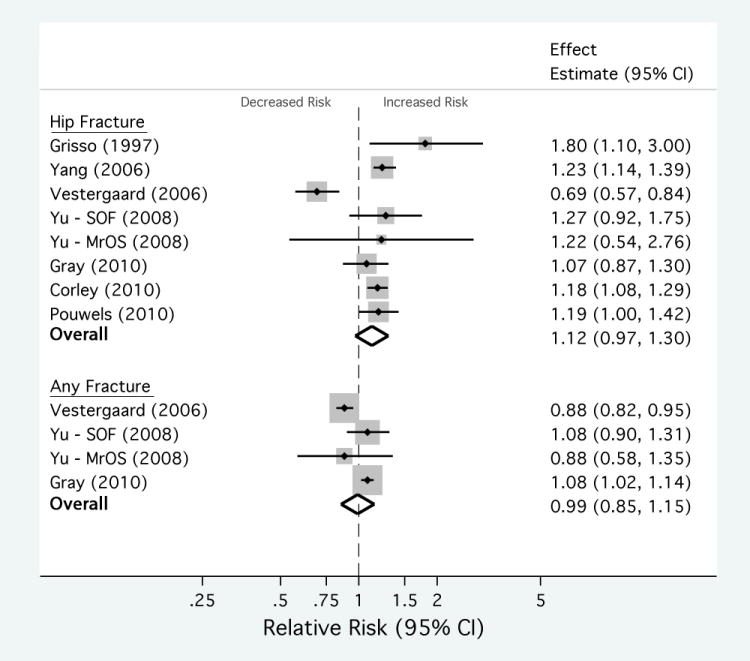
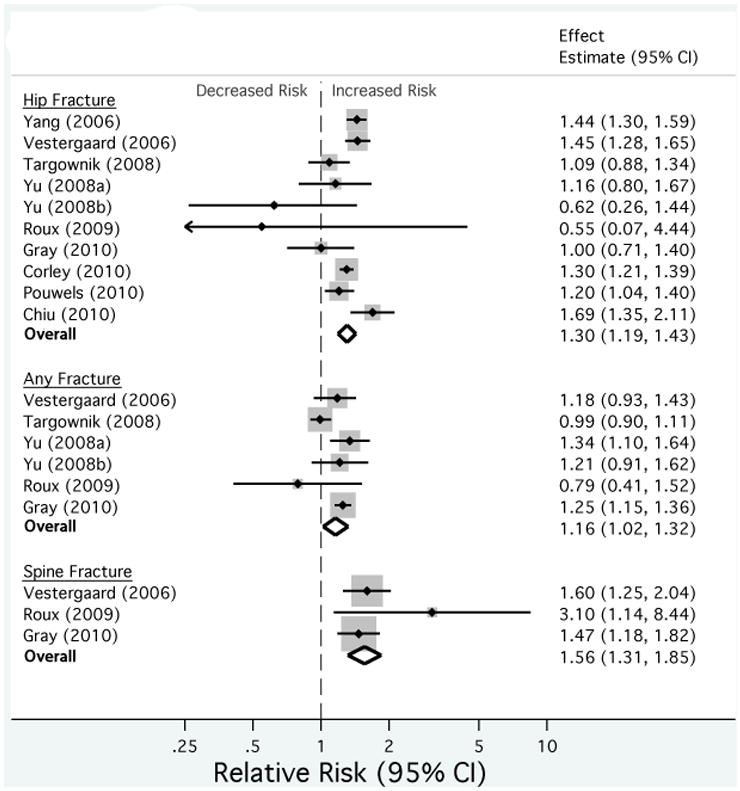
All studies were observational case-control or cohort studies and primarily evaluated older adults. The summary effect estimate for risk of hip fracture increased modestly among individuals taking proton pump inhibitors (relative risk [RR] 1.30, 95% confidence interval [CI], 1.19-1.43). There also was an increase in spine (RR 1.56, 95% CI, 1.31-1.85) and any-site fractures (RR 1.16, 95% CI, 1.04-1.30) among proton pump inhibitor users. These findings were similar in both men and women and after stratification by duration of use. In contrast, histamine(2)-receptor antagonist use was not significantly associated with increased risk of hip fracture (RR 1.12, 95% CI, 0.97-1.30).
In this meta-analysis of observational studies, proton pump inhibitors modestly increased the risk of hip, spine, and any-site fractures, whereas histamine(2)-receptor antagonists were not associated with fracture risk. The possibility of residual confounding cannot be excluded. Further skeletal evaluation should be considered for patients who are taking proton pump inhibitors and also at risk for osteoporotic fracture.
人们对抑酸药物(如质子泵抑制剂和组胺 2 受体拮抗剂)引起骨折的风险表示担忧。
本荟萃分析评估了质子泵抑制剂或组胺 2 受体拮抗剂的使用与骨折之间的关联。我们对 MEDLINE、EMBASE 和其他来源的已发表文献进行了系统搜索(1970 年至 2010 年 10 月 10 日)。有 10 篇报告了 11 项研究的文献被认为符合分析条件。
所有研究均为观察性病例对照或队列研究,主要评估老年人。服用质子泵抑制剂者发生髋部骨折的风险估计值适度增加(相对危险度 [RR] 1.30,95%置信区间 [CI],1.19-1.43)。服用质子泵抑制剂者的脊柱(RR 1.56,95%CI,1.31-1.85)和任何部位骨折(RR 1.16,95%CI,1.04-1.30)的风险也增加。这些发现无论在男性和女性中,还是在按使用时间长短进行分层后均相似。相反,组胺 2 受体拮抗剂的使用与髋部骨折风险增加无关(RR 1.12,95%CI,0.97-1.30)。
在本荟萃分析的观察性研究中,质子泵抑制剂适度增加了髋部、脊柱和任何部位骨折的风险,而组胺 2 受体拮抗剂与骨折风险无关。不能排除残余混杂的可能性。对于正在服用质子泵抑制剂且有骨质疏松性骨折风险的患者,应进一步进行骨骼评估。