Department of Pharmacological and Pharmaceutical Sciences, University of Houston, 1441 Moursund Street, Houston, TX 77030, USA.
Life Sci. 2011 Jul 4;89(1-2):57-64. doi: 10.1016/j.lfs.2011.05.005. Epub 2011 May 18.
Our aim is to investigate the molecular mechanism of regulation of gene expression of drug metabolizing enzymes (DMEs) and transporters in diet-induced obesity.
Adult male CD1 mice were fed diets containing 60% kcal fat (HFD) or 10% kcal fat (LFD) for 14 weeks. RNA levels of hepatic DMEs, transporters and their regulatory nuclear receptors (NRs) were analyzed by real-time PCR. Activation of cell-signaling components (JNK and NF-κΒ) and pro-inflammatory cytokines (IL-1β, IL-6 and TNFα) were measured in the liver. Finally, the pharmacodynamics of drugs metabolized by DMEs was measured to determine the clinical relevance of our findings.
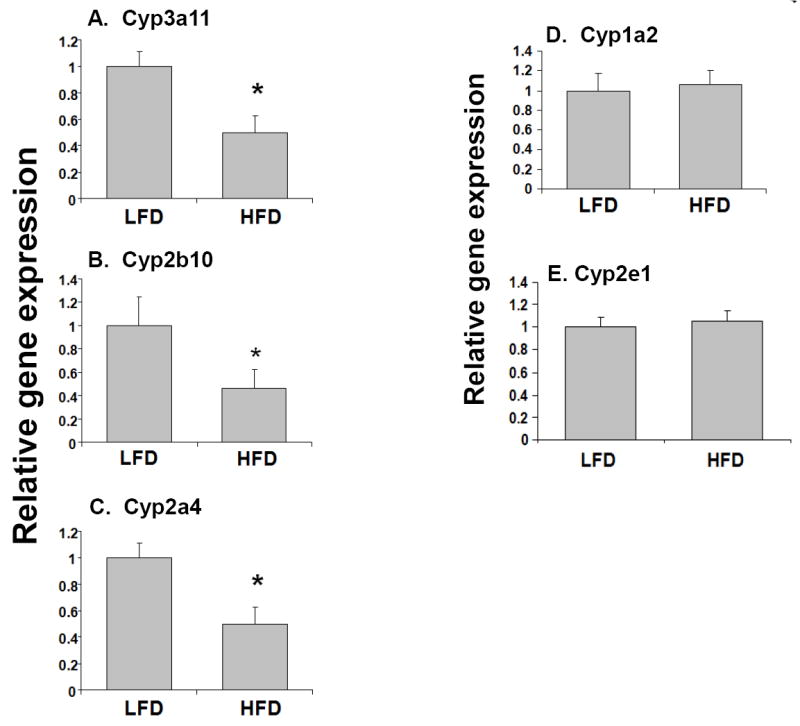
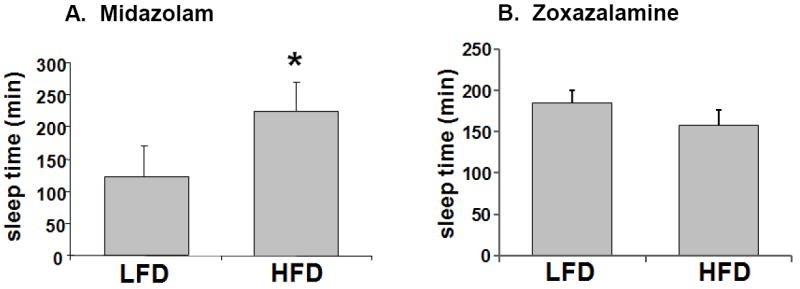
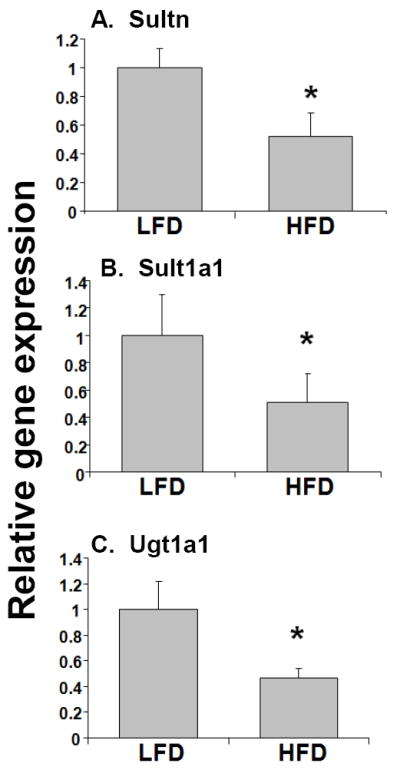
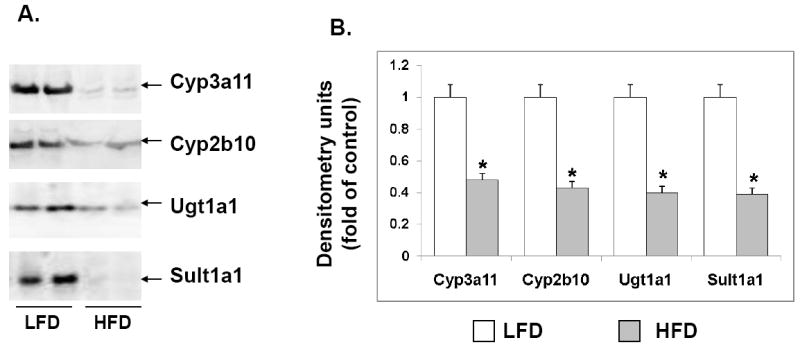
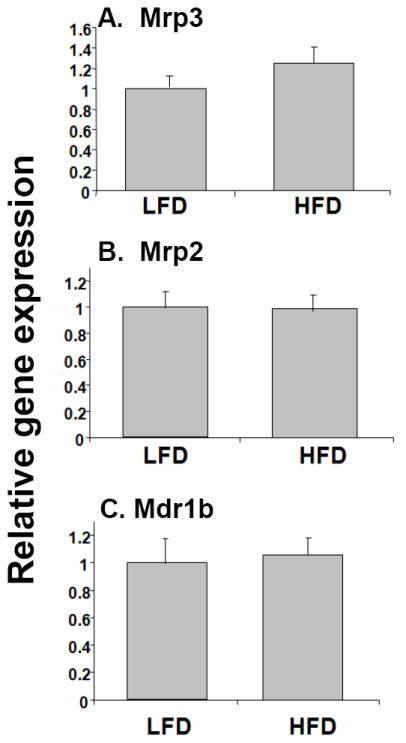
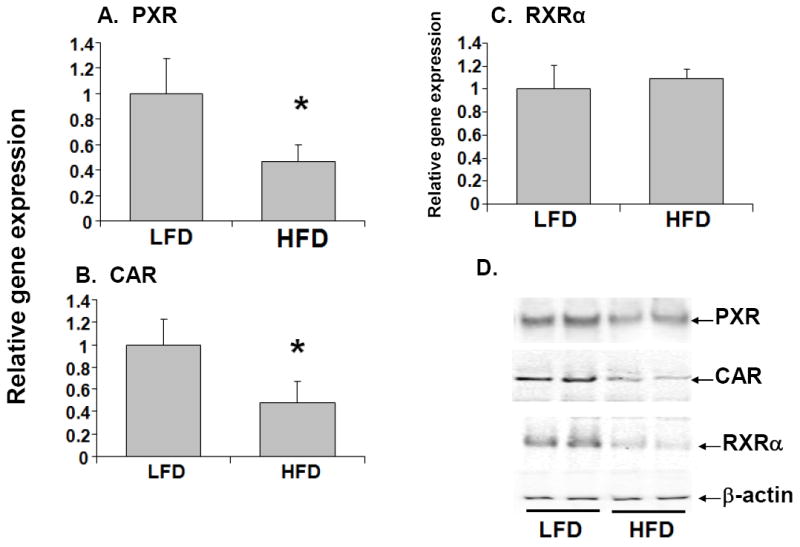
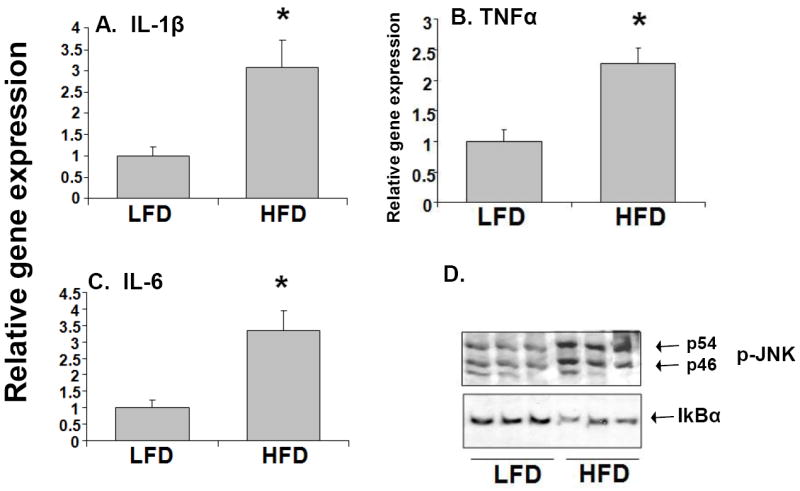
RNA levels of the hepatic phase I (Cyp3a11, Cyp2b10, Cyp2a4) and phase II (Ugt1a1, Sult1a1, Sultn) enzymes were reduced ~30-60% in HFD compared to LFD mice. RNA levels of Cyp2e1, Cyp1a2 and the drug transporters, multidrug resistance proteins, (Mrp)2, Mrp3 and multidrug resistant gene (Mdr)1b were unaltered in HFD mice. Gene expression of the NRs, PXR and CAR and nuclear protein levels of RXRα was reduced in HFD mice. Cytokines, JNK and NF-κΒ were induced in HFD mice. Thus reduction in hepatic gene expression in obesity may be modulated by cross-talk between NRs and inflammation-induced cell-signaling. Sleep time of Midazolam (Cyp3a substrate) was prolonged in HFD mice, while Zoxazolamine (Cyp1a2 and Cyp2e1 substrate)-induced sleep time was unaltered.
This study demonstrates that gene-specific reductions in DMEs can affect specific drugs metabolized by these enzymes, thus providing a rationale to monitor the effectiveness of drug therapy in obese individuals.
我们旨在研究饮食诱导肥胖中药物代谢酶(DMEs)和转运体基因表达调控的分子机制。
成年雄性 CD1 小鼠喂食含 60%热量脂肪(HFD)或 10%热量脂肪(LFD)的饮食 14 周。通过实时 PCR 分析肝内 DMEs、转运体及其调节核受体(NRs)的 RNA 水平。测定肝内细胞信号成分(JNK 和 NF-κΒ)和促炎细胞因子(IL-1β、IL-6 和 TNFα)的激活情况。最后,测定 DMEs 代谢的药物的药效动力学,以确定我们发现的临床相关性。
与 LFD 相比,HFD 小鼠肝内 I 相(Cyp3a11、Cyp2b10、Cyp2a4)和 II 相(Ugt1a1、Sult1a1、Sultn)酶的 RNA 水平降低了约 30-60%。HFD 小鼠 Cyp2e1、Cyp1a2 和药物转运体多药耐药蛋白(Mrp)2、Mrp3 和多药耐药基因(Mdr)1b 的 RNA 水平没有改变。NRs、PXR 和 CAR 的基因表达和 RXRα 的核蛋白水平在 HFD 小鼠中降低。HFD 小鼠中细胞因子、JNK 和 NF-κΒ 被诱导。因此,肥胖中肝内基因表达的减少可能是由 NRs 和炎症诱导的细胞信号之间的串扰调节的。咪达唑仑(Cyp3a 底物)的睡眠时间在 HFD 小鼠中延长,而唑拉西隆(Cyp1a2 和 Cyp2e1 底物)诱导的睡眠时间没有改变。
这项研究表明,DMEs 的基因特异性减少会影响这些酶代谢的特定药物,从而为监测肥胖个体药物治疗的有效性提供了依据。