State Key Laboratory of Molecular Biology, Institute of Biochemistry and Cell Biology, Shanghai Institutes for Biological Sciences, Chinese Academy of Sciences, Shanghai, China.
PLoS One. 2011;6(5):e19763. doi: 10.1371/journal.pone.0019763. Epub 2011 May 19.
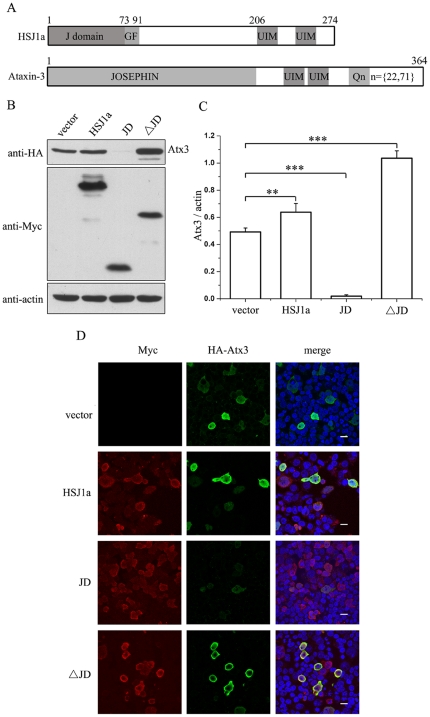
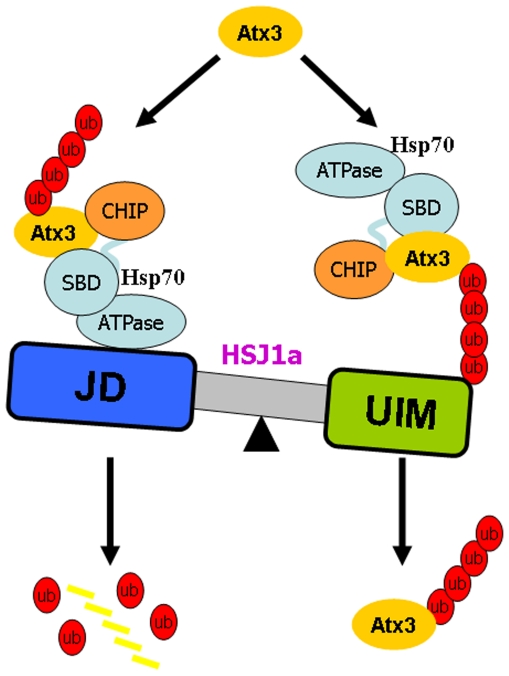
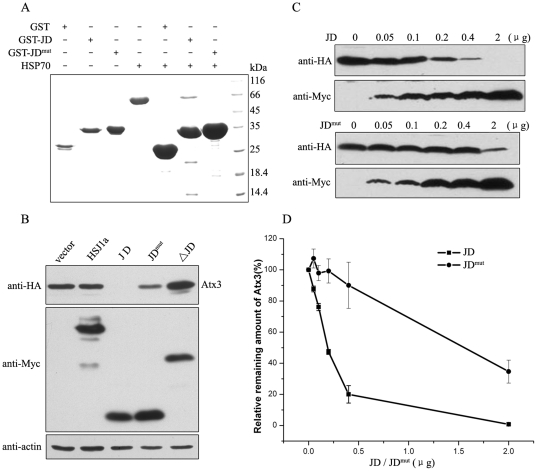
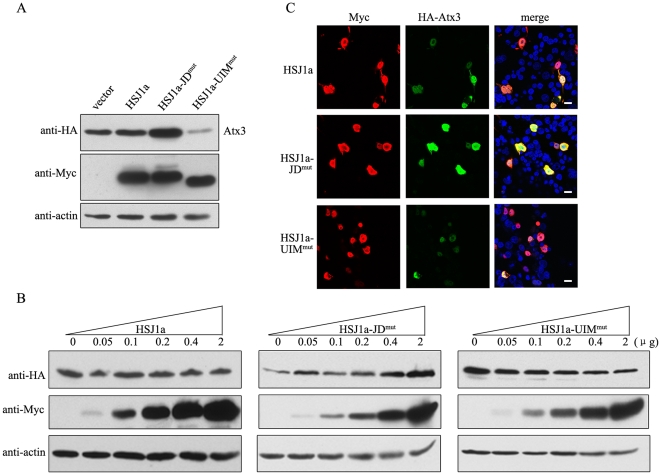
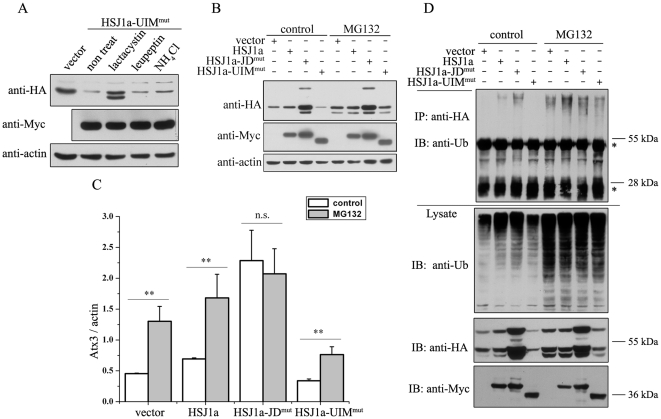
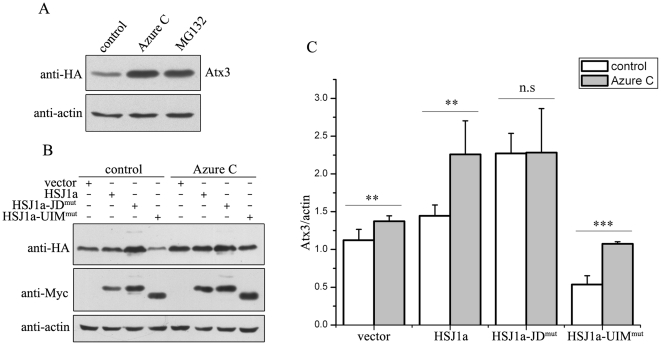
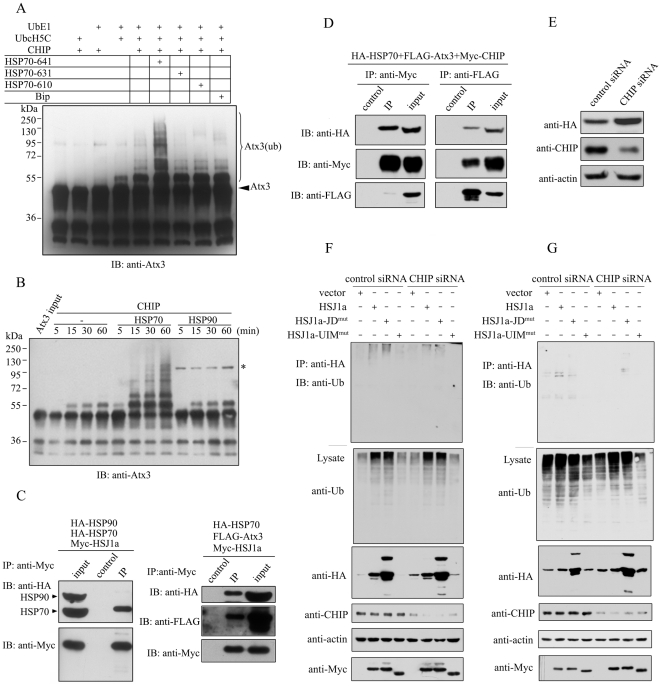
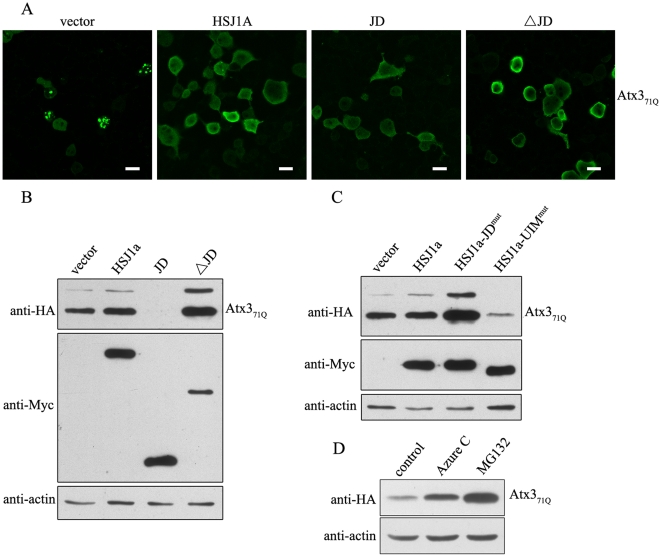
Homo sapiens J domain protein (HSJ1) is a J-domain containing co-chaperone that is known to stimulate ATPase activity of HSP70 chaperone, while it also harbors two ubiquitin (Ub)-interacting motifs (UIMs) that may bind with ubiquitinated substrates and potentially function in protein degradation. We studied the effects of HSJ1a on the protein levels of both normal and the disease--related polyQ-expanded forms of ataxin-3 (Atx3) in cells. The results demonstrate that the N-terminal J-domain and the C-terminal UIM domain of HSJ1a exert opposite functions in regulating the protein level of cellular overexpressed Atx3. This dual regulation is dependent on the binding of the J-domain with HSP70, and the UIM domain with polyUb chains. The J-domain down-regulates the protein level of Atx3 through HSP70 mediated proteasomal degradation, while the UIM domain may alleviate this process via maintaining the ubiquitinated Atx3. We propose that co-chaperone HSJ1a orchestrates the balance of substrates in stressed cells in a Yin-Yang manner.
人类 J 结构域蛋白(HSJ1)是一种含有 J 结构域的共伴侣蛋白,已知它可以刺激 HSP70 伴侣的 ATP 酶活性,同时它还具有两个泛素(Ub)相互作用基序(UIM),可能与泛素化的底物结合,并可能在蛋白质降解中发挥作用。我们研究了 HSJ1a 对细胞中正常和与疾病相关的多聚 Q 扩展形式的 Ataxin-3(Atx3)的蛋白水平的影响。结果表明,HSJ1a 的 N 端 J 结构域和 C 端 UIM 结构域在调节细胞中过表达的 Atx3 的蛋白水平方面发挥着相反的作用。这种双重调节依赖于 J 结构域与 HSP70 的结合,以及 UIM 结构域与多聚 Ub 链的结合。J 结构域通过 HSP70 介导的蛋白酶体降解下调 Atx3 的蛋白水平,而 UIM 结构域可能通过维持泛素化的 Atx3 来减轻这一过程。我们提出,共伴侣 HSJ1a 以阴阳方式协调应激细胞中底物的平衡。