Kentucky Spinal Cord Injury Research Center, University of Louisville, School of Medicine, Louisville, Kentucky 40292, USA.
Glia. 2011 Oct;59(10):1489-502. doi: 10.1002/glia.21191. Epub 2011 Jun 2.
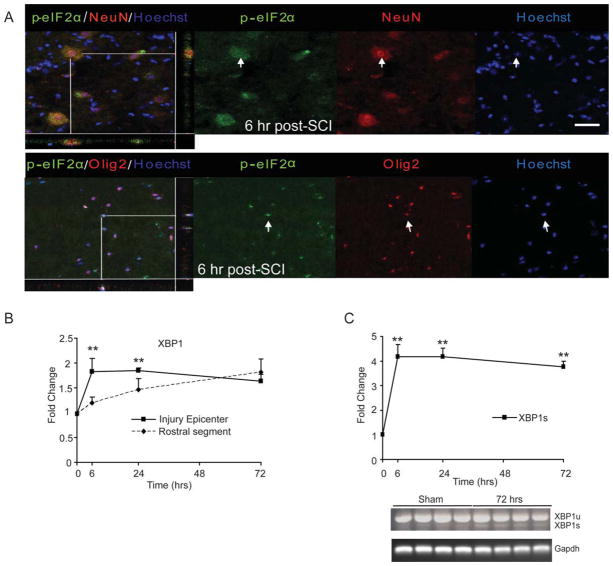
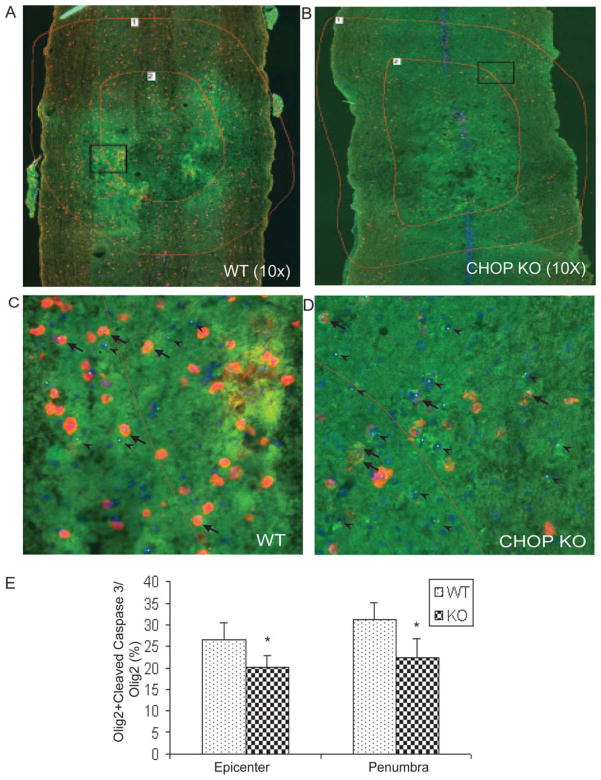
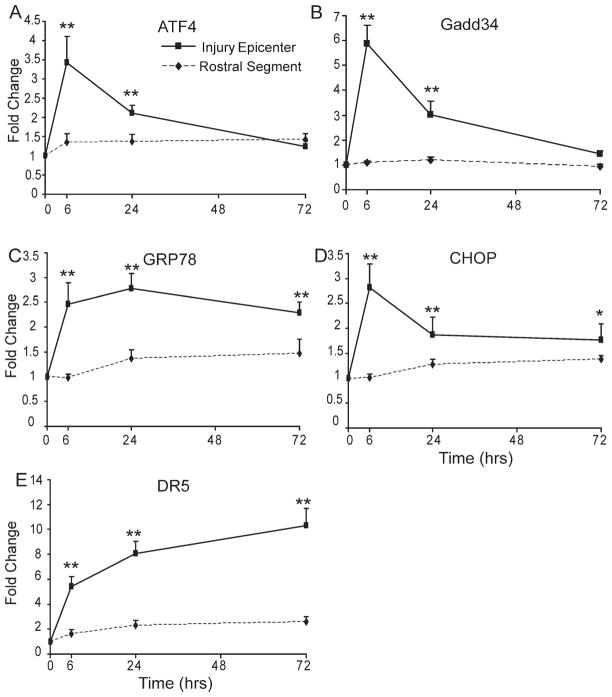
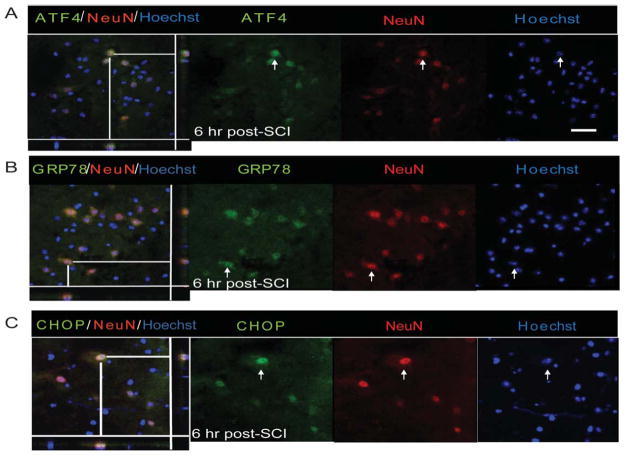
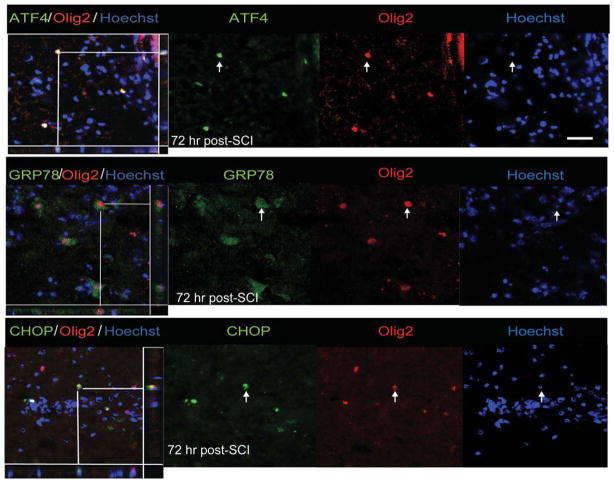
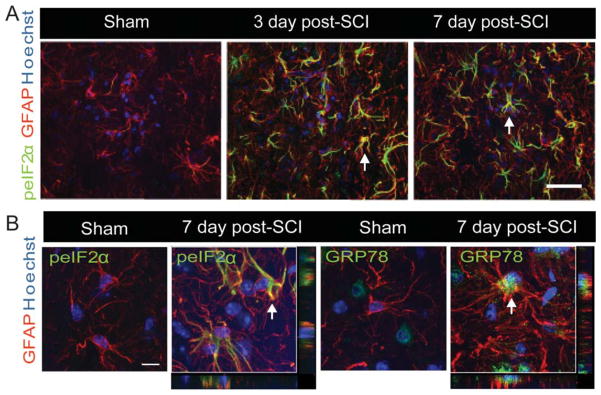
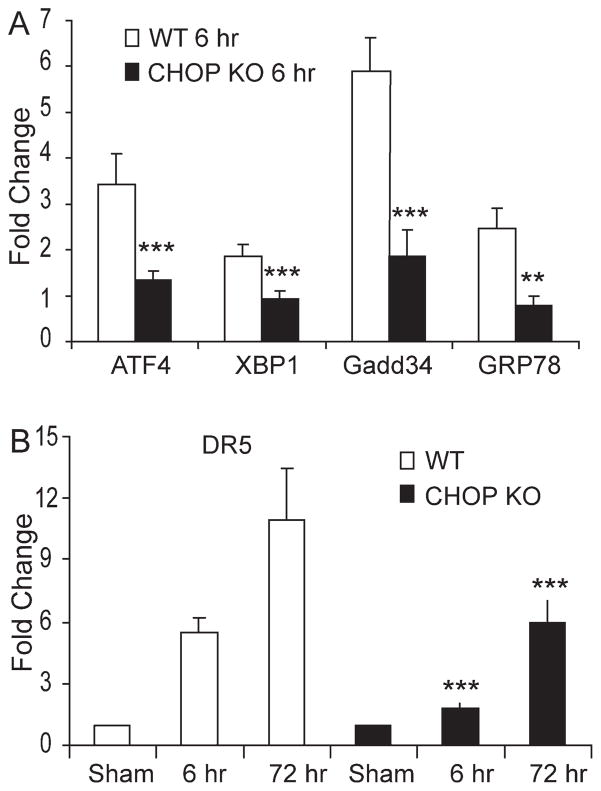
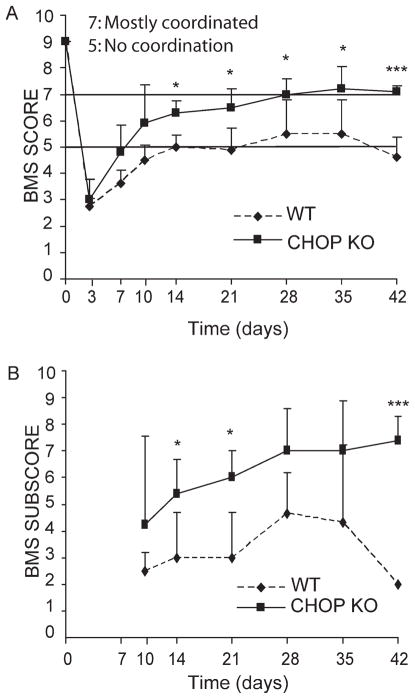
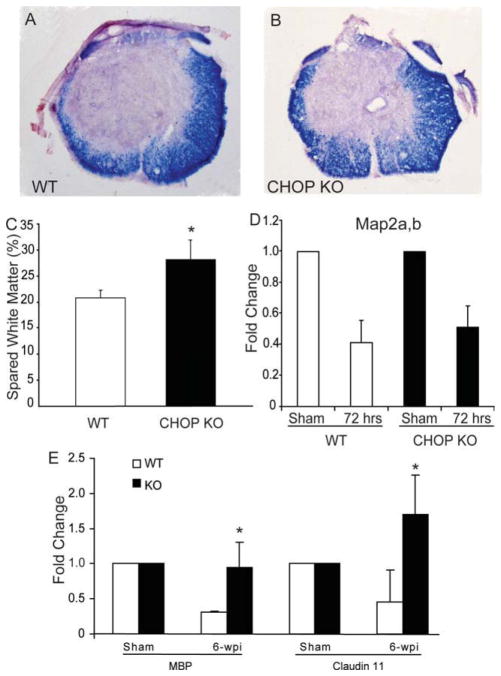
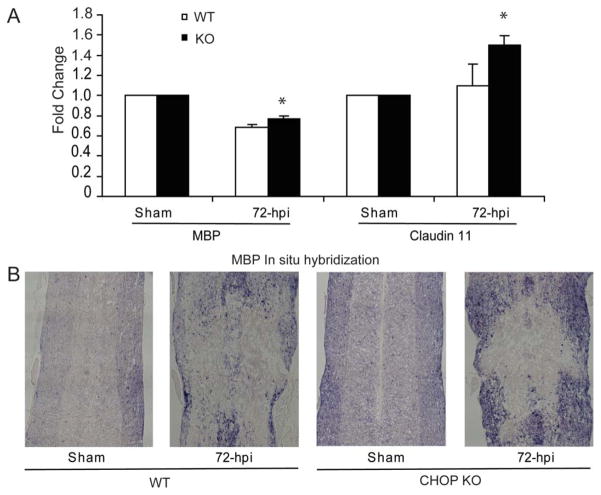
Activation of the unfolded protein response (UPR) is involved in the pathogenesis of numerous CNS myelin abnormalities; yet, its direct role in traumatic spinal cord injury (SCI)-induced demyelination is not known. The UPR is an evolutionarily conserved cell defense mechanism initiated to restore endoplasmic reticulum homeostasis in response to various cellular stresses including infection, trauma, and oxidative damage. However, if uncompensated, the UPR triggers apoptotic cell death. We demonstrate that the three signaling branches of UPR including the PERK, ATF6, and IRE1α are rapidly initiated in a mouse model of contusive SCI specifically at the injury epicenter. Immunohistochemical analyses of the various UPR markers revealed that in neurons, the UPR appeared at 6 and 24-h post-SCI. In contrast, in oligodendrocytes and astroglia, UPR persisted at least for up to 3 days post-SCI. The UPR-associated proapoptotic transcriptional regulator CHOP was among the UPR markers upregulated in neurons and oligodendrocytes, but not in astrocytes, of traumatized mouse spinal cords. To directly analyze its role in SCI, WT and CHOP null mice received a moderate T9 contusive injury. Deletion of CHOP led to an overall attenuation of the UPR after contusive SCI. Furthermore, analyses of hindlimb locomotion demonstrated a significant functional recovery that correlated with an increase in white-matter sparing, transcript levels of myelin basic protein, and Claudin 11 and decreased oligodendrocyte apoptosis in CHOP null mice in contrast to WT animals. Thus, our study provides evidence that the UPR contributes to oligodendrocyte loss after traumatic SCI.
未折叠蛋白反应(UPR)的激活与许多中枢神经系统髓鞘异常的发病机制有关;然而,其在创伤性脊髓损伤(SCI)诱导的脱髓鞘中的直接作用尚不清楚。UPR 是一种进化上保守的细胞防御机制,当内质网受到各种细胞应激(包括感染、创伤和氧化损伤)时,该机制会被激活以恢复内质网的稳态。然而,如果不能得到补偿,UPR 会引发细胞凋亡。我们证明,在撞击性 SCI 的小鼠模型中,UPR 的三条信号通路分支(PERK、ATF6 和 IRE1α)在损伤中心迅速启动。对各种 UPR 标志物的免疫组织化学分析表明,在神经元中,UPR 在 SCI 后 6 和 24 小时出现。相比之下,在少突胶质细胞和星形胶质细胞中,UPR 至少在 SCI 后持续存在 3 天。UPR 相关的促凋亡转录调节因子 CHOP 是上调的 UPR 标志物之一,在神经元和少突胶质细胞中上调,但在星形胶质细胞中没有上调,在创伤性小鼠脊髓中。为了直接分析其在 SCI 中的作用,WT 和 CHOP 缺失小鼠接受了中度 T9 撞击性损伤。CHOP 的缺失导致撞击性 SCI 后 UPR 总体减弱。此外,后肢运动分析表明,CHOP 缺失小鼠的功能恢复显著,与白质保留增加、髓鞘碱性蛋白和 Claudin 11 的转录水平增加以及少突胶质细胞凋亡减少相关,与 WT 动物相比。因此,我们的研究提供了证据表明 UPR 有助于创伤性 SCI 后少突胶质细胞的丢失。