Department of Anesthesiology, College of Medicine Mayo Clinic, Rochester, Minnesota, USA.
Pain Pract. 2012 Mar;12(3):175-83. doi: 10.1111/j.1533-2500.2011.00480.x. Epub 2011 Jun 16.
The role of preoperative gabapentin in postoperative pain management is not clear, particularly in patients receiving regional blockade. Patients undergoing thoracotomy benefit from epidural analgesia but still may experience significant postoperative pain. We examined the effect of preoperative gabapentin in thoracotomy patients.
Adults undergoing elective thoracotomy were enrolled in this prospective, randomized, double-blinded, placebo-controlled study, and randomly assigned to receive 600 mg gabapentin or active placebo (12.5 mg diphenhydramine) orally within 2 hours preoperatively. Standardized management included thoracic epidural infusion, intravenous patient-controlled opioid analgesia, acetaminophen and ketorolac. Pain scores, opioid use and side effects were recorded for 48 hours. Pain was also assessed at 3 months.
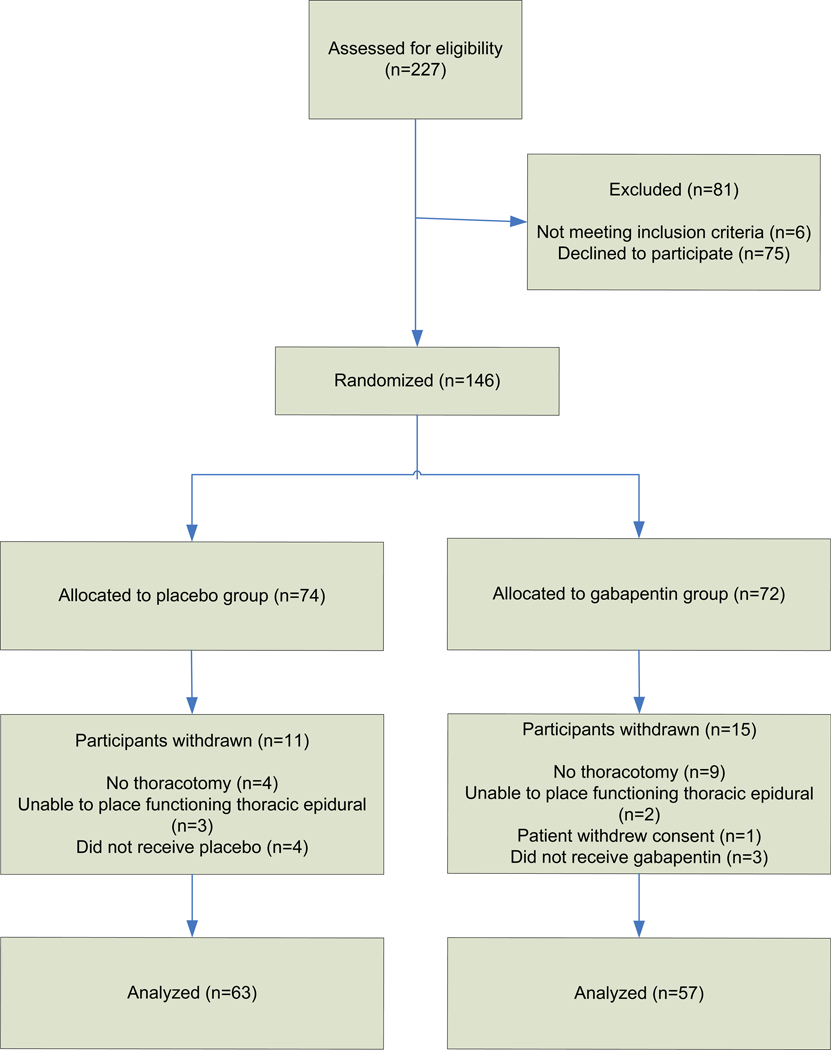
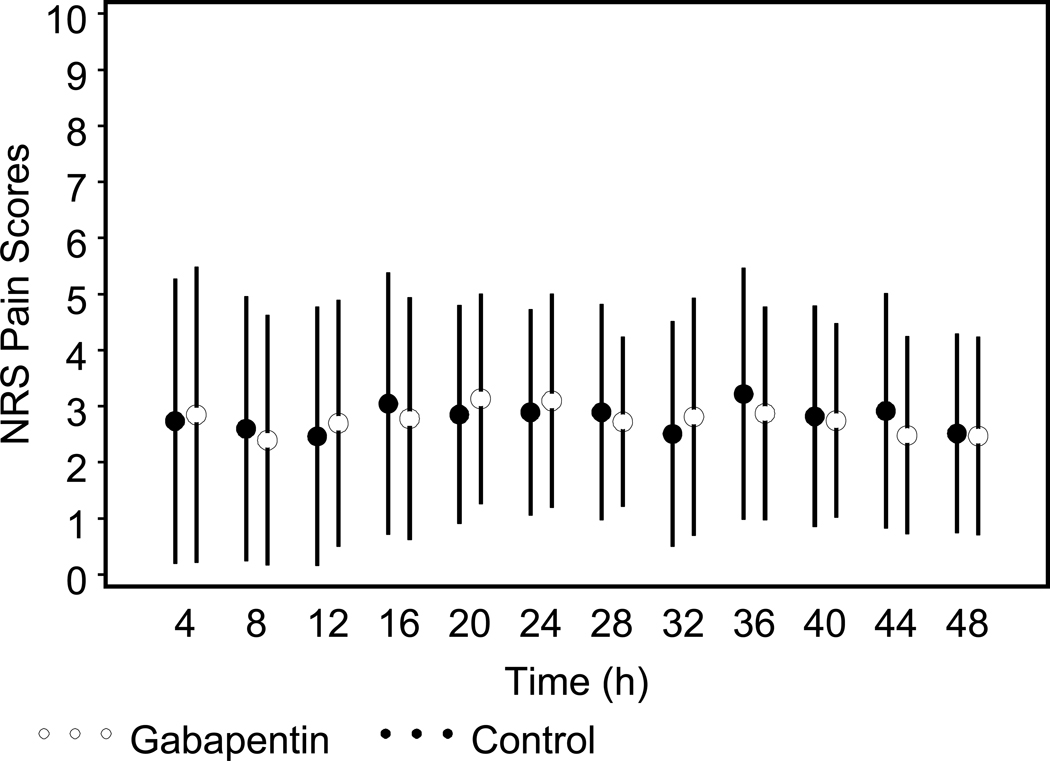
One hundred twenty patients (63 placebo and 57 gabapentin) were studied. Pain scores did not significantly differ at any time point (P = 0.53). Parenteral and oral opioid consumption was not significantly different between groups on postoperative day 1 or 2 (P > 0.05 in both cases). The frequency of side effects such as nausea and vomiting or respiratory depression was not significantly different between groups, but gabapentin was associated with decreased frequency of pruritus requiring nalbuphine (14% gabapentin vs. 43% control group, P < 0.001). The frequency of patients experiencing pain at 3 months post-thoracotomy was also comparable between groups (70% gabapentin vs. 66% placebo group, P = 0.72).
A single preoperative oral dose of gabapentin (600 mg) did not reduce pain scores or opioid consumption following elective thoracotomy, and did not confer any analgesic benefit in the setting of effective multimodal analgesia that included thoracic epidural infusion.
术前加巴喷丁在术后疼痛管理中的作用尚不清楚,尤其是在接受区域阻滞的患者中。接受剖胸手术的患者受益于硬膜外镇痛,但仍可能经历明显的术后疼痛。我们研究了术前加巴喷丁在剖胸手术患者中的作用。
本前瞻性、随机、双盲、安慰剂对照研究纳入了择期剖胸手术的成年人,并随机分配口服 600mg 加巴喷丁或活性安慰剂(12.5mg 苯海拉明),术前 2 小时内。标准化管理包括胸段硬膜外输注、静脉患者自控阿片类镇痛药、对乙酰氨基酚和酮咯酸。记录 48 小时内的疼痛评分、阿片类药物使用情况和副作用。还在 3 个月时评估疼痛。
120 例患者(63 例安慰剂组和 57 例加巴喷丁组)参与了研究。在任何时间点疼痛评分均无显著差异(P = 0.53)。术后第 1 天或第 2 天,两组之间的静脉和口服阿片类药物消耗量无显著差异(两种情况下 P > 0.05)。恶心、呕吐或呼吸抑制等副作用的发生率在两组之间也无显著差异,但加巴喷丁与需要纳布啡的瘙痒发生率降低相关(加巴喷丁组 14%,对照组 43%,P < 0.001)。3 个月后剖胸手术后疼痛的患者比例在两组之间也相当(加巴喷丁组 70%,安慰剂组 66%,P = 0.72)。
单次口服术前剂量的加巴喷丁(600mg)不能降低择期剖胸手术后的疼痛评分或阿片类药物消耗量,在包括胸段硬膜外输注的有效多模式镇痛中也没有带来任何镇痛益处。