Department of Microbiology and Hygiene, Charité-University Medicine Berlin, Berlin, Germany.
PLoS One. 2011;6(6):e20953. doi: 10.1371/journal.pone.0020953. Epub 2011 Jun 15.
Although Campylobacter jejuni-infections have a high prevalence worldwide and represent a significant socioeconomic burden, it is still not well understood how C. jejuni causes intestinal inflammation. Detailed investigation of C. jejuni-mediated intestinal immunopathology is hampered by the lack of appropriate vertebrate models. In particular, mice display colonization resistance against this pathogen.
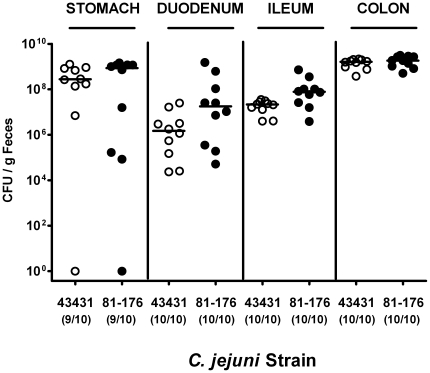
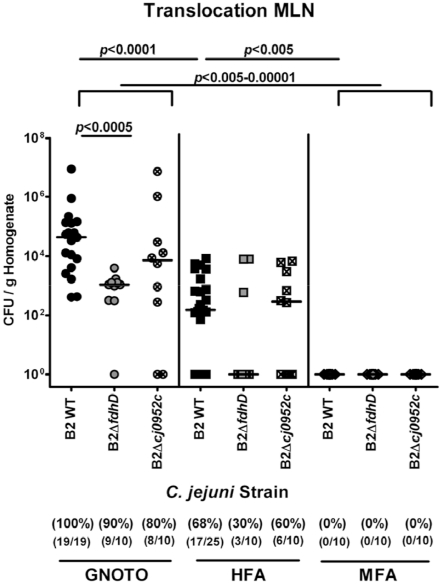
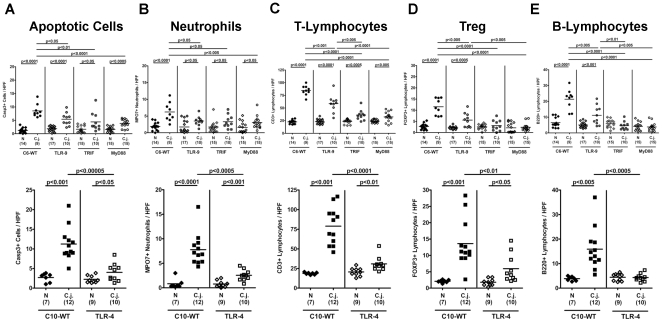
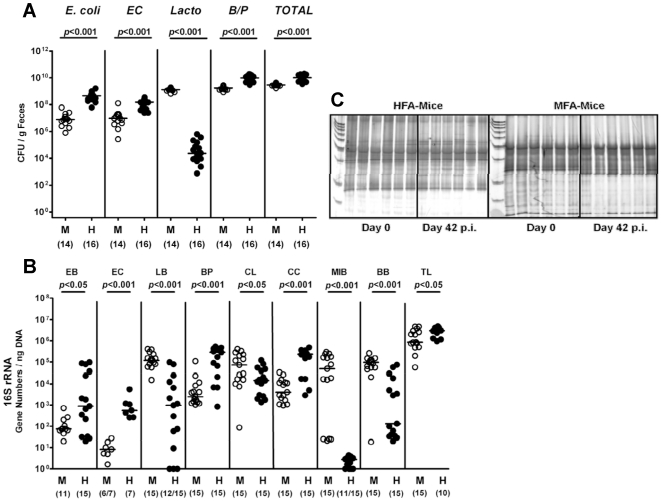
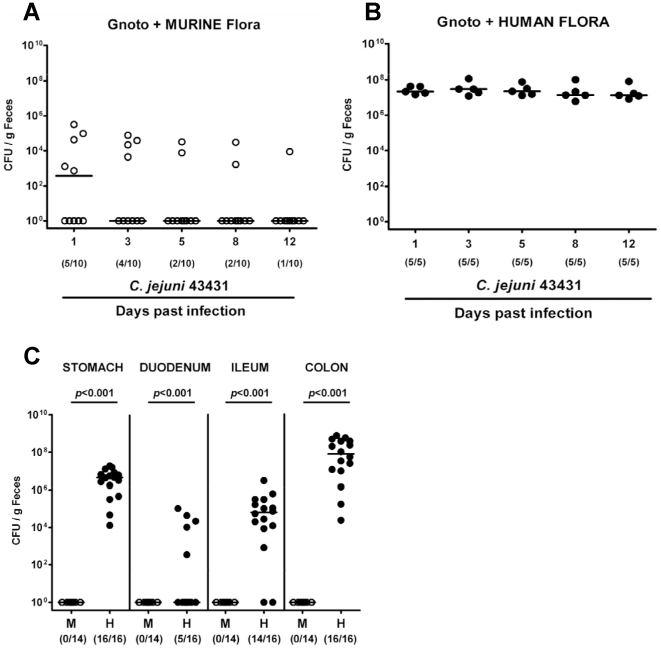
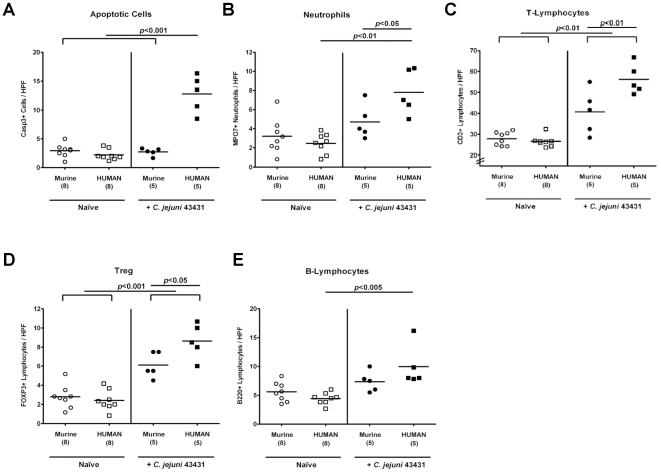
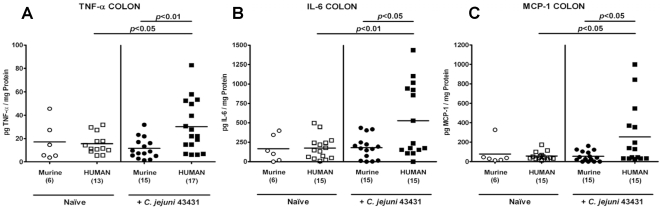
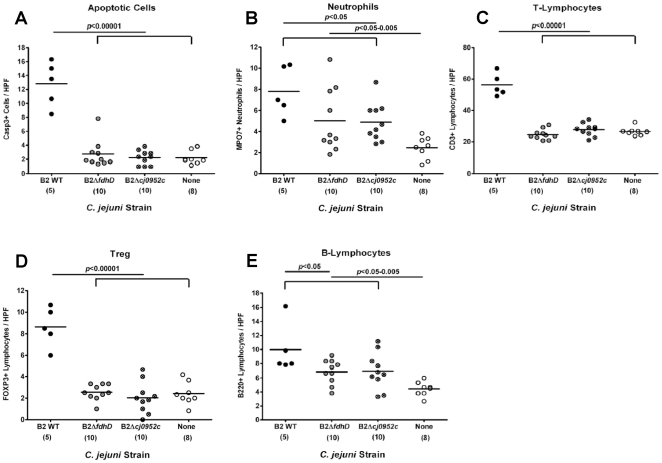
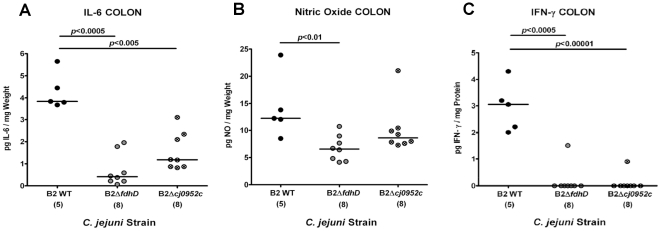
METHODOLOGY/PRINCIPAL FINDINGS: To overcome these limitations we developed a novel C. jejuni-infection model using gnotobiotic mice in which the intestinal flora was eradicated by antibiotic treatment. These animals could then be permanently associated with a complete human (hfa) or murine (mfa) microbiota. After peroral infection C. jejuni colonized the gastrointestinal tract of gnotobiotic and hfa mice for six weeks, whereas mfa mice cleared the pathogen within two days. Strikingly, stable C. jejuni colonization was accompanied by a pro-inflammatory immune response indicated by increased numbers of T- and B-lymphocytes, regulatory T-cells, neutrophils and apoptotic cells, as well as increased concentrations of TNF-α, IL-6, and MCP-1 in the colon mucosa of hfa mice. Analysis of MyD88(-/-), TRIF(-/-), TLR4(-/-), and TLR9(-/-) mice revealed that TLR4- and TLR9-signaling was essential for immunopathology following C. jejuni-infection. Interestingly, C. jejuni-mutant strains deficient in formic acid metabolism and perception induced less intestinal immunopathology compared to the parental strain infection. In summary, the murine gut flora is essential for colonization resistance against C. jejuni and can be overcome by reconstitution of gnotobiotic mice with human flora. Detection of C. jejuni-LPS and -CpG-DNA by host TLR4 and TLR9, respectively, plays a key role in immunopathology. Finally, the host immune response is tightly coupled to bacterial formic acid metabolism and invasion fitness.
CONCLUSION/SIGNIFICANCE: We conclude that gnotobiotic and "humanized" mice represent excellent novel C. jejuni-infection and -inflammation models and provide deep insights into the immunological and molecular interplays between C. jejuni, microbiota and innate immunity in human campylobacteriosis.
尽管空肠弯曲菌感染在全球范围内普遍存在,并对社会经济造成重大负担,但人们对空肠弯曲菌引起肠道炎症的机制仍知之甚少。详细研究空肠弯曲菌引起的肠道免疫病理学受到缺乏合适的脊椎动物模型的阻碍。特别是,小鼠对这种病原体表现出定植抗性。
方法/主要发现:为了克服这些限制,我们使用抗生素治疗根除肠道菌群的无菌小鼠开发了一种新型空肠弯曲菌感染模型。然后,这些动物可以与完整的人类(hfa)或鼠类(mfa)微生物群永久关联。经口服感染后,空肠弯曲菌在无菌和 hfa 小鼠的胃肠道定植 6 周,而 mfa 小鼠在两天内清除了病原体。引人注目的是,稳定的空肠弯曲菌定植伴随着促炎免疫反应,表现为 T 和 B 淋巴细胞、调节性 T 细胞、中性粒细胞和凋亡细胞数量增加,以及 hfa 小鼠结肠黏膜中 TNF-α、IL-6 和 MCP-1 浓度增加。MyD88(-/-)、TRIF(-/-)、TLR4(-/-)和 TLR9(-/-) 小鼠的分析表明,TLR4 和 TLR9 信号对空肠弯曲菌感染后的免疫病理学至关重要。有趣的是,与亲本株感染相比,缺乏甲酸代谢和感知能力的空肠弯曲菌突变株引起的肠道免疫病理学较少。总之,鼠类肠道菌群是空肠弯曲菌定植抗性所必需的,可以通过用人类菌群重建无菌小鼠来克服。宿主 TLR4 和 TLR9 分别检测空肠弯曲菌 LPS 和 CpG-DNA,在免疫病理学中发挥关键作用。最后,宿主的免疫反应与细菌甲酸代谢和入侵适应性紧密相关。
结论/意义:我们得出结论,无菌和“人源化”小鼠是研究空肠弯曲菌感染和炎症的优秀新型模型,并深入了解空肠弯曲菌、微生物群和固有免疫之间在人类弯曲菌病中的免疫学和分子相互作用。