Centre for Comparative Genomics, Murdoch University, WA, Australia.
BMC Genomics. 2011 Jun 24;12:328. doi: 10.1186/1471-2164-12-328.
MicroRNAs (miRNAs) are small non-coding RNAs that act as regulators of gene expression in eukaryotes modulating a large diversity of biological processes. The discovery of miRNAs has provided new opportunities to understand the biology of a number of species. The cattle tick, Rhipicephalus (Boophilus) microplus, causes significant economic losses in cattle production worldwide and this drives us to further understand their biology so that effective control measures can be developed. To be able to provide new insights into the biology of cattle ticks and to expand the repertoire of tick miRNAs we utilized Illumina technology to sequence the small RNA transcriptomes derived from various life stages and selected organs of R. microplus.
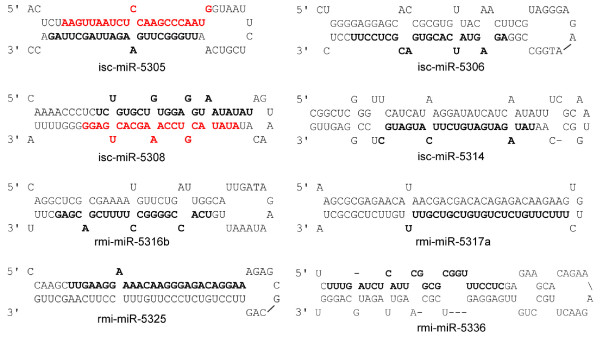
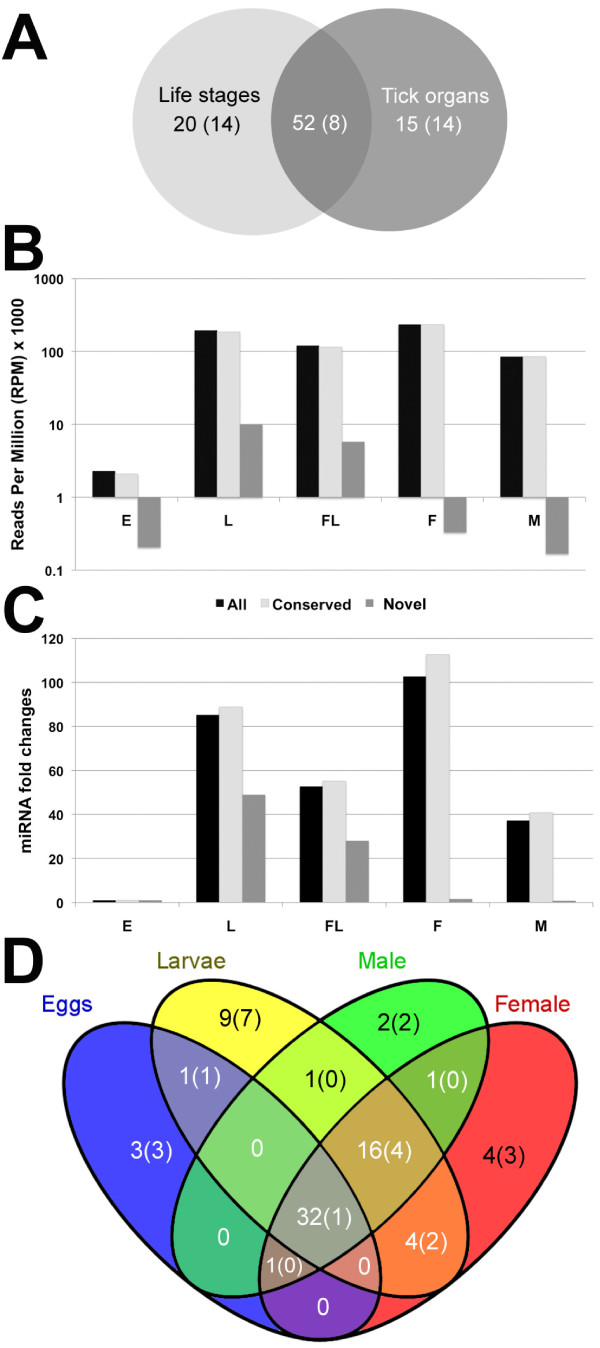
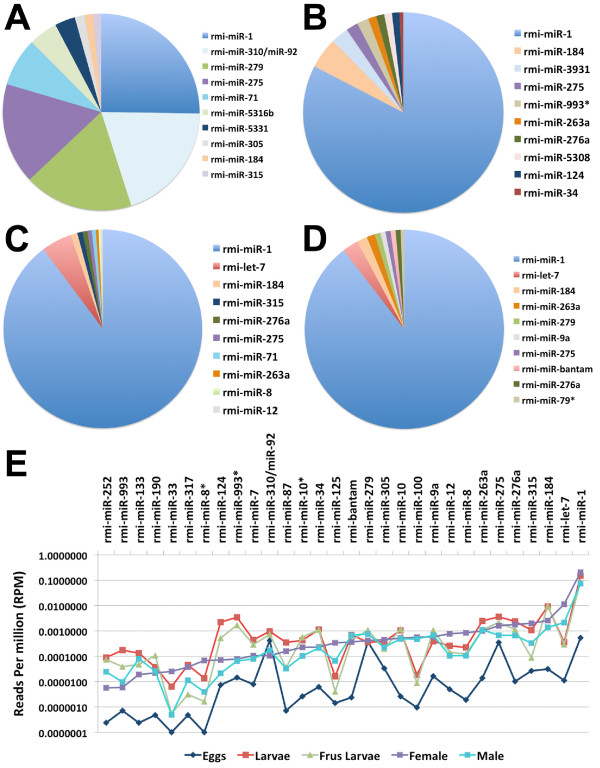
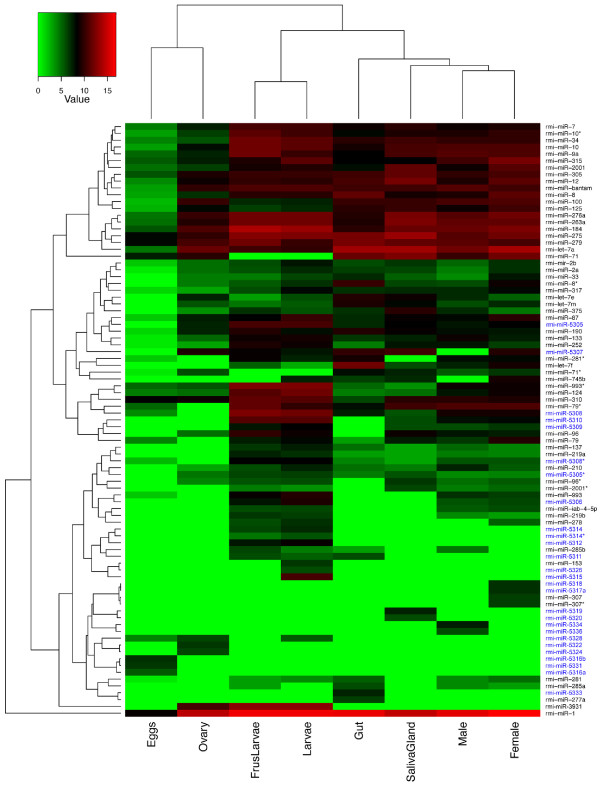
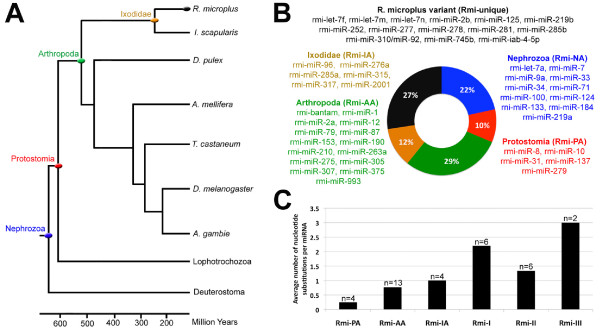
To discover and profile cattle tick miRNAs we employed two complementary approaches, one aiming to find evolutionary conserved miRNAs and another focused on the discovery of novel cattle-tick specific miRNAs. We found 51 evolutionary conserved R. microplus miRNA loci, with 36 of these previously found in the tick Ixodes scapularis. The majority of the R. microplus miRNAs are perfectly conserved throughout evolution with 11, 5 and 15 of these conserved since the Nephrozoan (640 MYA), Protostomian (620MYA) and Arthropoda (540 MYA) ancestor, respectively. We then employed a de novo computational screening for novel tick miRNAs using the draft genome of I. scapularis and genomic contigs of R. microplus as templates. This identified 36 novel R. microplus miRNA loci of which 12 were conserved in I. scapularis. Overall we found 87 R. microplus miRNA loci, of these 15 showed the expression of both miRNA and miRNA* sequences. R. microplus miRNAs showed a variety of expression profiles, with the evolutionary-conserved miRNAs mainly expressed in all life stages at various levels, while the expression of novel tick-specific miRNAs was mostly limited to particular life stages and/or tick organs.
Anciently acquired miRNAs in the R. microplus lineage not only tend to accumulate the least amount of nucleotide substitutions as compared to those recently acquired miRNAs, but also show ubiquitous expression profiles through out tick life stages and organs contrasting with the restricted expression profiles of novel tick-specific miRNAs.
MicroRNAs (miRNAs) 是真核生物中作为基因表达调控因子的小非编码 RNA,调节着大量的生物过程。miRNAs 的发现为理解许多物种的生物学提供了新的机会。牛蜱,Rhipicephalus (Boophilus) microplus,在全球范围内给牛的养殖造成了巨大的经济损失,这促使我们进一步了解它们的生物学,以便开发出有效的控制措施。为了能够深入了解牛蜱的生物学,并扩大蜱 miRNA 的目录,我们利用 Illumina 技术对 R. microplus 的不同生命阶段和选定器官的小 RNA 转录组进行了测序。
为了发现和分析牛蜱 miRNA,我们采用了两种互补的方法,一种旨在寻找进化保守的 miRNA,另一种则专注于发现新的牛蜱特异性 miRNA。我们发现了 51 个进化保守的 R. microplus miRNA 基因座,其中 36 个在蜱 Ixodes scapularis 中已经发现。大多数 R. microplus miRNAs 在整个进化过程中都是完全保守的,其中 11 个、5 个和 15 个分别可以追溯到 Nephrozoan (640 MYA)、Protostomian (620MYA) 和 Arthropoda (540 MYA) 的祖先。然后,我们使用 I. scapularis 的草图基因组和 R. microplus 的基因组连续体作为模板,通过从头计算筛选新的蜱 miRNA。这鉴定出 36 个新的 R. microplus miRNA 基因座,其中 12 个在 I. scapularis 中是保守的。总的来说,我们发现了 87 个 R. microplus miRNA 基因座,其中 15 个显示了 miRNA 和 miRNA*序列的表达。R. microplus miRNAs 表现出多种表达模式,进化保守的 miRNAs 主要在各个生命阶段以不同的水平表达,而新的蜱特异性 miRNAs 的表达则主要局限于特定的生命阶段和/或蜱器官。
在 R. microplus 谱系中,古老获得的 miRNAs 不仅与最近获得的 miRNAs 相比积累的核苷酸替换最少,而且在整个蜱的生命阶段和器官中表现出普遍的表达模式,这与新的蜱特异性 miRNAs 的限制表达模式形成对比。