Vision and Cognition Lab, Centre for Integrative Neuroscience, University of Tübingen, 72076 Tübingen, Germany.
Cereb Cortex. 2012 Apr;22(4):865-76. doi: 10.1093/cercor/bhr154. Epub 2011 Jun 27.
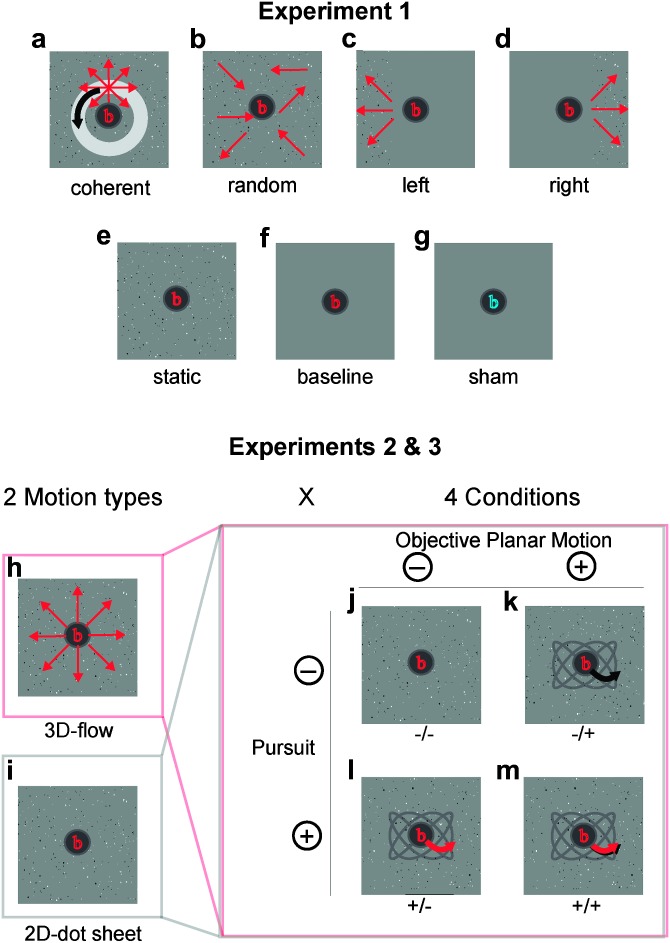
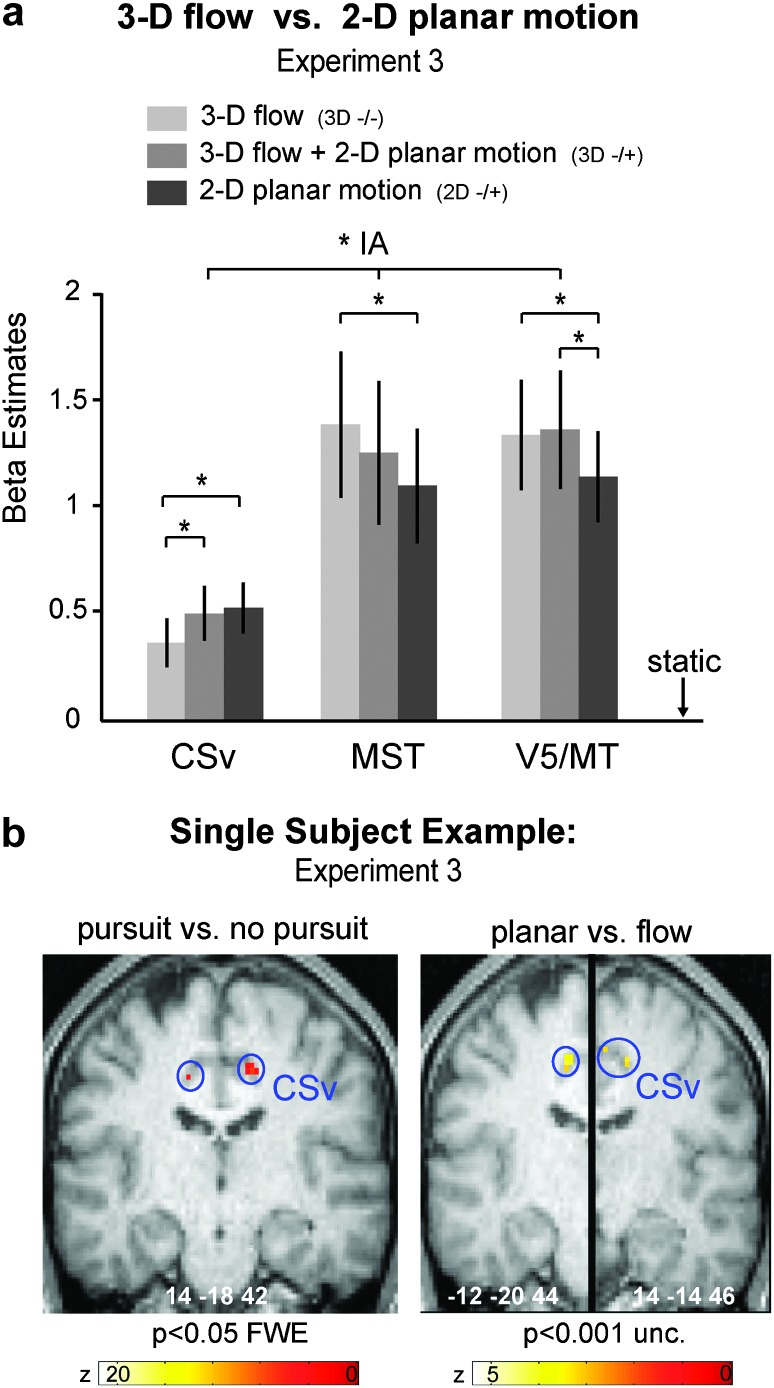
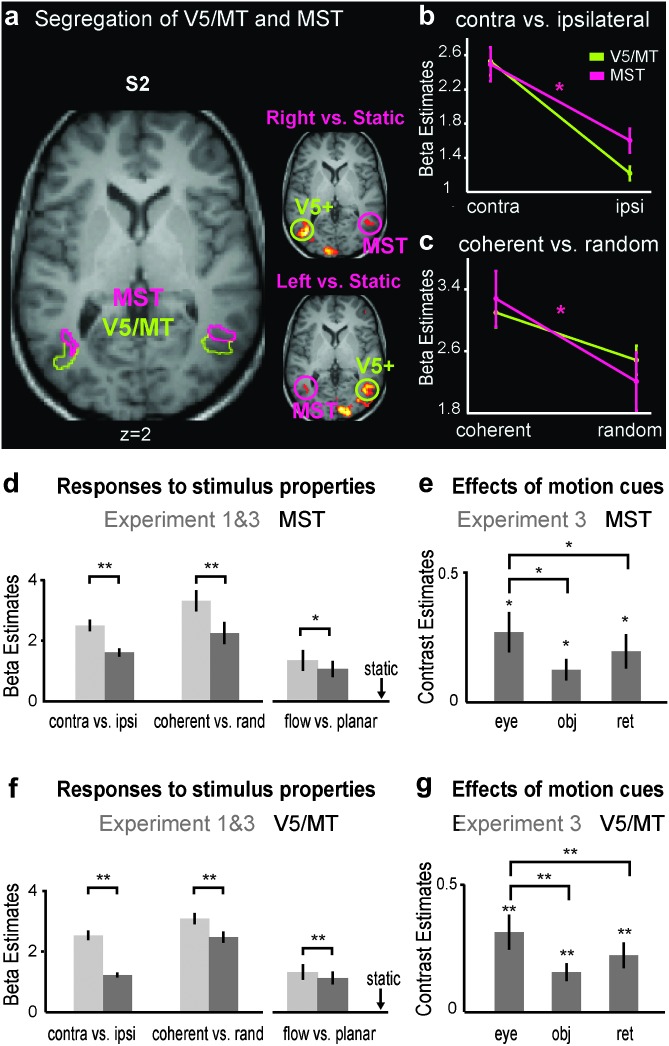
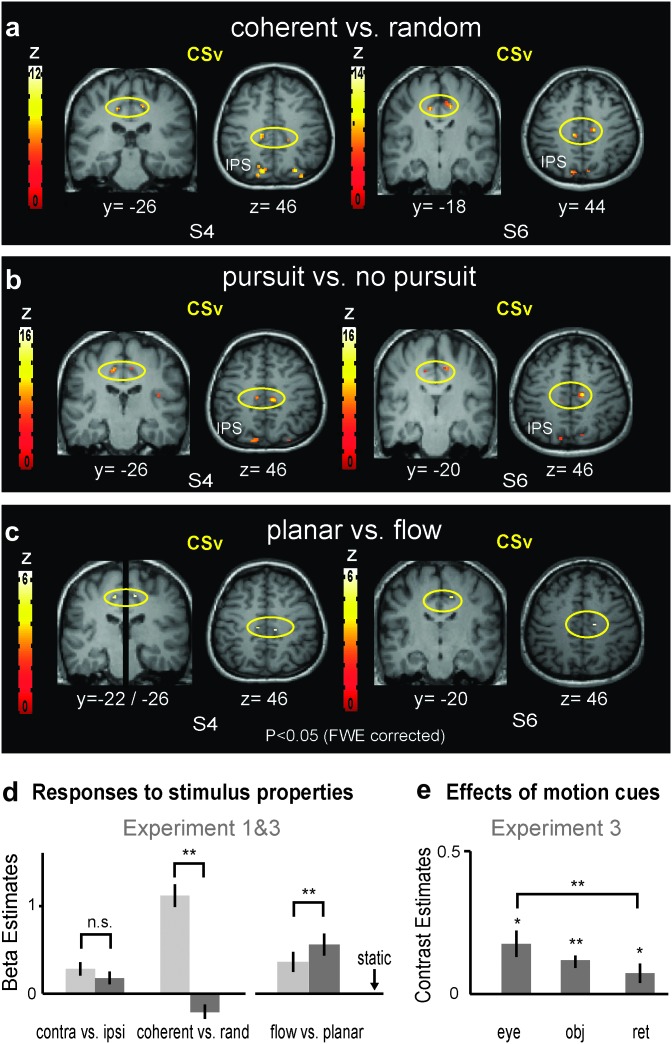
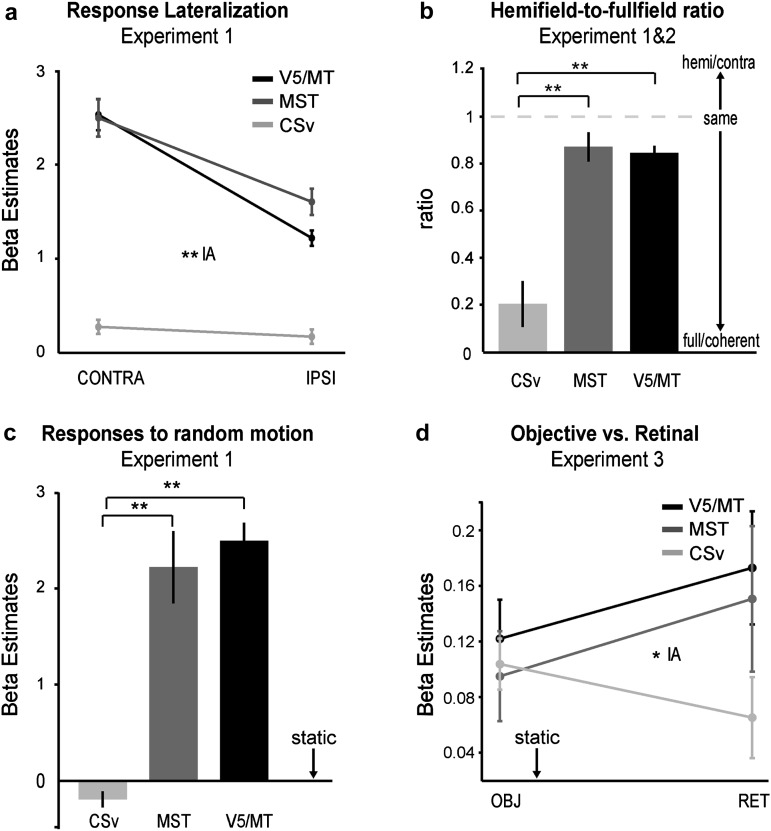
Motion processing regions apart from V5+/MT+ are still relatively poorly understood. Here, we used functional magnetic resonance imaging to perform a detailed functional analysis of the recently described cingulate sulcus visual area (CSv) in the dorsal posterior cingulate cortex. We used distinct types of visual motion stimuli to compare CSv with V5/MT and MST, including a visual pursuit paradigm. Both V5/MT and MST preferred 3D flow over 2D planar motion, responded less yet substantially to random motion, had a strong preference for contralateral versus ipsilateral stimulation, and responded nearly equally to contralateral and to full-field stimuli. In contrast, CSv had a pronounced preference to 2D planar motion over 3D flow, did not respond to random motion, had a weak and nonsignificant lateralization that was significantly smaller than that of MST, and strongly preferred full-field over contralateral stimuli. In addition, CSv had a better capability to integrate eye movements with retinal motion compared with V5/MT and MST. CSv thus differs from V5+/MT+ by its unique preference to full-field, coherent, and planar motion cues. These results place CSv in a good position to process visual cues related to self-induced motion, in particular those associated to eye or lateral head movements.
运动处理区域除 V5+/MT+外,仍然知之甚少。在这里,我们使用功能磁共振成像对后扣带回皮层背侧新描述的扣带沟视觉区(CSv)进行了详细的功能分析。我们使用不同类型的视觉运动刺激来比较 CSv 与 V5/MT 和 MST,包括视觉追踪范式。V5/MT 和 MST 都偏爱 3D 流而不是 2D 平面运动,对随机运动的反应较少但明显,对同侧刺激有强烈的偏好,对同侧和全视野刺激的反应几乎相同。相比之下,CSv 对 2D 平面运动的偏好明显高于 3D 流,对随机运动没有反应,侧化作用较弱且不显著,明显小于 MST,对全视野刺激的偏好明显强于同侧刺激。此外,CSv 与 V5/MT 和 MST 相比,具有更好地将眼球运动与视网膜运动整合的能力。因此,CSv 与其独特的全视野、相干和平坦运动线索偏好不同。这些结果表明 CSv 能够处理与自我诱导运动相关的视觉线索,特别是与眼睛或头部侧向运动相关的视觉线索。