Department of Ecology and Evolutionary Biology, University of Tennessee, Knoxville, TN, USA.
Evodevo. 2011 Jul 1;2(1):14. doi: 10.1186/2041-9139-2-14.
A number of innovations underlie the origin of rapid reproductive cycles in angiosperms. A critical early step involved the modification of an ancestrally short and slow-growing pollen tube for faster and longer distance transport of sperm to egg. Associated with this shift are the predominantly callose (1,3-β-glucan) walls and septae (callose plugs) of angiosperm pollen tubes. Callose synthesis is mediated by callose synthase (CalS). Of 12 CalS gene family members in Arabidopsis, only one (CalS5) has been directly linked to pollen tube callose. CalS5 orthologues are present in several monocot and eudicot genomes, but little is known about the evolutionary origin of CalS5 or what its ancestral function may have been.
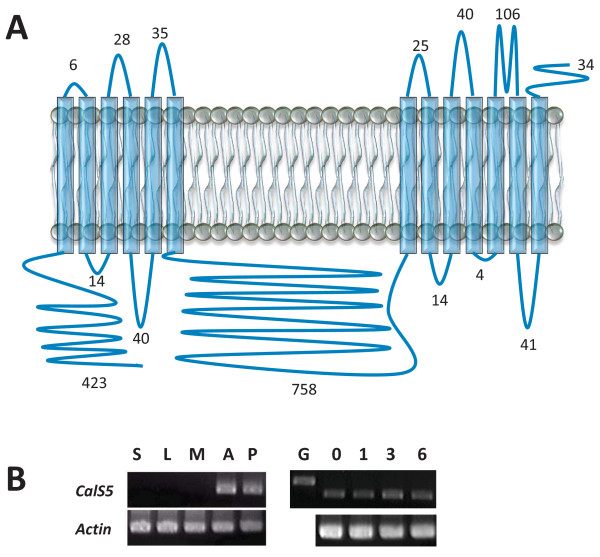
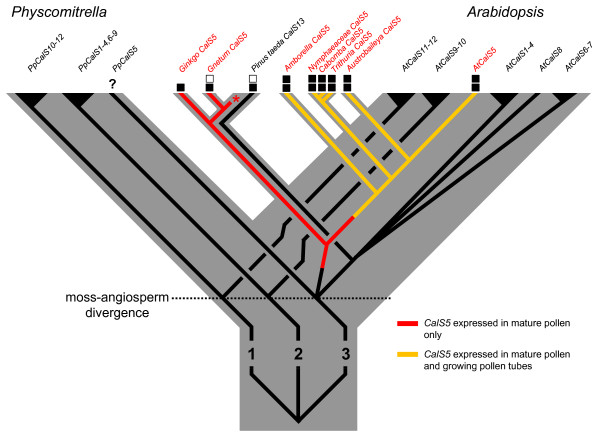
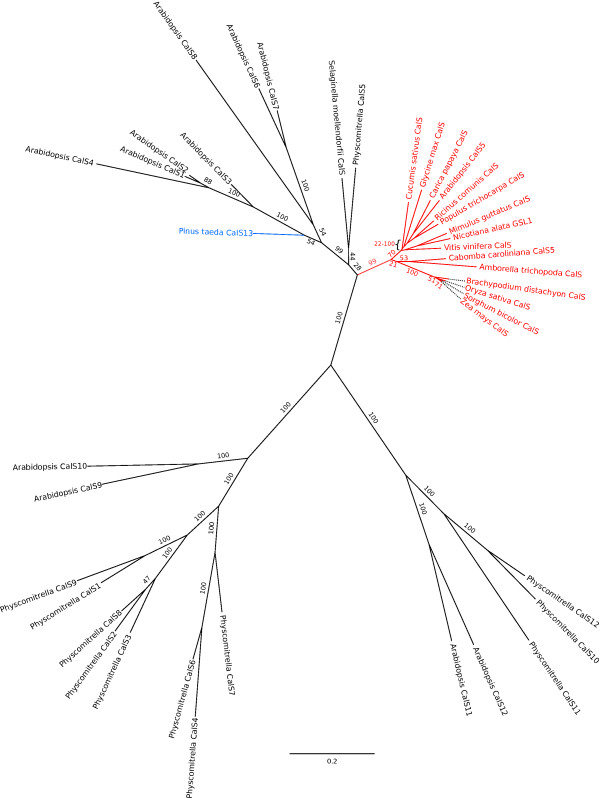
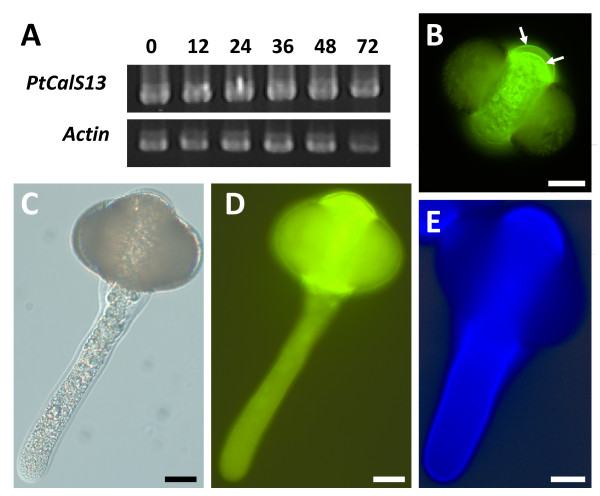
We investigated expression of CalS in pollen and pollen tubes of selected non-flowering seed plants (gymnosperms) and angiosperms within lineages that diverged below the monocot/eudicot node. First, we determined the nearly full length coding sequence of a CalS5 orthologue from Cabomba caroliniana (CcCalS5) (Nymphaeales). Semi-quantitative RT-PCR demonstrated low CcCalS5 expression within several vegetative tissues, but strong expression in mature pollen. CalS transcripts were detected in pollen tubes of several species within Nymphaeales and Austrobaileyales, and comparative analyses with a phylogenetically diverse group of sequenced genomes indicated homology to CalS5. We also report in silico evidence of a putative CalS5 orthologue from Amborella. Among gymnosperms, CalS5 transcripts were recovered from germinating pollen of Gnetum and Ginkgo, but a novel CalS paralog was instead amplified from germinating pollen of Pinus taeda.
The finding that CalS5 is the predominant callose synthase in pollen tubes of both early-diverging and model system angiosperms is an indicator of the homology of their novel callosic pollen tube walls and callose plugs. The data suggest that CalS5 had transient expression and pollen-specific functions in early seed plants and was then recruited to novel expression patterns and functions within pollen tube walls in an ancestor of extant angiosperms.
许多创新是被子植物快速生殖周期的起源。一个关键的早期步骤涉及到对祖先短而生长缓慢的花粉管进行修饰,以实现精子更快、更远距离地向卵子运输。与这种转变相关的是,被子植物花粉管主要由胼胝质(1,3-β-葡聚糖)壁和隔膜(胼胝质塞)组成。胼胝质的合成由胼胝质合酶(CalS)介导。在拟南芥的 12 个 CalS 基因家族成员中,只有一个(CalS5)与花粉管胼胝质直接相关。CalS5 的同源物存在于几种单子叶植物和真双子叶植物的基因组中,但对 CalS5 的进化起源及其祖先功能知之甚少。
我们调查了选定的非开花种子植物(裸子植物)和被子植物中 CalS 在花粉和花粉管中的表达,这些植物在单子叶植物/真双子叶植物节点以下的谱系中分化。首先,我们从卡罗来纳水鳖(Cabomba caroliniana)(CcCalS5)(睡莲目)中确定了 CalS5 同源物的全长编码序列。半定量 RT-PCR 表明,CcCalS5 在几种营养组织中的表达较低,但在成熟花粉中表达较强。在睡莲目和澳柏拉目内的几个物种的花粉管中检测到 CalS 转录物,并与一组具有系统发育多样性的测序基因组进行比较分析表明与 CalS5 同源。我们还报告了来自 Amborella 的推定 CalS5 同源物的计算机证据。在裸子植物中,CalS5 转录物从 Gnetum 和银杏的萌发花粉中回收,但从 Pinus taeda 的萌发花粉中扩增到了一个新的 CalS 旁系同源物。
CalS5 是早期分化和模式系统被子植物花粉管中主要的胼胝质合酶这一发现表明,它们新型胼胝质花粉管壁和胼胝质塞具有同源性。这些数据表明,CalS5 在早期种子植物中有短暂的表达和花粉特异性功能,然后在现存被子植物祖先的花粉管壁中被招募到新的表达模式和功能中。