Clinical Oncology, Pharma Mar S.A., Colmenar Viejo, Madrid 28770, Spain.
Mar Drugs. 2011;9(6):1007-1023. doi: 10.3390/md9061007. Epub 2011 Jun 9.
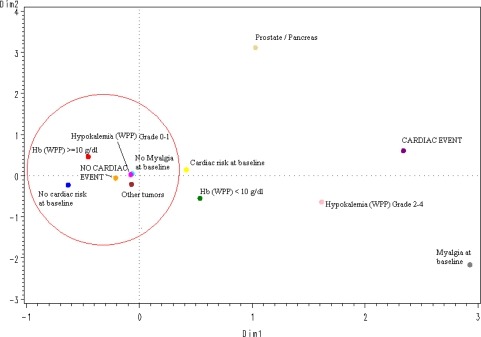
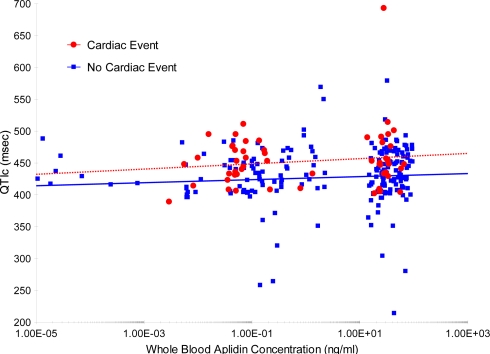
Plitidepsin is a cyclic depsipeptide of marine origin in clinical development in cancer patients. Previously, some depsipeptides have been linked to increased cardiac toxicity. Clinical databases were searched for cardiac adverse events (CAEs) that occurred in clinical trials with the single-agent plitidepsin. Demographic, clinical and pharmacological variables were explored by univariate and multivariate logistic regression analysis. Forty-six of 578 treated patients (8.0%) had at least one CAE (11 patients (1.9%) with plitidepsin-related CAEs), none with fatal outcome as a direct consequence. The more frequent CAEs were rhythm abnormalities (n = 31; 5.4%), mostly atrial fibrillation/flutter (n = 15; 2.6%). Of note, life-threatening ventricular arrhythmias did not occur. Myocardial injury events (n = 17; 3.0%) included possible ischemic-related and non-ischemic events. Other events (miscellaneous, n = 6; 1.0%) were not related to plitidepsin. Significant associations were found with prostate or pancreas cancer primary diagnosis (p = 0.0017), known baseline cardiac risk factors (p = 0.0072), myalgia present at baseline (p = 0.0140), hemoglobin levels lower than 10 g/dL (p = 0.0208) and grade ≥2 hypokalemia (p = 0.0095). Treatment-related variables (plitidepsin dose, number of cycles, schedule and/or total cumulative dose) were not associated. Electrocardiograms performed before and after plitidepsin administration (n = 136) detected no relevant effect on QTc interval. None of the pharmacokinetic parameters analyzed had a significant impact on the probability of developing a CAE. In conclusion, the most frequent CAE type was atrial fibrillation/atrial flutter, although its frequency was not different to that reported in the age-matched healthy population, while other CAEs types were rare. No dose-cumulative pattern was observed, and no treatment-related variables were associated with CAEs. Relevant risk factors identified were related to the patient's condition and/or to disease-related characteristics rather than to drug exposure. Therefore, the current analysis supports a safe cardiac risk profile for single-agent plitidepsin in cancer patients.
普里替定是一种源自海洋的环二肽,目前正在癌症患者中进行临床开发。此前,一些环二肽与心脏毒性增加有关。检索了临床数据库中与单药普里替定相关的临床试验中发生的心脏不良事件(CAE)。通过单变量和多变量逻辑回归分析探讨了人口统计学、临床和药理学变量。在 578 名接受治疗的患者中,有 46 名(8.0%)至少发生了 1 次 CAE(11 名患者(1.9%)与普里替定相关的 CAE),没有因直接后果导致死亡。更常见的 CAE 是节律异常(n = 31;5.4%),主要是心房颤动/扑动(n = 15;2.6%)。值得注意的是,没有发生危及生命的室性心律失常。心肌损伤事件(n = 17;3.0%)包括可能与缺血相关和非缺血性事件。其他事件(杂项,n = 6;1.0%)与普里替定无关。与前列腺癌或胰腺癌的原发性诊断(p = 0.0017)、已知的基线心脏危险因素(p = 0.0072)、基线时存在肌痛(p = 0.0140)、血红蛋白水平低于 10 g/dL(p = 0.0208)和 2 级以上低钾血症(p = 0.0095)有显著相关性。与治疗相关的变量(普里替定剂量、周期数、方案和/或总累积剂量)与 CAE 无关。在接受普里替定治疗前后进行的心电图检查(n = 136)未发现 QTc 间期有明显变化。分析的药代动力学参数均未对发生 CAE 的概率有显著影响。总之,最常见的 CAE 类型是心房颤动/心房扑动,但其频率与年龄匹配的健康人群报告的频率无差异,而其他 CAE 类型则很少见。未观察到剂量累积模式,且与 CAE 无关的治疗相关变量。确定的相关危险因素与患者的病情和/或疾病相关特征有关,而与药物暴露无关。因此,目前的分析支持单药普里替定在癌症患者中的心脏安全性。